
Happy Felton and the Knothole Gang
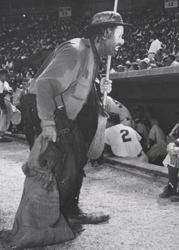
Happy Felton, Jackie Robinson and members of the Knothole Gang prior to a game at Ebbets Field. Knothole gangs came about long before Happy Felton formed his in Brooklyn. The term came from a time when baseball fields had wooden fences. Kids who could not afford the price of a…

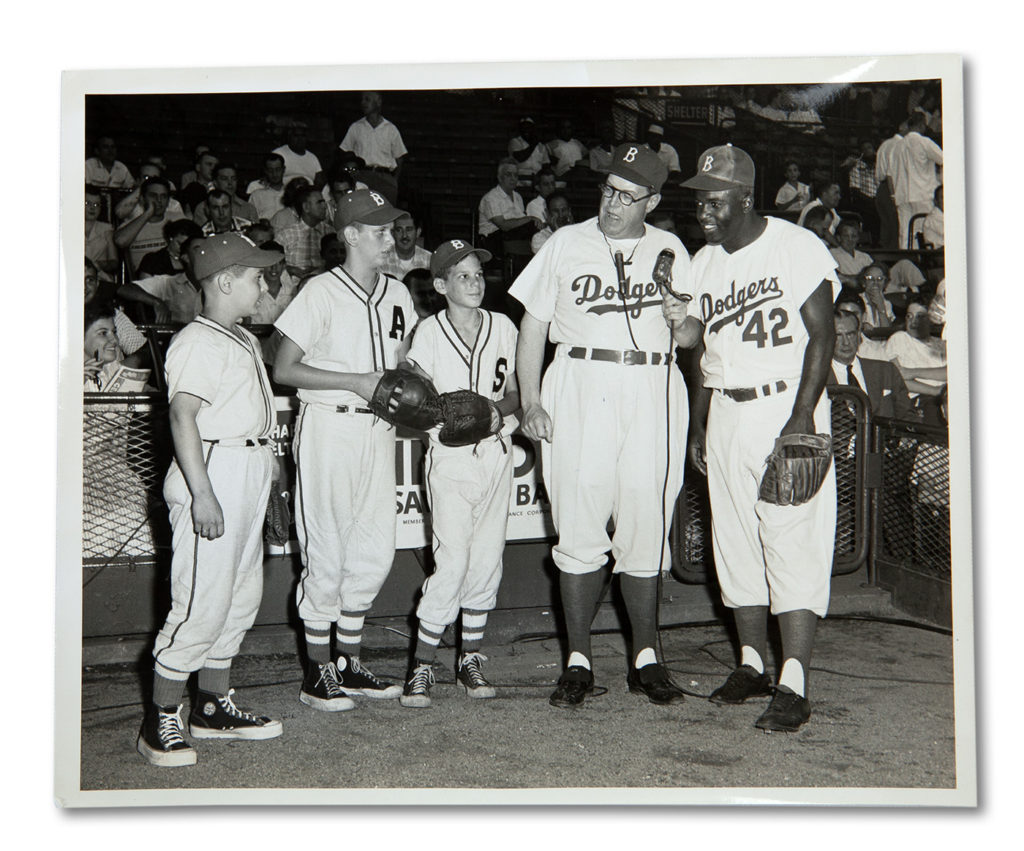
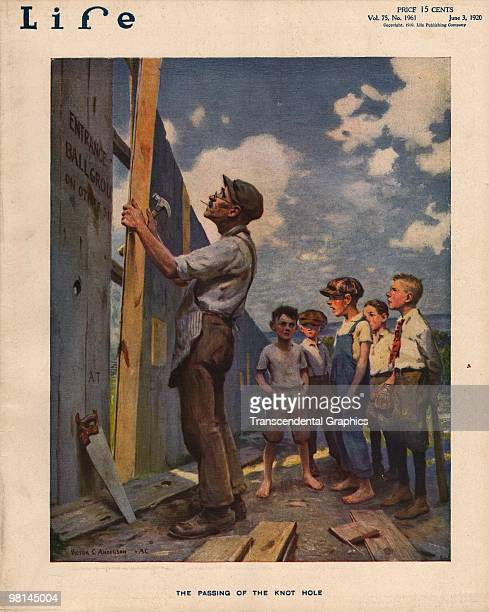
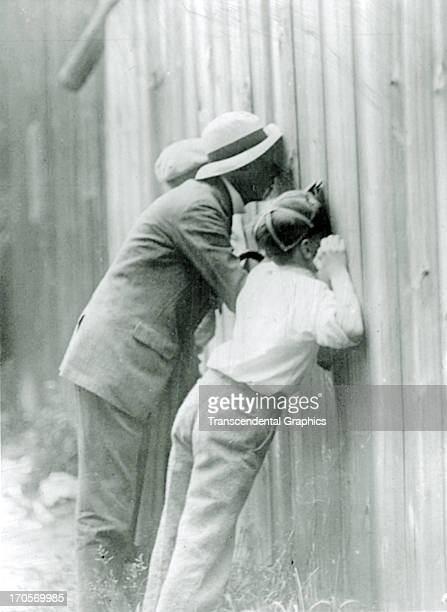
Knothole gangs came about long before Happy Felton formed his in Brooklyn. The term came from a time when baseball fields had wooden fences. Kids who could not afford the price of a ticket found they could watch the game for free when knots in the fence fell out, creating a knothole. Naturally, gangs of kids would gather around these to watch the games.
The first actual knothole gang came about in the late 1800s, probably about 1889, when New Orleans Pelicans owner Abner Powell promoted the first knothole gang when he allowed kids to watch for free if they showed good behavior. Another good example was the Columbus Redbirds of Columbus, Ohio. If kids decided they wanted to sign up, they would do so, and if they got good grades, they would be admitted free to any home game except the playoffs and All-Star games.
The Brooklyn Dodgers handed out over 2 million free passes to kids in the 40’s and 50’s. Kids used to lie down to peek under the center field gate at Ebbets Field. From 1962-1965 the Colt 45’s called their knothole gang the Six Shooter Club.
Historically, the St. Louis Cardinals are recognized as sponsoring the first Knothole Gand Club. In Baseball Through a Knothole, a St. Louis history by Bill Borst, he tells the story. William Edward Bilheimer, a St. Louis insurance man, introduced the idea of a “Knothole Gang.” With every 50-dollar purchase of stock in the Cardinals, one bleacher seat was opened up free of charge for the city’s youth. This was the beginning of the 1917 season and came about as part of the plans when Mrs. Helen Britton sold the Cardinal club to a fan syndicate from the city’s prominent businessmen that formed an army of stockholders. Executive Branch Rickey formed the idea.
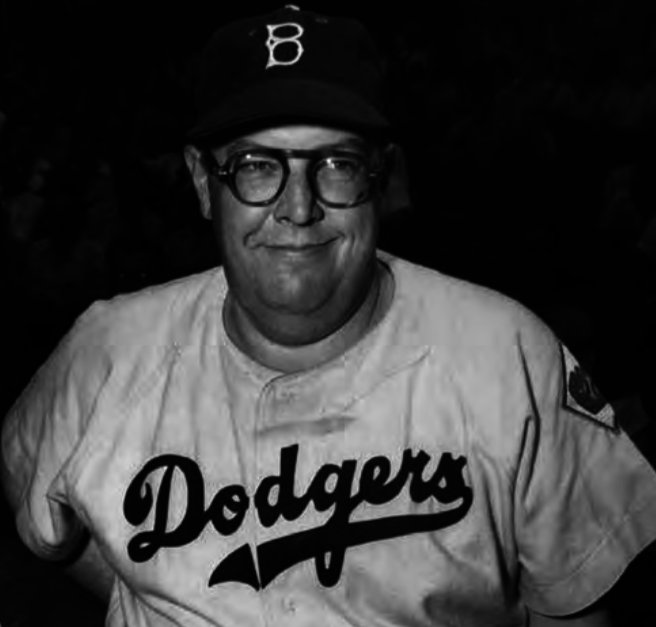
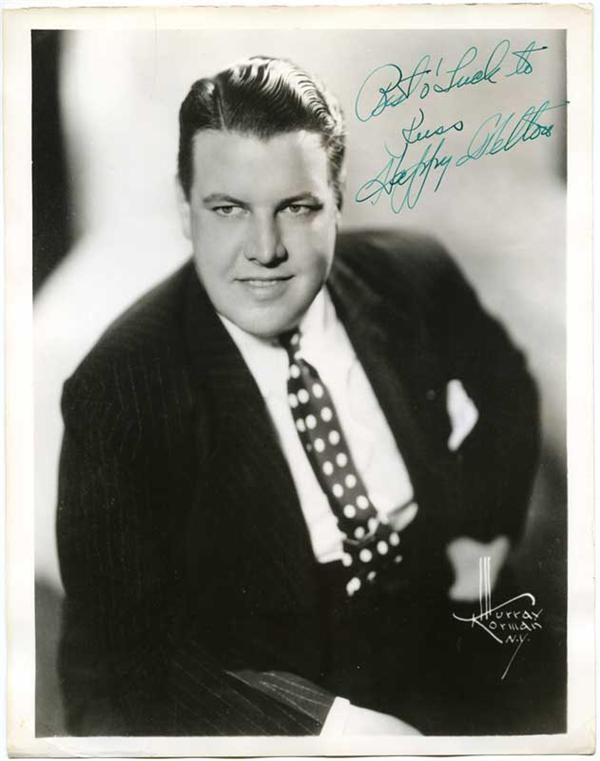
Francis J. Felton was born in Pennsylvania on November 30th, 1907. He would go on to work in Vaudeville, be a bandleader, and host children’s programs. He was known as Happy. After his graduation from college, he played drums in a circus, worked in a medicine man show, sang in the Four Ambassadors Quartet, and performed in Vaudeville with Adele Jason and the Boys. He was also a headliner in Vaudeville, including being held over as head of Loews State Theater Vaudeville show in August of 1943.
Following those activities, he formed and led an orchestra that played in nightclubs and hotels around the United States for ten years. He left the orchestra to go to Broadway, where he replaced Chic Johnson in Hellzapoppin, a role that lasted 14 months. He went on to appear in comedic roles in touring companies of Broadway shows and appeared in a few films. A Guy Named Joe, a WWII picture starring Spencer Tracy, Swing Shift Maise with Ann Southern, and one of my favorites, Whistling in Brooklyn with Red Skelton. He also made a short film called Music with a Smile, the Happy Felton Style. In 1947 he formed Happy Felton Music, a publishing company.
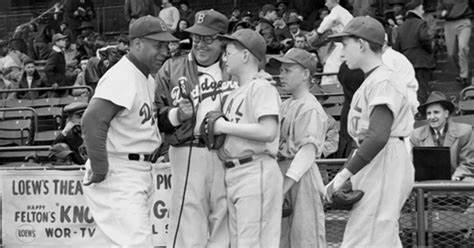
In April of 1950, the Happy Felton Knothole Gang debuted on WOR.TV in New York. The show started 25 minutes before each Brooklyn Dodgers home game. Felton and three youngsters would be in the Ebbets Field bullpen in right field. The kids would be evaluated by a Dodger player on their fielding ability, speed, and baseball competence. All three would receive baseball equipment, and the winner would get to return the next day to chat with his favorite Dodger. Boy, would kids today love that?
Boys on the program were initially recommended by the league in which they played. Those nominees were then screened by the American Legion, the Catholic Youth Organization, and the Police Athletic League to determine the final participants. It was initially sponsored by Tidewater Oil Company and the Studebaker Dealers Association of New York.
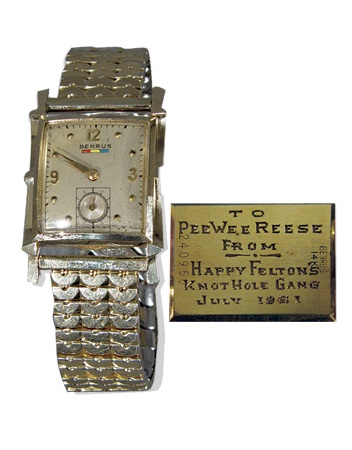
A review in the New York Times of June 3, 1955, episode described the show as ” a valuable service for youngsters interested in baseball.” Critic J.P. Stanley noted that Felton “knows how to talk to youngsters without making them feel hostile or foolish.” He also praised Jackie Robinson and Carl Erskine for their contributions to the workout and interview portions of the show.
In March 1952, Loews Theaters and Metro-Goldwyn-Mayer concluded a deal that had the two companies sponsoring Knothole Gang broadcasts. The arrangement also included using Loew’s theaters for ” movie meetings on Saturday mornings” with special programs for the children and plans for special events at Ebbets Field. On the first Saturday of the program, 50,000 youngsters registered (free) in 35 theaters, and more registration cards were requested. Each theater included the showing of a baseball-related film and opportunities to ask questions of a baseball player. And a chance to win prizes. Felton would appear live at one theater each week, while others had a Felton film in the place of a personal appearance.
Felton added a second program in 1951, a Talk to the Stars post-game show. He was the master of ceremonies in a question-and-answer show featuring a Dodger player and a member of the opposing team. Initially, questions were called in by fans, but the popularity of the show brought a change of having questions submitted by postcard. They averaged 5.000 a week. Felton had other pursuits and shows on TV throughout his affiliation with the Knothole Gang. One was based on his old Vaudeville act. The Knothole Gang itself was active until 1958, when the Dodgers moved west.
Happy Felton was married in 1942 to composer, Vi Brantley. They had two daughters. Happy passed away on October 21, 1964, at Mt. Sinai Hospital at the age of 56. In my first game at the Coliseum in 1958, we sat in the Knothole section down the right field line.
More from Dodger Talk

Enjoy it While You Can!
It was both surprising and not surprising to me that the Dodgers signed Kyle Tucker. That they can make it work is a tribute to the true genius of Mark Walter and Andrew Friedman. Enjoy it while you can, because it will end soon. In the upcoming CBA and talks among owners, MLB…

Dodgers Food Trailer
I did this interview a couple of weeks ago with Chef Mike, who runs the Dodgers Food Trailer for the Great Lakes Loons. They are there for every home and road regular season and playoff game. They prepare three meals a day for approximately 50 people (players and coaches). Since games end late most evenings, they do not prepare breakfast. Many of their hotels have a complimentary breakfast anyway. However,…

Meet LAD 2026 Draft Picks 1-12
3 picks were High School players (2 SS and 1 OF). There was a college OF, college catcher, college SS, and 10 college pitchers. Of all the talk for a need for a catcher, the only catcher the Dodgers selected was Luke Bard, son of LAD bullpen coach Josh Bard. Bard was a 4th year senior from Houston Christian University. He is not a prospect, so the Dodgers are still…

Interview with Paul Beachy – Team Bus Driver For The Great Lakes Loons (LA Dodgers Minor League Team)
It’s been a few days since I did this interview. We have evidently been working my son-in-law (the video guy) like a rented mule at US Water Systems. However, I am taking him to London with me in a few days, so maybe Watford will buy him a pint as a tip, but he’s a dang Red Sox fan, so there is that! I thought that it would be interesting…
Discussion (44)
Disagree, not disagreeable
Correction: Gowdy is 25, not 23, and signed out of high school for $3.5 million, not $3 million.
Even if the Dodgers can’t fix him, even if he flames out…. he still made $3.5 million.
Nice work if you can get it.
Tis the season for prospects rankings. And the latest from MLB Pipeline suggests (of course) that the Dodgers are in fine form, ranking just behind the Orioles.
An excerpt from the story:
“We’ve been going off raw totals to honor the farm systems above, but here’s what happens when you break down the Top 5 by Prospect Points (i.e. 100 for No. 1 overall, 99 for No. 2, etc.):
“Arizona boasts arguably the best Big Four of any prospect group this year in Corbin Carroll (No. 2), Jordan Lawlar (No. 11) and Druw Jones (No. 15) and the reigning Minor League strikeout leader in Brandon Pfaadt (No. 59). That quartet represents the D-backs’ only Top 100 representation, but it’s enough to clear 27 other clubs in the Prospect Points ranks.
“The Reds specialize in infielders with their Top 100 foursome of Elly De La Cruz (No. 10), Noelvi Marte (No. 29), Edwin Arroyo (No. 44) and Cam Collier (No. 69). The last three were all acquired last year either via the Draft or the Luis Castillo blockbuster trade with the Mariners, giving Cincinnati a much-needed influx of talent at a time when it’s heading toward a certain rebuild.”
This list raises my usual kvetch an question…
First, the complaint: MLB Pipline, like other prospect rankings, leave Outman out. Again with the Dangerfield treatment. I get that Pages, being younger, may be considered a superior prospect over time–but Outman has a great shot at being on the OD roster and perhaps the starting lineup.
Outman also has a much better shot than Busch, who is also muchhighly rated, and about the same age as Outman. Unlike Outman, Busch does not win raves for defense–and there is no obvious fit on the Dodger roster. Perhaps what I’m looking for is a ranking for prospects most likely to make an impact this season.
So the exclusion of Outman really just further underscores how deep the Dodgers system is. A lot of these top 100 prospects may never make it to the majors–but Outman, unrated, has already played in the majors and should get a great shot this season.
These lists also leave me wondering whether the Dodger brass would trade from prospect strength to get appealing prospects.
Dodgers are shaky at SS, right? Lux is iffy, and Rojas is not young. Maybe this duo is only good for one season.
So what would it take to get top SS prospect Elly de la Cruz from Cincy, for example? If Cincy needs a catcher, would they take Rushing and a sweetener for de la Cruz?
Yes, you never know. Who here was expecting the Phillips would turn out to be such a find? Dodgers have found quite a few diamonds in the rough.
And maybe Kevin Gowdy is one.
He’s a young (23) reclamation project with an intriguing backstory: Showed so much in high school in Santa Barbara to become a 2nd round draft pick by the Phillies. I read or heard somewhere that he signed for an over-slot $3 million to pass on a UCLA scholarship. But later came injury and TJ surgery and his minor league numbers suck, with an ERA over 5 and a not-great K to walk ratio.
Dodgers are assigning him to Tulsa. Can the gurus get him to pre-surgery form?
Baseball Prospectus says this about him:
“Low ¾ delivery with clean arm action; Average arm speed; Bends when he throws to create deception; Choppy throughout his throwing motion, has some quirks and stops to it; Closes shoulder before throwing, makes it difficult for RHH to pick up on his pitches; Finishes slightly off balance; Moderate effort.”
You never know.
Print the tickets:
Dodgers Sign Wander Suero To Minor League Deal
Open on www.baseball-reference.comhttps://www.baseball-reference.com/players/s/suerowa01.shtmlThat was a great story posted by Rata. Thank you!
21 Days until pitchers and catchers officially show up. I know a lot of Dodgers players are showing up earlier.
I am eager to see what kind of infield alignment there is.
Don’t know if any of you remember or were part of the Jr Dodger club from 1971-1973. Think the max age was 12 – but membership was $6 you would get 6 tix games, tshirt,pennant,club card. Best deal in world for 6 bucks !!
Bring back games on channel 11 KTTV w Vinny,Jerry Doggett.
Need those days back !!
You old guys would know this. Back in the New York Giants days and Brooklyn Dodgers the reason why there was so many good pitchers is because the pitchers hit and pitches and there was like only maybe 13 palyers on a team. That’s why you see no hitters one hitters. Baseball was baseball everyone played. And the two guys on the bench were usually subs to play anywhere in the field. Alot if times they ball players would drive from one city to the next on a bus or take a train. And they drank heavily so most games they players were hung over. My great great grandfather said Babe Ruth would show up skunk drink and throw like a one hitter and hit two homers. Can you imagine in today’s game a player showing up with a whisper of alcohal on his breath and they wouldn’t start him because it be bad press coverage. I used to work in single A baseball and I was around the palyers age. When we went out after the games the only rule the manager and organization had. Was don’t show up drunk to the ballpark the next day. Man those guys would drink until four o’clock in the morning because well they don’t have to be back to the ball park until 500 the next day. But that was the only rule. And if they chewed tabacvo make sure fans didn’t see them take a dip. It was when baseball was doing the know tabacco policy. If they fans saw you and complained you would why fined for it. So what did the guys do. Took a dip in the clubhouse before going out on the field. Or say they had to go use the restroom. As long as the fans didn’t see them. Just some baseball jabber thought was fun to talk about the best part of going to college hanging out at the ballpark with the players and after the game.
It wouldn’t surprise me at all if we hear Danny Duffy signing a minor league contract with invite to ST right about the time pitchers and catchers report to CBR.
It seems AF always has a surprise or two as I recall a couple of
years ago it was Jimmy Nelson who signed and was announced by a reporter who saw his name plate above locker before it was announced by the team.
I remember watching on Channel 9.
Thank you thank you thank you Bear – Gold Medal
Thank you Bear
I love your stories about the Dodgers in the 50’s and 60’s. They are like a Time Machine that bring up so many memories for me. With all the crap in our world today I miss that simpler, slower paced life. Not saying it was perfect back then, but in many ways It was much better than what we have today.
The Indianapolis Indians have a Knot Hole Club:
Open on www.milb.comhttps://www.milb.com/indianapolis/tickets/knot-hole-kids-clubI thought Bear left.
Thanks Bear. Interesting read. I never heard of the guy. A knothole section down the right field line? Never heard of that either.
I belonged to a version of that gang. My parents were not church goers when I was young, but they wanted me to go to Sunday School so they would drop me off in front of the church and come back an hour later to pick me up. There was an open field with a cow grazing in it across the street from the church and after my parents drove away I would meet Richie, who had a bat and ball, and a few other friends for 55 minutes of our favorite game. I was back on the church steps before the services ended. When my parents asked me what I learned in Sunday School I told them “Well, the Pasture said “Don’t go Over The Line”.
Why am I telling you this? Because we called ourselves The Not Holy Gang.
Some of that is true.
Just wanted to let you know that researching this was a fun read. Happy was a very talented man.