
Satchel Paige: Baseballs Ultimate Showman:
Part One The Beginning Satchel Paige K.C. Monarchs Leroy “Satchel” Paige. He threw his first professional pitch in 1926. He threw his last in 1966, forty years later. In between those years, he threw more pitches in more games and ballparks than any other pitcher in baseball…

Part One The Beginning
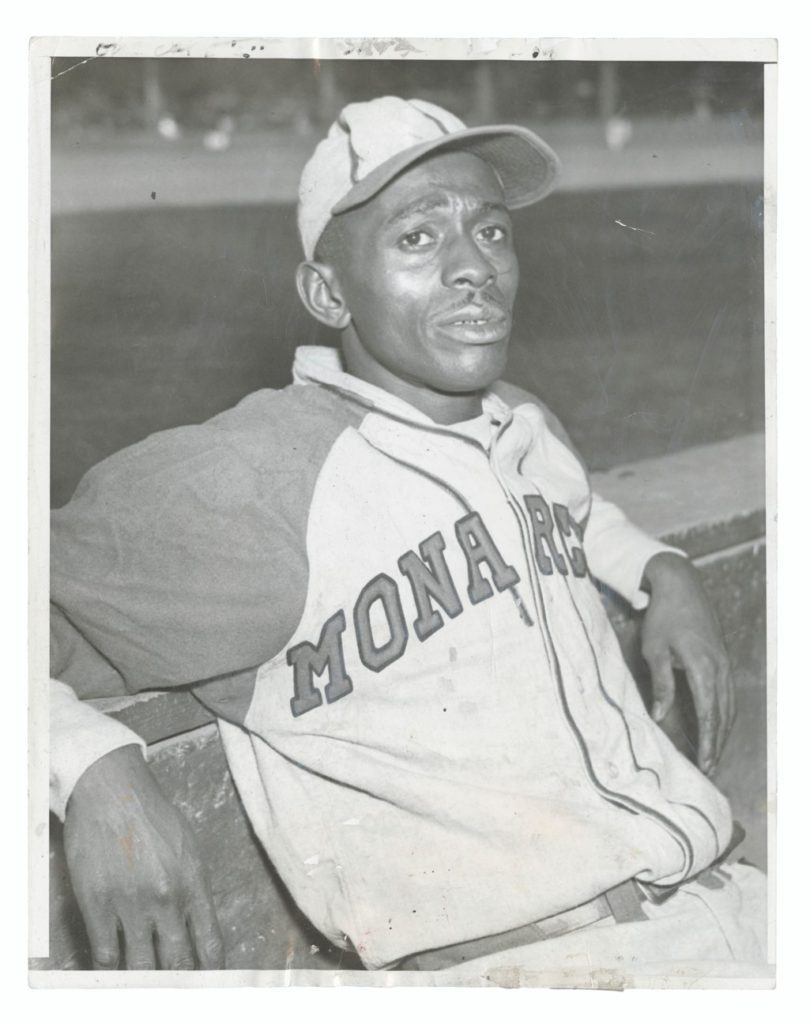
Leroy “Satchel” Paige. He threw his first professional pitch in 1926. He threw his last in 1966, forty years later. In between those years, he threw more pitches in more games and ballparks than any other pitcher in baseball history. He was, in fact, a living legend. He was also a great promoter, of himself. But beyond that, he was probably one of the most talented and skilled players ever to throw a ball from a pitcher’s mound.
He came from humble beginnings to baseball immortality. He was born Leroy Robert Paige on July 7, 1906, in Mobile, Alabama. He was delivered at home by a midwife, which was more than most black women could afford in those days. His mother, Lulu, was already worried about how she was going to feed and take care of her other four daughters and two sons who had come before Leroy. There would be five more to follow. Lulu was a washerwoman. For those who do not know what that is, it means she did laundry for richer people. His father, John, alternated between his job tending lilies in gardens uptown and sitting on the corner stoops where he liked to loiter, rarely caring or tending to the needs of his expanding brood.
With skin the color of a chestnut, the newborn’s prospects looked woeful. They were about to get much worse. Born in the heartland of the Confederacy, his birthplace, Mobile, had for 200 years welcomed outsiders. Irish Catholics, fleeing the famine, Jewish merchants, legions of Creoles, the offspring of French or Spanish fathers and their chattel mothers. They, in turn, challenged inbred thinking on everything from politics to race. The result of that in the Post-Civil War-Reconstruction period was blurred color lines that would be unthinkable in Birmingham, Montgomery, Selma, or the rest of Alabama.
Unfortunately for young Leroy, that way of thinking changed dramatically in the year of his birth. Blacks were suddenly not allowed to do many things they had been doing freely for years. Separate seating on streetcars. No longer allowed to go to restaurants, saloons, brothels, or hotels. They could not be buried in certain cemeteries. They were not allowed to marry whites or play ball on the same field with them. They were also not allowed to go to the same schools. Leroy was too young to understand any of this, but he nonetheless felt its impact.
The difference between him and white children was the way he was addressed, his clothing, or lack thereof. Shoes? He later recalled; they were someplace else. All of the Paige kids knew that by age 6 was that they had to help put food on the table, and in a good year, shoes on their feet.
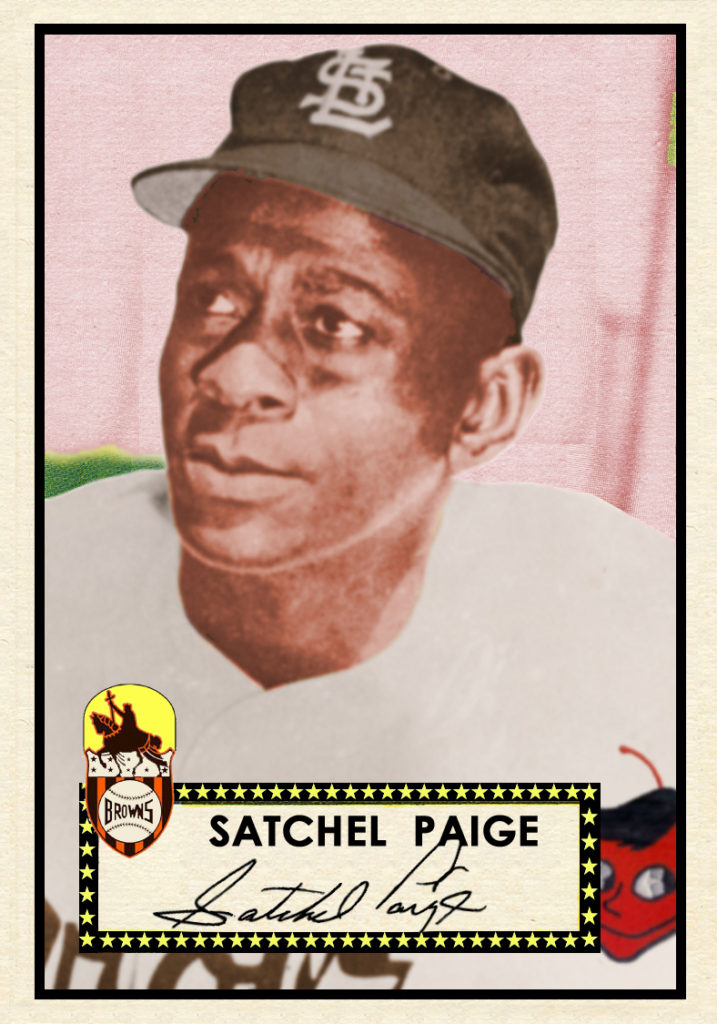
Leroy worked the alleyways like a pro, cashing in empty bottles he would find there. He delivered ice, and that brought in small change. But he was growing fast. As he grew, his parents expected more earning power. The most obvious place to look for work was the L&N rail station. He would polish the shoes of wealthy white travelers. He also would carry their bags to luxurious hotels like Mobiles, Battle House, for as little as a dime. Realizing he was not going to make much money doing that for as little as a dime a trip, he got some rope and jury-rigged a contraption that would allow him to carry two-three or sometimes four bags at a time.
The contraption amused the other baggage boys. One day one of them said, ” you look like a walking satchel tree.” The description fit him to a tee, and it stuck. Leroy Paige became no more, and Satchel took over. His parents also, somewhere along the way, changed the spelling of his last name from Page to Paige. Satchel would later say they added the “i” to sound more high-toned.
While he played baseball as a child, it was when he went to a reform school that he became a player. Two weeks before his 12th birthday, he was sentenced to the Alabama Reform School for Juvenile Negro Lawbreakers. Part of the reason was he missed school so often. The other was that he started taking suitcases and anything else that was easy to grab. Now the court was telling him he would not see freedom again for six years. It all seemed like a bad dream until they closed the doors behind him. Then he knew it was real.
The good news was that his new home gave him plenty of time for his favorite pastime, throwing a baseball. There was a coach, Edward Byrd, who taught him the fundamentals. And for probably the first time in his life, he paid attention. At almost 6 feet and 140 pounds, his wiry arms and stilt-like legs were almost perfect for propelling a baseball. He once joked that if he turned sideways, you would not be able to see him.
Byrd totally understood the talents this wiry kid had been given. His hands were large and made a baseball look like a golf ball. He had a snap in his wrist when he threw the ball that seemed like it was being catapulted. The coach was determined that it would not be wasted. Satchel himself knew how to exploit his storehouse of kinetic energy. His first move was to kick his leg so high it would black out the sky and befuddle the hitter. Then he would swing his arm far enough forward so it seemed like his hand was right in the batter’s face when he let go of the ball. Thus, was born the “Paige pose”. It was the look that would serve him well over his 40 years as a player.
Byrd also taught him that you could not just win with just your physical gifts. You had to outwit the hitter. Watch his knees. Find any weakness you can, then exploit it. Satchel, in those days, was as wild as most young pitchers are. But a baseball coming out of his hands looked like a cannonball. It was going that fast, and most hitters could not catch up to it. Satchel liked to say that he traded five years of freedom to learn how to pitch.
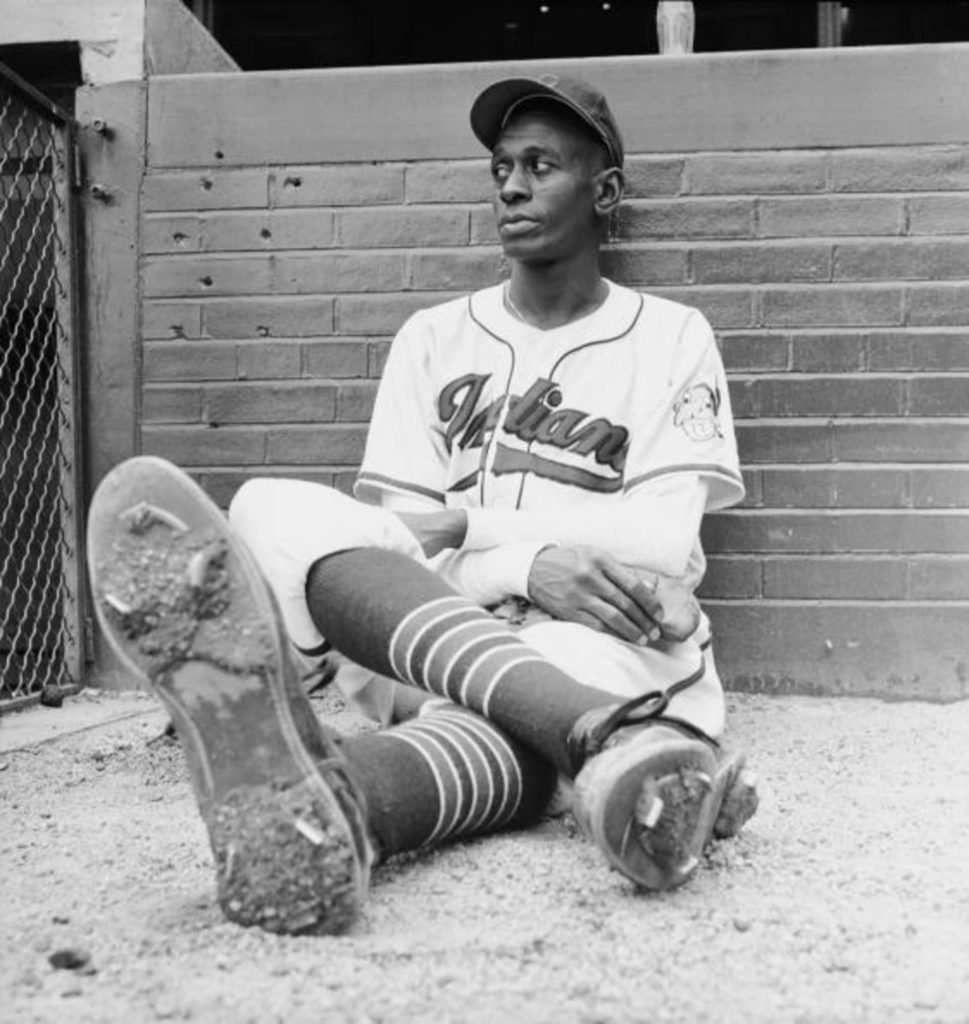
I would be the first to suggest that his Negro League records are pretty mild compared to the number of years he pitched. And I would also say, totally inaccurate. But they are what they are. He started his Negro League journey at Chattanooga. He would then pitch in Baltimore, Cleveland, Pittsburgh, and Kansas City. His true stats are impossible to verify. If you look at his Baseball Reference page, it shows 121 wins, 81 losses, and a 2.71 ERA. Those are the stats that were recorded at some point.
Satchel himself circumvented the usual channels and kept a notebook in which he wrote down his stats. If it is to be believed, and he was the best at self-promotion, he pitched in over 2500 games with 2000 wins, 250 shutouts, 50 no-hitters, a 21-game winning streak, and a 62-inning scoreless streak. Of course, none of that is official. But I believe the numbers are probably somewhere in between.
His first real Negro League action came in 1927 with the Birmingham Black Barons. If his stats were to be believed, he never won more than 13 games in any season. But Negro League teams played upwards of 175 games a year. Not only did they play scheduled games, but they played a lot of barnstorming games prior to and after the season. Then most stars would head for Latin America to play in the winter leagues there. Baseball was a year-round pursuit for them. And Satchel, for many years, was their biggest draw.
He would call the infield in, purposely load the bases, and then strike out the side. His off-speed pitches were learned long after his natural fastball. Sometimes he would start but only pitch four innings. Not long enough for the win, but long enough to lose. And he pitched against everybody: White pros, minor league teams, the winter leagues; he did it all. He also might have been the inspiration for the movie, “The Bingo Long Traveling All-Stars and Motor Kings.” Billy Dee Williams was Bingo Long, aka Satchel, James Earl Jones was Leon Carter, aka Josh Gibson. Former Giant and Angel outfielder Leon “Daddy Wags” Wagner also had a part in the film as one of the All-Stars, as did Richard Pryor.
Negro League teams also sometimes would play triple-headers. According to Paige, he won all three games a couple of times. He pitched for the Homestead Grays for one season. He pitched for the Pittsburgh Crawfords, the Baltimore Elite Giants, and some other teams, but he is mostly remembered for his time with the Kansas City Monarchs. When you see photos of his time in the Negro Leagues, they are usually with KC.
Other than the fact that he was a huge star and a top draw in the league, little is really known about the life of those players. Oh, guys like Buck O’Neil did what they could to educate fans as the years have passed, and many of their stories involved Satchel and guys like Gibson, Cool Papa Bell, and others. I myself am hoping to make a trip this summer to the Negro League Museum in Kansas City.
All through the thirties and into the early forties, Satchel plied his trade. Most Negro League players wished they could play in the Majors. But every time it was brought up, it was quickly dismissed. Baseball’s good old boy generation just would not have it. When word got out that Branch Rickey was scouting players to play in the majors, at first possibly, it was believed he wanted a black team in Brooklyn in the Negro Leagues. But when the truth finally was realized, almost everyone assumed the player to break the barrier would be an established star like Satchel or Josh Gibson.
But Satchel turned 40 the year Jackie signed, and Josh Gibson died in 1946 at the age of 35. Rickey needed someone younger and someone who would not become the sideshow a player like Satchel would.
It would take a while, but someone would finally give Satchel his chance in 1948. The self-proclaimed greatest pitcher alive would finally get to face his white rivals.
Part Two to follow later this week.
More from Dodger Talk

Enjoy it While You Can!
It was both surprising and not surprising to me that the Dodgers signed Kyle Tucker. That they can make it work is a tribute to the true genius of Mark Walter and Andrew Friedman. Enjoy it while you can, because it will end soon. In the upcoming CBA and talks among owners, MLB…

Dodgers Food Trailer
I did this interview a couple of weeks ago with Chef Mike, who runs the Dodgers Food Trailer for the Great Lakes Loons. They are there for every home and road regular season and playoff game. They prepare three meals a day for approximately 50 people (players and coaches). Since games end late most evenings, they do not prepare breakfast. Many of their hotels have a complimentary breakfast anyway. However,…

Meet LAD 2026 Draft Picks 1-12
3 picks were High School players (2 SS and 1 OF). There was a college OF, college catcher, college SS, and 10 college pitchers. Of all the talk for a need for a catcher, the only catcher the Dodgers selected was Luke Bard, son of LAD bullpen coach Josh Bard. Bard was a 4th year senior from Houston Christian University. He is not a prospect, so the Dodgers are still…

Interview with Paul Beachy – Team Bus Driver For The Great Lakes Loons (LA Dodgers Minor League Team)
It’s been a few days since I did this interview. We have evidently been working my son-in-law (the video guy) like a rented mule at US Water Systems. However, I am taking him to London with me in a few days, so maybe Watford will buy him a pint as a tip, but he’s a dang Red Sox fan, so there is that! I thought that it would be interesting…
Discussion (54)
Disagree, not disagreeable
Just curious, I googled up some MLB player age stats for 2022….
We have no clear idea how the Dodgers shake out this year–yet.
But in 2022, Baseball Reference says average age of Dodger batters was 29.6–third oldest, behind the Mets and Yankees.
Even with Vargas and (maybe) Outman in the lineup, the Dodgers may well have the oldest batters this season.
FWIW, the age of Dodger pitchers in 2022 was 28.8, pretty much middle of the pack.
Good point about the contracts.
And the next long-term deal will go to….
Urias? Will Smith?
Ohtani???
Barnes 33
Freeman 33
Taylor 32
Muncy 32
Rojas 34
Peralta 35
Thompson 32
Heyward 33
Martinez 35
That’s a potential Dodgers starting lineup.
On the plus side, Mookie is still just 30!
The likely lineup, of course, would also include Vargas (23) and Smith (27). And maybe Outman (25).
But why isn’t this team younger?
Re leftfield….
Gotta be Peralta plus either Taylor or Trayce. It’s too bad that Busch didn’t get more reps in LF–but the fact that they signed Peralta probably sealed his fate. They also signed Peralta after all but promising Heyward (another lefty bat) a spot on the roster–and maybe there was a promise!
These decisions put the squeeze on both Outman and Busch. The emphasis on grizzled veterans (let’s add JDM too) could backfire. How are Outman and Busch expected to grow if they don’t face ML pitchers? And remember: At 25, Outman and Busch aren’t exactly phenoms.
The Yankees have two prospects, age 21 and 22, battling for the SS job. The Dodgers’ youngest position players is Vargas at 23. There was talk about the Dodgers wanting to “get younger” but even if Outman breaks thru the average age of position players must be older now. The club said goodbye to Justin Turner, but hello to JDM, Peralta, Rojas and Heyward.
The only safe bet for success in the OF is Mookie . I think Peralta is proven but fading–and there are reasons to doubt the others (though certainly Outman deserves his shot). If nobody breaks thru, the pressure to deal for Reynolds will grow.
Weaksauce lineup tonight. Does anyone deserve to be out there with Mookie
USA vs Japan in the WBC final tomorrow night. Urias and Barnes headed back to the Dodgers.
Tonight’s Lineup vs Rockies (away) 9:40ET
1PeraltaLF
2Taylor,SS
3HeywardCF
4MartinezDH
5Vargas, M2B
6DuggarRF
7Williams, L3B
8Ward1B
9FreitasC
Pitino just signed a six-year deal. Don’t these guys ever think of retiring?
Yes, Peralta, at $6.5 million, is the left fielder. He’ll get some time off now and then of course. Taylor his sub? Yep. That would appear to be the plan.
2000 wins. That would be a record.
Sure hope Thompson gets his average over .100 this week. Would like to see JD hitting his weight by Friday. Mookie looks like he’s starting to hit. Smith will be ready. I think Muncy will be Muncy again. Too much swing and miss but an .800+ OPS.
I still see only one 150 inning pitcher in this rotation. Would like to be wrong about that.
Peralta is going to be out there. He played well in the WBC and will be back in camp today. Tonight’s game time moved back to 6:40 PST. Busch has already been reassigned to the minor league camp. They want him out there playing everyday. Outman is now playing himself onto the OKC roster.
Time to throw Busch into the LF mix? Nobody else is claiming the job.
Nicely told.
I remember watching Satchel on TV in the 1960s. I think he was playing for Charley Finley in Kansas City, before the move Oakland. Yeah, an absolute legend.