
Rules Changes
I started working on this piece with the intention of showing that the 2023 rule changes are significant to the game, and this season will show major changes that baseball has seldom seen. That morphed into a look at baseball history and the rule changes that have occurred over…

I started working on this piece with the intention of showing that the 2023 rule changes are significant to the game, and this season will show major changes that baseball has seldom seen. That morphed into a look at baseball history and the rule changes that have occurred over the years. Maybe I went too far, as dipping back into the origins of the game and rules at the outset is a little too much, but I find it interesting, nonetheless. So, bear with me. Eventually, I’ll get to the point of this article, which is to discuss the impact of the 2023 rule changes. Meanwhile, a look back at history:
More than once, we have heard an old-timer opine that baseball is the great sport that it is because it is a game that never changes and that it has remained the same for years. Nothing can be further from the truth. In the 170 years of existence of its documentation, “Base ball” as it was originally known, has changed its rules, equipment, fields, officiating, positioning, measurements, and more probably over 100 times. Some rule changes are more significant than others. In fact, the grand old game as we know it isn’t even close to what it started out as.
Imagine a game played without mitts. Even catchers used their bare hands. Then there were the pitch requests, as batters would ask for a low or high pitch, and pitchers were required to comply. This rule was in effect until 1887, and the pitches were thrown underhanded. Outs would be recorded if the ball was caught after one bounce. Umpires sat on lounge chairs a distance from the plate and were selected from the crowd. Pitchers threw underhanded until 1883. Up until 1893, bats were permitted to have a flat side, much like the cricket equipment. Catchers didn’t crouch behind the plate until 1900, and if you watch footage of the game into the 1940s, the catcher’s crouch was relatively minor compared to today’s game. It wasn’t until 1888 that professional baseball settled on four balls as a walk and three strikes as a strikeout. The distance from the pitch release point was as short as 50 feet, and the current 60 feet, six-inch distance was not uniformly adopted until 1887. In fact, a mound wasn’t instituted until years later. Then there was the scoring of the game.
In the 1800s, walks were counted as hits for a short period of time which accounted for dozens of hitters “batting” over .400. Game-winning homers would be scored as singles because the batter would only advance as far as needed for the winning run to score. The ground rule double was ruled a home run until 1930, (How many of the 714 that Babe Ruth hit were actually balls that bounced over the fence?) The hit-by-pitch didn’t award a batter first base. The stolen base wasn’t recorded as a statistic for many years.
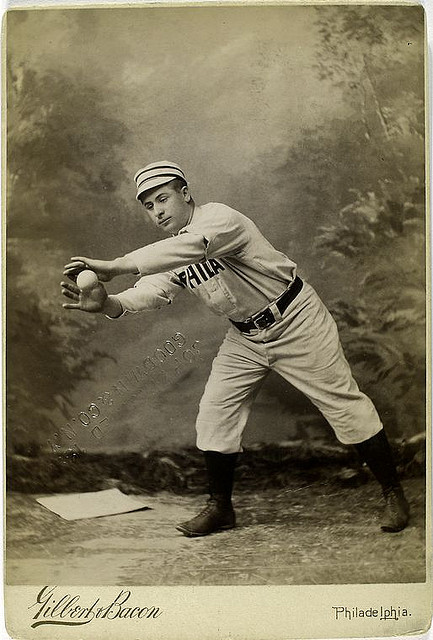
The 21st-century game isn’t close to being what baseball was when it started. Played with bare hands from inconsistent distances, differing strike zones, and base placements. It really didn’t become anything close to what we recognize today until after 1900. Below is a chronological listing of significant changes to the game.
1857-Baseball games used to end when a team scored 21 runs; this was changed to nine-inning contests with the team that was ahead after nine innings being declared the winner
1857- Batters used to be able to reach base on foul balls hit
1858 -Called strikes are introduced
1858- A batter is out on a batted ball, fair or foul, if caught on the fly or after one bounce
1862- “Pitcher’s box” introduced’ 12 feet by 3 feet
1863- Bat size is regulated
1863- Called balls and bases on balls introduced
1863- Pitcher’s box is now 12 feet by 4 feet
1863- The pitcher is no longer allowed to take a step during his delivery and he had to pitch with both feet on the ground at the same time
1863- The home base and pitcher’s box must be marked
1862- Each base runner must touch each base in making the circuit
1864- Out on a fair bound is removed, and the “fly catch” of fair balls is adopted
1866- Pitcher’s box narrowed to six feet wide
1867- Pitcher is now permitted to move around inside their box
1868- Bat length limited to 42 inches
1868- Pitcher allowed to lift feet when delivering the ball
1868- Pitcher’s box is now made into a 6 foot square
1870- The batter-runner may overrun first base
1871- The batter is officially given the privilege of calling for a low or high pitch (in practice since 1864)
1872- Ball size and weight are made smaller, to dimensions currently in use today
1873- Batter’s box introduced
1873- Any player, umpire, or scorer who gambles on a game he takes part in shall be expelled from his club and the National Association
The National Baseball League is Established
1877- Canvas bases 15 inches square were introduced
1877- Home plate was placed in the angle formed by the intersection of the first and third base lines
1877- Player reserve clause was written into the contracts for the first time
1877- The base runner was out if hit by a batted ball
1877- The hitter was exempted from a time at bat if he walked
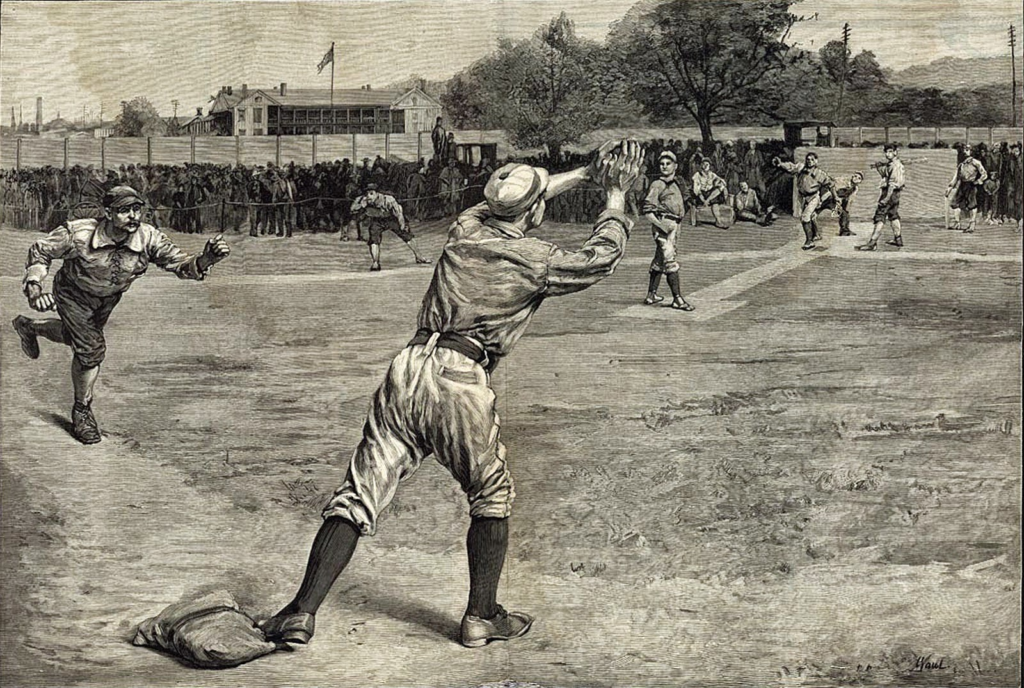
1878- The number of “called balls” became 9, and all balls were either strikes, balls, or fouls
1879- The player reserve clause was, for the first time, put into a contract
1879- The pitcher had to face a batsman before pitching to him
1880- Base on balls was reduced to 7 “called balls.”
1880- Batter no longer got a fourth strike
1880- The front of the pitcher’s box moved to 50 feet from the center of home plate
1880- The catcher had to catch the pitch on the fly in order to register an out on a third strike
1882- Pitchers are now allowed to throw sidearm
1882- The “foul bound catch” was abolished, and the pitcher could deliver a ball from above his waist
1883- Championships were to be decided on a percentage basis
1883- Six “called balls” became a base on balls
1884- All restrictions on the delivery of a pitcher were removed
1885- A granulated substance may be applied up to 18″ from the bottom of the bat
1885- Chest protectors worn by catchers and umpires came into use
1885- Home base could be made of marble or whitened rubber
1885- One portion of the bat could be flat (one side)
1885- The pitcher’s box was changed to 4 feet by 7 feet
1886- Stolen bases became an official statistic
1887- The pitcher’s box was reduced to 4 feet by 5 1/2 feet
1887- Calling for high and low pitches was abolished
1887-Choice of innings given to home team captain
1887-Five balls became a base on balls
1887-Four “called strikes” were adopted for this season only
1887-Bases on balls were recorded as hits for this season only
1887-The batter was awarded first base when hit by a pitch
1887-Home plate was to be made of rubber only – dropping the marble type and was to be 12 inches square
1887-Pitcher must keep his back foot on the rear line of the pitcher’s box (55.5 feet from the middle of home plate)
1887-Strike zone established between shoulders and knees
1887-Coaches were recognized by the rules for the first time ever
1888- A batsman was credited with a base hit when a runner was hit by his batted ball
1888- Batter awarded a hit when a runner is out for being hit by batted ball
1888- The base on balls exemption from a time at bat was restored
1889- A sacrifice hit was statistically recognized
1889- Four balls became a base on balls
1889- One predesignated substitute may be used at the end of any complete inning
1890-Two substitutes may be used and may enter at any time
1891- Substitutions were permitted at any point in the game
1891- Large padded mitts were allowed for catchers
1893- The pitching box was eliminated and a rubber slab 12 inches by 4 inches was substituted
1893- The pitcher was required to place his rear foot against the slab
1893- The slab was moved from 50 feet to 60 feet 6 inches from rear of home plate
1893- The rule allowing a flat side to a bat was rescinded
1893- The requirement that the bat be round and wholly of hard wood was substituted
1894- Foul bunts were classified as strikes
1894- Sacrifice hits limited to bunts and not counted as at bats
1894- The rule exempting a batter from a time at bat on a sacrifice was instituted.
1895- A held foul tip was classified as a strike
1895- Bats were permitted to be 2 3/4 inches in diameter and not to exceed 42 inches
1895- Infield-fly rule was adopted
1895- The pitching slab was enlarged to 24 inches by 6 inches
1895- The size of gloves was limited except for catchers and first basemen
1899- Batter awarded first on catcher’s interference
1900- Plate changed from square to five-sided figure
Major League Baseball (MLB) was established with the National League and American League agreeing to the same set of rules and playing a championship called the World Series.
1901- All foul balls not caught on fly counted as strikes until the batter has two strikes
1901- Catchers were compelled to remain continuously under the bat
1903- The height of the mound was limited to 15 inches higher than the level of the baselines
1903- Foul strike rule was adopted by the American League
1908- Pitchers were prohibited from soiling a new ball
1908- The sacrifice fly rule was adopted
1909- Relief pitcher must face at least one batter
1910- Stolen base no longer credited when one of the runners is thrown out in a double steal attempt
1917- Earned-run statistics and definitions were added to the rules
1920- All freak deliveries, including the spitball, were outlawed
1920- Balk to be called if pitcher releases pitch while the catcher is out of his box
1920- The failure of a preceding runner to touch a base would not affect the status of a succeeding runner
1920- The batter was given credit for a home run in the last of the ninth inning if the winning run was on base when the ball was hit out of the field
1920- The number of runs batted in were to be included in the official score
1920- Frivolous ninth-inning uncontested steals in one-sided games were to be scored as defensive indifference
1925- The minimum home-run distance was set at 250 feet
1926- The pitcher was allowed to use a rosin bag
1926- Sacrifice hit awarded when any runner advances on a fly out
1931- The ground-rule double was instituted, meaning that balls that bounce over the fence entitle the batter to two bases
1931- Balls hit over the fence are to be ruled fair or foul based on where they are when they leave the field
1931- Sacrifice flies eliminated
1931- Regulations referring to a batter contacting his own ball were clarified as was the area of bases awarded a batter when a defensive player threw his glove at a batted or thrown ball or in the case of spectator interference
1950- The home team must bat second
1950- The mound must be 15 inches high
1950-Rules for determining winning and losing pitcher established
1950- The size of first baseman’s glove/mitt regulated
1950-Strike zone redefined to from armpits to top of knees
1953- Players were to remove their gloves from the field (in 1954) when batting and no equipment was to show on the field at any time
1954- Defensive interference was changed from an offense solely by a catcher to one by a fielder as well
1954- No fielder could take a position in line with a batter’s vision with the deliberate intent to in any way distract the batter
1954- The sacrifice fly rule was brought back, this time with a man scoring after the catch only
1959- Regulations were set up for minimum boundaries for all new parks, 325-400-325 feet
1963- Strike zone enlarged to from top of the shoulders to the knees. This would remain in place for only six years due to the “pitchers’ era and numerous records set by hurlers in the 1960s
1965- The size of the catcher’s mitt was regulated
1965-The anti-spitball rule was rewritten and tightened up because of the wave of wet pitches that were thrown the prior season, (Gaylord Perry)
1969- The pitcher’s mound was dropped five inches
1969-The strike zone was shrunken to the area from the armpits to the top of the batter’s knees
1969-The save rule was added to the official rules for the first time
1969-Divisional play begins in each league with a League Championship Series instituted to determine World Series qualifiers.
1971- All major-league players were ordered to wear protective helmets
1973- The rule on glove size and color was minutely outlined for standardization
1973- The American League began using designated hitters for pitchers on an experimental basis
1974- The save rule was rewritten
1974- Minimum standards for individual championships were outlined
1975- The ball was permitted to be covered with cowhide because of the shortage of horses
1975-Suspension for three days became mandatory if the batter were to hit a fair ball with a filled, doctored or flat-surfaced bat
1975- Current save rule was adopted
1975-Reserve clause is determined to be unconstitutional and ball players that have played out their contracts are granted free agency and are allowed to negotiate on the open market
1978- The pitcher can’t throw at the batter
1981 Baseball strike shortens season, forcing MLB to create season “half” winners and expand divisional postseason series.
1988- Catchers must wear protective helmets while on defense
1995-Post season play expanded to include “wild-card” qualifiers, League Division Series (LDS) added to post-season play
1997- MLB agrees to the initiation of Inter-League play for the first time (with the exception of the World Series Championship each season)
2008- MLB adds limited (home run calls, fair or foul) instant replay to be in effect for all games starting on Friday, August 29th
2014- Runners are required to make a direct route to the plate when scoring and not initiate contact with the catcher in order to collide and dislodge the baseball from the catcher. A catcher is required to allow the pathway to the runner arriving at the plate. (Known informally as the Posey rule)
2016- Slides on potential double plays will require that base runners must make a bona fide attempt to reach and remain on base. (Known informally as the Utley rule)
2020- Temporary / COVID-19 Pandemic Rules instituted for Shortened Season. They are: Both leagues utilize the designated hitter rules. Extra-inning runner on second base automatically. Seven-inning doubleheaders. The postseason expands to 16 teams.
2022-Pitchers are required to face a minimum of three batters in an appearance or pitch to the end of a half-inning (with exceptions for injury)
2022- Draft lottery implemented to discourage tanking
2022-The National League officially adopts the designated hitter
2022-The postseason expands to 12 teams
2023- Defensive shifts are banned
2023- Pitch clocks will be instituted
2023- Base sizes increased by 3 inches from 15 inches square to 18 inches square.
2023- Limitations on the number of pick-off throws
In the 2023 season, we will see those four significant rule changes that probably will be the most impactful ones to the game since the designated hitter was introduced in 1973.
Each rule change has its nuances, and we are already speculating how teams will adjust.
The pitch clock
It’s a shame Pedro Baez is out of the game. I’d love to see him adjust to the clock. This rule change may be the least impactful because the rhythm of the game will simply need to speed up, and it has done so at minor league levels already without much of an impact. As those minor leaguers move up into the majors, this won’t be an issue for them. For those veterans long in the tooth, it’ll be uncomfortable at first, but then, they will make the change. Spring training will be the time that they struggle the most at first, but by opening day, I predict this to be a non-issue. How strictly umpires enforce this rule will be interesting. Will there be an audio sound that indicates to them that the time has lapsed? It is a lot to monitor, just balls and strikes alone. Now watching a clock, too, might be a little much.
Defensive Shift limitations
Depth. All four infielders must have both feet within the outer boundary of the field when the pitcher is on the rubber.
Has MLB determined the size of dirt infields to uniform measurements? Yes, they have. It has always been in the rule book but never has been enforced. All infields in baseball are not the same size. That is until 2023. There has always been a rule in place that states that the infield dirt will not extend more than 95 feet from the center of the pitcher’s mound. An infield in Arizona might be a few feet deeper than the infield in Kansas City because the rule has been ignored. Now, MLB is going to measure, and they will permit the dirt area to be between 94 and 96 feet to account for the difficulties in getting this measurement to be exact. Jayson Stark addressed it in an article from September 15, 2022, in The Athletic, calling it the “groundskeeping error.”
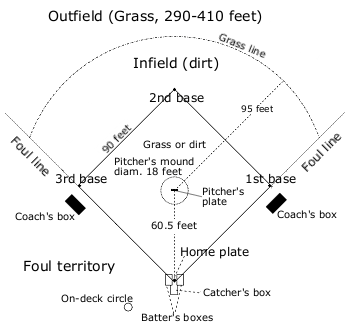
Lateral Positioning. Two infielders are required to be positioned on each side of second base with the pitch released.
Can an infielder dart in the direction of where he thinks the ball will be hit once the pitch is in the air? It appears to be so. This might make the athleticism of infielders more prevalent and necessary. Statues out there will simply watch routine grounders make their way into the outfield grass. We are talking about three or four steps, but they could make a difference. Then again, moving after the pitch is in flight may be counterproductive, especially if the momentum of a moving infielder has to reverse course on a batted ball, not hit precisely to where the infielder is headed. Spring training will tell us whether adjustments will be made in this area.
No switching of sides. Infielders may not switch sides (e.g. placing the best defender on the side of the infield the batter is most likely to hit the ball) unless there is a substitution.
Sorry, Manny Machado, no catching fly balls in right field for you. This will save time as well, as many times in the days of the shift, players moved depending on the pitch count. Those days are done.
Though the new rules regarding shift discuss infield restrictions, there are none so far that address outfield positioning. It might be in some teams’ minds to move a left fielder to right field for that left-handed pull hitter that cannot place the ball into left field if his life depended on it. Most likely, this will be in places with short left-field porches like Houston or Boston. It is highly doubtful that it could be done in ballparks with spacious outfields like Dodger Stadium, Coors Field, or Kansas City’s Kauffman Field.
Base Size increase and the Pick-off throw limitations
These two rule changes rule change might be the most impactful, especially when it comes to offensive advantages. Combine the larger bases with the limitations on the number of pick-off throws that can be made, and we have a recipe for dancing around the bases. Countless times we saw replays showing outs recorded by fractions of inches. Now there is a three-inch advantage given to baserunners.
We just may see a resurgence of the running game, something that brings excitement and action to the game. I don’t believe that another 100 stolen base season is in the making for some speedster out there, but if some team lacking in the power department decides to adjust their offensive philosophy, it could be very interesting to see how these rule changes affect how they play the game as they attempt to manufacture runs in more creative ways.
Something to think about will be how pitchers will keep runners from stealing on them once they have reached their pickoff limit. Base stealers will have carte blanche when it comes to massive leads at that point. A pitcher like Kenley Jansen, who never has been able to effectively hold on runners, will have to make major changes to his delivery, or he will perish in save situations. Jansen isn’t the only one out there. There are others that will have to make adjustments.
We will see growth in batting averages, runs scored, stolen bases, ERA’s, and most likely pitching changes too, as the rise in the offense will necessitate relievers playing a larger role in the game.
How this will impact the Dodgers
Opinions vary, but statistics piled up since 2020 show that the Astros, Braves were Dodgers were the three teams that lost the most hits due to shifting since tracking began. They also were the last three champions of the sport. During that three-season span, the Dodgers have batted .252. It is estimated that without the shift, they would have hit .269. While the Dodgers’ groundball hit rate is at a league-low 39.4%, when they do hit it on the ground, they lead the league in groundball out percentage.
We should see an increase in Max Muncy’s batting average who was poor at placing the ball the opposite way. We should also see Freddie Freeman excel. A guy that can place the ball with frequency. He led the National League in hits against the shift. Now with no shift in place, he should be able to pile up a few more hits. I know that sounds contradictory (it is), but what it comes down to is the guy that can’t place it will get more hits because that third infielder won’t be on his pull side. The hitter skilled at going the opposite way will see more holes due to the traditional defensive infield setup, so he will tally more hits as well.
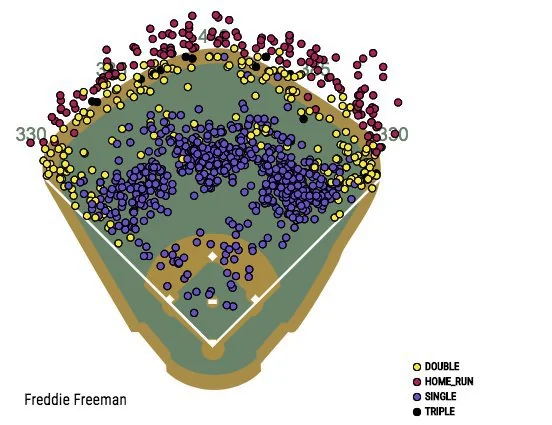
The Dodgers on the defensive side shifted their infielders at a league-high 53% of the time. Those pitchers that induced the most outs because of the shift were Tony Gonsolion and Clayton Kershaw. It is expected that those two will most negatively be impacted by the lack of the shift. Kershaw as a savvy vet, should be able to adjust. With Gonsolin, the jury is out.
Since 2020 the Dodger’s pitching staff has had an MLB-leading 2.95 ERA. Compare that to the 2nd best ERA during that span, Tampa Bay, at 3.54. That is impressive, to say the least. With that said, it is probably safe to say that the Dodgers’ ERA will rise with the nixing of the shift. An infield defense with Lux at shortstop will make things worse, and if Muncy, who is rather limited in mobility at 2B, we are looking at potentially disastrous results defensively. All the more reason to be encouraged that Miguel Rojas could be the starting shortstop. Again, a lot will be determined in Spring Training.
More from Dodger Talk

Enjoy it While You Can!
It was both surprising and not surprising to me that the Dodgers signed Kyle Tucker. That they can make it work is a tribute to the true genius of Mark Walter and Andrew Friedman. Enjoy it while you can, because it will end soon. In the upcoming CBA and talks among owners, MLB…

Dodgers Food Trailer
I did this interview a couple of weeks ago with Chef Mike, who runs the Dodgers Food Trailer for the Great Lakes Loons. They are there for every home and road regular season and playoff game. They prepare three meals a day for approximately 50 people (players and coaches). Since games end late most evenings, they do not prepare breakfast. Many of their hotels have a complimentary breakfast anyway. However,…

Meet LAD 2026 Draft Picks 1-12
3 picks were High School players (2 SS and 1 OF). There was a college OF, college catcher, college SS, and 10 college pitchers. Of all the talk for a need for a catcher, the only catcher the Dodgers selected was Luke Bard, son of LAD bullpen coach Josh Bard. Bard was a 4th year senior from Houston Christian University. He is not a prospect, so the Dodgers are still…

Interview with Paul Beachy – Team Bus Driver For The Great Lakes Loons (LA Dodgers Minor League Team)
It’s been a few days since I did this interview. We have evidently been working my son-in-law (the video guy) like a rented mule at US Water Systems. However, I am taking him to London with me in a few days, so maybe Watford will buy him a pint as a tip, but he’s a dang Red Sox fan, so there is that! I thought that it would be interesting…
Discussion (64)
Disagree, not disagreeable
1970 Hemi Cuda.
Open on 1.bp.blogspot.comhttp://1.bp.blogspot.com/-7TGJAaGseGA/TiLlM55GK5I/AAAAAAAAAqw/jAEHn7_2GNE/s1600/Plymouth+Hemi+Cuda+1970-Front+Right+View.jpgI was reading an article today these four pitchers could be in the hall of Fame. And all four could have been with the Dodgers this year but they didn’t have the money. Just a funny article how they were all dodgers and one should have been this year. They said Clayton Kershaw, Max Sherzier, Zack Grienke, and Justin Verlander , how would that have been a starting four with Buehler or Urias. But, the Dodgers didn’t want to spend the money and were worried about Max’s arm. Just an article because we were talking about the players that could be in the Hall of Fame. Three of them were Dodgers pretty cool.
More Ohtani talk and Dodger speculation.
I can’t really speculate on long term payroll flexibility, but with perhaps Kershaw coming off the books next year and not signing Urias (assumptions), it doesn’t seem unreasonable to sign Ohtani to a 40-50 AAV contract.
Former Dodger scout and executive Ralph Avila passed away today. He was 92. Among the players he signed were the Martinez brothers, Ramon and Pedro, Raul Mondesi, Mariano Duncan and Candy Maldonado. RIP Ralph.
Signing one guy was a sex-fiend move.
Great article. I might just print this out for future reference.
Saw Law’s top 100 also. Good stuff.
For those who keep saying “Just because prospects are highly ranked doesn’t mean they will price in MLB”. I don’t get it. While factually true, it’s the nature of the game. Some prospects will bust. Some will greatly outperform where they were originally protected. The Dodgers have been very good at predicting who will be productive while being overlooked by other teams. Better than just about any franchise. You can’t just wait for players to prove themselves in the majors and THEN go after them, it would be impossible to maintain a payroll for more than a couple years. Well, you can. The Padres are doing just that. And they have a 2-3 year window and then they will have to gut the team and rebuild.
This reminds me of one of my greatest mistakes. In the late 90s there was a classic car lot not too far from my city. I’d stop in now and then. I came very close to buying an original 1965 Shelby Cobra for $50,000. It needed a lot of work. Probably another $30k-$40k. figured I would buy it and over a few years really fix the thing up.
Well today that car (still needing a lot of work) sells for about $500,000. Well over $1m in perfect condition. That is obviously well out of my price range now. But I sure wish I had gone with my gut and bought cheap.
Dodgers planned this. This is why you build a deep minor league system. If half of our top prospects produce near their anticipated ceiling, we’re going to be a monster team for years. Even if the other half burn out.
Rosario and Bieber now it does make alot of since at trade deadline deal because Dodgers will need a shortstop and a ace pitcher to go with Bueljer and gosolin and May in 2024 season when Kersh retires and Thor most likely leaves. So in hiess we were atch and hope Cleveland starts off bad and then wants some good minor league guys to get those two guys. Shall be interesting a new Bieber in LA and not the singer
Bluto and dodgerpatch
I don’t know why you called me out, but if you care, I’ve got a response to it. It’s the 11th post from the top.
ERA’s are going to go up. So will team batting averages and runs scored. Toronto changes the distance and height of their walls at Rogers Center. Right center is now only 345 feet away.
In 2022, the Astros won the World Series. Here is a list of their starting pitchers:
In 2021, the Braves won the World Series. Here is a list of their starting pitchers:
The 2023 Dodgers:
Other than injuries, what are the similarities and difference?
before we decide who can make the team and where they play!
Can’t we at least wait until the end of spring training
I like Vargas in LF Outman CF. That way Muncy can play 3B and Lux stays at 2B and Rojas stays at shortstop until the deadline and they go man we need a good hitting shortstop see where Adames is at see where Anderson is at see will Rosario is at if those teams are out of playoffs picture then you grab one if those guys an dthen sign them Rosario will be a free agent. Then you have Rojas and Taylor as utility players and Thompson the fourth outfielder. Do I wishbthey did something now yes then at deadline. But Cleveland and Milwaukee and Chicago want to see where they are at before they move players.
That is an amazing post Evan – I will be taking many reads to digest it all.
This is the longest January I can remember. I haven’t been this excited for spring training in a long time.
The downer of having to get our tax rate reset is balanced by the excitement and anticipation of seeing which of these kids make the most out of their opportunity this spring.
Now maybe we can all understand why the Dodgers are not making dope-fiend trades!
Keith Law (The Athletic) released his Top 100 Prospects today, and Diego Cartaya is at #6. In part, he said this about Diego: “Cartaya hammers fastballs and offspeed, posting high exit velocities and often out-muscling pitchers with his pure strength, while already showing a good feel for the strike zone even before he turned 21 in September. He’s already better on defense than he was a year ago, but he can catch the ball too close to his body, limiting him probably to fringe-average receiving at his peak, and has had some trouble throwing out runners despite plus arm strength. None of that will matter if he continues to hit for power and get on base like he has so far, and there’s every reason in tools and performance to date to say that he will.”
Miguel Vargas was next at #23. Law said this (in Part): “he’s topped 110 mph off the bat in the minors and hits a ton of line drives, with a swing that might make him more of a 40 doubles/20 homers guy than a 30 homer guy, although either way he’s likely to post OBPs in the upper .300s. I think he’ll be the former, a high-OBP hitter who smashes a ton of doubles, maybe getting to 50 or so in his peak years, with solid-average defense at second or third, but maybe has years where he hits “only” 15-18 homers and is quietly excellent instead.”
Bobby Miller weighed in at #28. Law wrote this: “For pure stuff, Miller has few peers, if any, among minor-league starter prospects. He can sit 96-100 mph and has touched 102 in shorter outings, working with a four-pitch mix where everything is above-average.” He ended with this: “If he can hold it better when he works from the stretch, he’ll be a top-10 pitcher in baseball.”
Gavin Stone was ranked at #39, and Law says this: “His command and control are the only things keeping him from a major-league rotation right now, as they’re no better than grade 45, but he’s also not that far away, and he repeats his delivery well enough that I expect him to get to average or better soon and end up at least a No. 3 starter.”
Dalton Rushing was the 5th Dodger Prospect, ranked at #62. Law wrote this about him: “It looks like he can really hit, with pro scouts impressed by what they’ve seen from him so far. If he stays behind the plate, maybe the poor Dodgers finally caught a break with a prospect.”
Andy Pages is ranked at #67. Law wrote: “Pages has plus-plus power and a cannon of an arm, and has generally shown a solid approach at the plate, both in ball-strike recognition and swing decisions. There’s significant upside here if he tightens up that approach, though, and can be more of a .260-.270 hitter with 30 homers and similar walk rates.”
The 7th TOP 100 Prospect is Mike Busch, and Law wrote this (in part): “Even with higher whiff rates, he still makes very hard contact and has 30-homer power, although he may end up more in the 20-25 homer range depending on how well he adjusts to major-league stuff. He hits lefties reasonably well, and has become a good enough defender that the Dodgers didn’t even play him at first in Triple A, which gives him a high floor as a soft regular at second with a chance to be an average to above-average one depending on his bat.”
Law ranks James Outman as #89 and said this: “There’s too much swing and miss in the zone here to say he’ll be more than an average hitter, but with his other tools, that makes him a potential star, especially if he can do more against lefties than just hit for power. He’s older than any hitter on this list, but doesn’t have as much baseball experience as the typical 25-year-old. Don’t be surprised if he ends up the Dodgers’ primary center fielder this year.”
I tend to rely on Keith Law’s rankings over most others, although BA is also close, IMHO. Still, having 8 of the Top 89 Prospects speaks volumes about the Dodgers Farm System.
The one rule that’s always appeared odd to me is when a 3rd strike occurs and the catcher drops or allows a passed pitch allowing the struck out batter to try reaching 1st base. I still chuckle at that one. It should be called the preschool rule.
Great stuff Evan. Most of what I have read about the Babe is that he actually lost a homer or two. I cannot remember the circumstances though. I do know he had at least one inside the park shot. Hard to believe he chugged around the bases like that. I think he hit it at the Polo Grounds.
Wow. That is “The Book on Rule Changes.”
Tomorrow I will publish the entire transcript of “War and Peace.”
Well, Andrew Friedman has spoken. From MLBTR:
The Dodgers’ multi-positional players give the club some flexibility, but president of baseball operations Andrew Friedman said in an interview today on MLB Network Radio on SiriusXM that he currently views the regular lineup with Max Muncy at third base, Gavin Lux at shortstop, Miguel Vargas at second base and Chris Taylor in the outfield. Miguel Rojas, acquired via trade from the Marlins earlier this month, is being thought of as more of a utility option, offering sound defense in reserve. Vargas made his MLB debut last season and didn’t actually see any action at second base over his first 18 big league games, plus he played far more third base than second base in the minors. Still, the Dodgers clearly think highly of the top prospect’s potential, and Vargas’ .304/.404/.511 slash line in 520 plate appearances at Triple-A indicate that he is ready for a longer look in the Show.
It’s possible they talked to him when he was smoking crack! 😉