
Oisk
I thought it would be nice to profile one of the 13 members of the Brooklyn Dodgers still living. Carl Erskine. I was actually a little surprised that there were 13 who were still alive. I mean we all know Sandy and Carl were, but the others, well it was just nice to see that many are still with us. Besides Sandy and Carl, Bob Aspromonte, Eddie Basinski, Tim Thompson,

I thought it would be nice to profile one of the 13 members of the Brooklyn Dodgers still living. Carl Erskine. I was actually a little surprised that there were 13 who were still alive. I mean we all know Sandy and Carl were, but the others, well it was just nice to see that many are still with us. Besides Sandy and Carl, Bob Aspromonte, Eddie Basinski, Tim Thompson, Chris Haughey, Don Demeter, Bobby Morgan, Tommy Brown, Joe Pignatano, Roger Craig, Fred Kipp and Jim Gentile still survive. The oldest is Eddie Basinski who was born April 11th, 1922. 99 years young.
Of those 13, Erskine and Koufax had the longest tenures with the Dodgers. Sandy 12 years and Erskine 12. Erskine was born in Anderson, Indiana on December 13, 1926. His full name is Carl Daniel Erskine. His family is originally from Scotland. Originally they settled in Virginia, but towards the end of the nineteenth century, they moved to Boone, Indiana. Eventually, they settled in Anderson, which at the time was known as the glass-blowing capital of the world. That changed when spark plug giant Delco-Remy settled in the area. Carl was the third son of Mr. and Mrs. Matt Erskine.
Erskine would become known for his curveball during his playing days. It was taught to him by his dad. The difference was Carl’s was overhand style, and his dad threw sidearm which made the ball come in somewhat flat. Feeling he needed to improve his son’s pitch, he purchased a book about pitching. While holding the book in his left hand, and a ball in his right, the elder Erskine accidentally let loose of the ball and it crashed into a kitchen cabinet smashing several dishes. Matt later admitted that it was the best break he ever had on a curve.
Carl would wander out to local diamonds to play. He would play sandlot, park league, and American Legion ball. The high school coach, Charles Cummings asked him to play on the team. At first all he did was throw batting practice to the varsity, but his talent was obvious and by midterm he was on the team and stayed there for the entire 4 years in high school.
In 1945 he graduated from high school and was drafted into the Navy. After basic, he was stationed at the Boston Navy Yard. He approached the rec officer and asked to join the team explaining he had pitched sandlot and high school ball. The officer asked how much he weighed and Carl replied 165 pounds. The rec officer said they had enough pitchers. So Erskine played for a semi-pro team on Sundays.
Later, in 1948 at a game at Ebbets Field, a fan started yelling at Erskine. There was a rule against socializing with fans, but this guy was persistent, so Erskine walked over. The man stuck out his hand and said ” shake hands with the dumbest SOB in the world. I am the rec officer who would not let you play for the Navy. With guys like me in charge, I am surprised we won that damn war! ”
While stationed in Boston, the Braves were hot on his trail and wanted to sign him. But Erskine stalled them saying he was underage. The Braves said no problem since the All-Star game was in Boston that year, his parents would come and he could sign with them present. Being a loyal Dodger fan, he sensed a problem and contacted Stan Freezle. Freezle was a Brooklyn scout who had been in contact with him. No problem, his parents would come to Boston not as the guests of the Braves, but of the Brooklyn Dodgers.
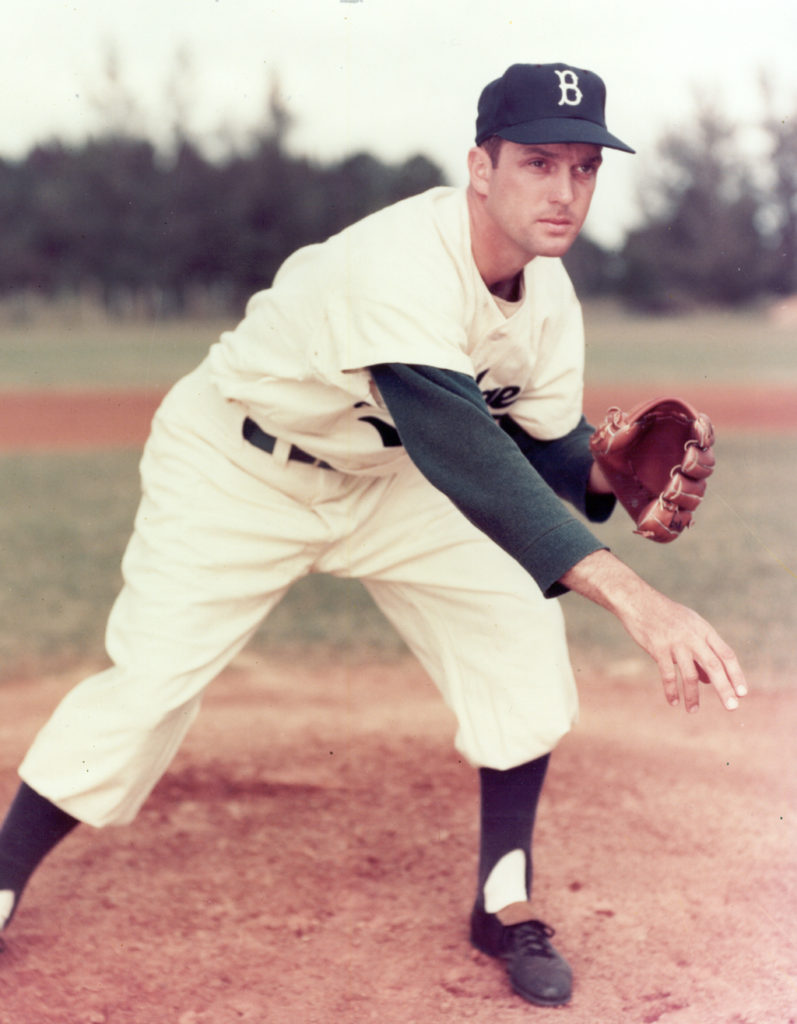
Before the game, Mr. and Mrs. Erskine are sitting in the big parlor of the Hotel Kenmore and who walks over puffing a big cigar, Branch Rickey. He told Erskine that he heard the Braves were interested in signing him, and Boston would never sign a player Brooklyn was interested in. He asked how much the Braves had offered and how much it would cost to get him to sign with the Dodgers. Erskine told him Boston had offered 2500. And said would 3000 be ok? Rickey replied, we are not going to give you 3000, we are going to give you 3500. How does that sound?
But after he was discharged, the commissioner declared him a free agent saying the Dodgers had violated the ban on signing players while still on active duty. Rickey wanted to get his 3500 back, and a bidding war began. Phillies offered 11,000, the Red Sox 10,000. But Erskine telephoned Freezle and told him he would sign for 5,000.
This next part is one of the coolest baseball stories I have ever heard. 10 years later, on May 12, 1956, after pitching his second no-hitter, he was interviewed after the game by Dizzy Dean. Dean asked, who signed you? Carl said, Branch Rickey. Dean retorted ” cheapest man who ever lived, I played for him in St. Louis, paid peanuts, about 2 bags a week. “
Erskine then told Ol Diz that he actually got 2 bonus’s from Rickey. This caused Dean to turn towards the camera and say ” Folks, this young man belongs in the Hall of Fame, not because he pitched two no-hitters, but because he got two bonus’s out of Branch Rickey! “. Erskine later learned that Rickey had been prepared to go as high as 30,000$.
Erskine reached the majors in 1948, a year after Jackie Robinson debuted. That made him one of the first white players to have colored teammates. But some incidents in his youth made him uniquely qualified to deal with the situation. In 1930, there was a lynching in a town called Marion, about 30 miles north of Anderson. Erskine’s dad took him up to see where it had happened. Two blacks had been taken out of jail and lynched in the jail yard. He could see the branch where it happened, and there had been a scramble and people had taken souvenirs’. There was still a piece of rope on the tree, and Erskine later remarked, I saw a lynching rope before I was 10.
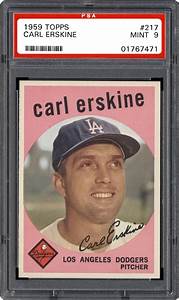
While playing on a team in Cuba in 1946, he played on a team with Chuck Connors, Solly Hemus, and Danny Gardella. They were managed by Negro League legend, Martin Dihigo. He would strike up a friendship with a pitcher named Max Manning, who would never play in the majors, not because of his skill, but because he was black. That season was the start of a long friendship. They would trade pitching tips. And later when he was inducted into the Glassboro College Hall of Fame, Erskine sent a glowing letter of recommendation. The experience helped him a lot when he joined Brooklyn and their growing group of black players.
He started out in the minors in 1946 pitching for Danville in the Three I League. He would marry his wife in 1947. They would have 4 children. He was at Ft Worth in AA ball, he was called up and got his first action in relief against the Pirates. He was used mostly in relief. He also spent time in 49 and 50 at Montreal’s AAA team. He got his first victory in relief against the Pirates.
Erskine made his first start on August 5, 1948. After his first pitch, he felt a sharp pain behind his shoulder. He did not know it at the time but he had pulled a muscle. It was an injury that would haunt him for the rest of his career. The Dodgers riding 3 HR’s by Gene Hermanski to offset 6 Dodger errors to come back and beat the Cubs 6-4 giving Erskine his 3rd victory. He told Burt Shotton about the injury, but Shotton either did not believe him or did not care. He finished the season 6-3 with a very damaged shoulder.
Back in those days, a player was judged on performance, and with 22 minor league teams, no one was guaranteed a slot. Erskine struggled and was sent back to Montreal. He saw a doctor there who checked his throwing motion and suggested some exercises to build up the shoulder. Erskine would pitch with some measure of pain his entire career.
He joined the Dodgers for good in 1951 and went 16-12. He was in the bullpen warming up when the call came from Dressen to send in a pitcher in the 9th at the Polo Grounds to face the Giants with 2 on and the Dodgers leading. Bullpen coach Clyde Sukeforth said Branca and Erskine were both ready, but Erskine had just bounced a curve in the dirt. Dressen went with Branca and we all know what happened. Erskine was later asked, what was the best pitch he ever threw, and he replied, the curveball I threw in the dirt at the Polo Grounds.
1952, Erskine threw over 200 innings for the first time in his career and finished with a 14-6 record and a 2.70 ERA, which would be the lowest in his career. On June 19th, an overcast day in Brooklyn, Carl faced the Chicago Cubs. In the 5th inning, with rain imminent, he walked the Cubs pitcher Willard Ramsdell and the sky’s opened up. The players retreated to the clubhouse and played cards as was their custom, the game of choice was bridge. About 40 minutes later, just as Erskine had a 4 heart hand, they said the game was back on. Erskine put on a dry uniform, went back on the field, and completed a no-hitter. Had he not walked the pitcher, he would have had a perfect game.
Dodgers won the pennant in 52 and went to the series against the Yankees. Erskine got into 3 games, starting 2 and going 1-1 in the series loss to the team from the Bronx. October 5th, which was the anniversary of his wedding, he was facing the Yankees and leading 4-0 in the 5th, and the next thing he knew he was behind 5-4. Dressen came out and Erskine was thinking 5 must be my unlucky number, 5th wedding anniversary, 5th inning, 5 runs allowed. And in those days, when Dressen came out, you did not say anything, you just handed him the ball and left.
As Dressen gets to the mound he says ” Isn’t today your anniversary?“ Are you taking Betty somewhere nice?” Erskine replied in the positive. Dressen hands him the ball back and says, well, see if you can get these guys out before it gets dark”. Erskine retired the next 19 hitters and won in extra innings and Erskine took his wife out to celebrate his anniversary and his first series win. “
In 1953, Erskine would have his only 20 win season, going 20-6 with a 3.54 ERA. He was 6th in the MVP voting. Remember, there was no Cy Young award yet. Brooklyn again won the pennant and faced the Yanks once again. Carl got into 3 games but went 1-0 as the Yanks continued to own the Dodgers. That 1953 team was one of the best Dodger teams ever fielded. And their 105 wins stood as a team record until Roberts 2019 team bested it by one. They hit a combined .285, with 208 HR’s, again beaten by the 19 team, Snider hit 42, Campy 41, and Hodges 31. Erskine struck out 14 Yankees in his start in the 3rd game. A record that stood until some guy named Koufax topped in in 1963.
In 1954, Erskine won 18 games, losing 15. His ERA was over 4 and he allowed 31 HRs. Brooklyn was second to the hated Giants. Newcombe had returned from the Army. With a new manager, Dressen was not retained after demanding a multi-year deal and not getting it. Walter Alston was the new skipper. With no series to play, Erskine went home to Indiana to enjoy the off-season with his family. His shoulder was still a problem though, and over the next couple of years, it would increasingly affect his performance.
1955. Next year finally arrives in Brooklyn. Erskine though drops to an 11-8 record. He has some flashes but is clearly not the same guy. He started one game in the series and lost. But as we all know, Podres wins the 7th game, and there is bedlam in Brooklyn.
1956. Erskine would have his last decent season as a Dodger. He went 13-11. He pitched 186 innings, the last season he would be over 100. On May 12th, facing the Giants, Erskine, whose shoulder was hurting every day, and stung by criticism of one of the Giants chief scouts, Tom Sheehan, who said “the Dodgers are over the hill, Campy and Jackie are too old and Erskine can’t beat anyone with that garbage he throws”.
Carl went out and they were ahead 1-0 in the 6th when the over-the-hill gang scored two. They traded zeroes until the 9th and then Alvin Dark hit a weak grounder back to Erskine and he had no-hitter #2. Robinson grabbed the paper and went over to Sheehan who was sitting in the Giant dugout, pulled out the clipping waving it in Sheehan’s face yelling, “How do you like that garbage?”
The Dodgers won the pennant again. And played a 7 game series with the Yanks, eventually falling in 7. They won the first two, lost the next 3. They won game 6 1-0 behind Labine, and then were shut out in game 7, 9-0. Erskine would lose his only decision. It was the last time he would pitch in a series. He finished with a 2-2 record and an ERA of 5.83. Considering the Yankee teams he was facing, and all of his appearances were against the Yanks, that was about the norm.
In 1957, the Dodgers last season in Brooklyn, he went 5-3 and only appeared in 15 games. His shoulder was really bothering him worse than it ever had. The Dodgers moved to LA in 1948 and Erskine again in limited activity went 4-4 appearing in 31 games. He came back in 1959, giving it one more try. He went 0-3 in 10 games and retired. His final record was 122-78 with 14 shutouts, 71 complete games, and 2 no-hitters.
He went home to concentrate on his family and business. And taking care of his 4th child, Jimmy, who was born with Down Syndrome. It is perhaps the greatest example of the man’s compassion. Most people thought the child should be in an institution, but Erskine and his wife Betty wanted to raise him themselves. And it is because of this that Erskine became very involved in the Special Olympics. He has always said that without his son his life would have been a lot emptier.
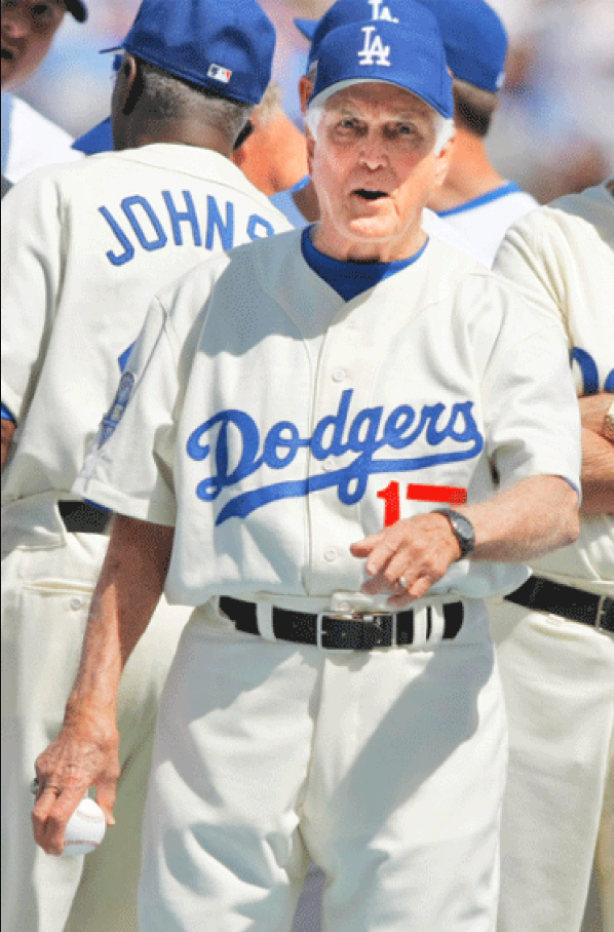
After his retirement, Erskine went on to become very successful in business. He got his life insurance license, he also served on the Indiana Bankers Association as Chairman in 1991 and 92 and also served as the Vice-Chairman of the Board for the STAR Financial Bank of Indianapolis….in Marks neighborhood. On top of that, he served as a coach and Anderson College for twelve seasons winning 4 conference championships.
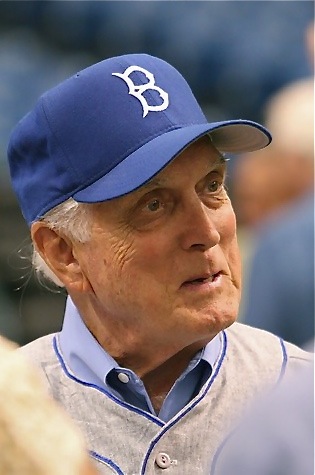
Carl will be 95 years young in December. He is still living in Anderson. I often wonder, as I also do about Sandy Koufax, how good he would have been had his shoulder been healthy all those years. The two best curveballs in Dodger history between these two. And guys like Hershiser, Drysdale, Sutton, and Podres, never threw one no-hitter, let alone two.
More from Dodger Talk

Enjoy it While You Can!
It was both surprising and not surprising to me that the Dodgers signed Kyle Tucker. That they can make it work is a tribute to the true genius of Mark Walter and Andrew Friedman. Enjoy it while you can, because it will end soon. In the upcoming CBA and talks among owners, MLB…

Dodgers Food Trailer
I did this interview a couple of weeks ago with Chef Mike, who runs the Dodgers Food Trailer for the Great Lakes Loons. They are there for every home and road regular season and playoff game. They prepare three meals a day for approximately 50 people (players and coaches). Since games end late most evenings, they do not prepare breakfast. Many of their hotels have a complimentary breakfast anyway. However,…

Meet LAD 2026 Draft Picks 1-12
3 picks were High School players (2 SS and 1 OF). There was a college OF, college catcher, college SS, and 10 college pitchers. Of all the talk for a need for a catcher, the only catcher the Dodgers selected was Luke Bard, son of LAD bullpen coach Josh Bard. Bard was a 4th year senior from Houston Christian University. He is not a prospect, so the Dodgers are still…

Interview with Paul Beachy – Team Bus Driver For The Great Lakes Loons (LA Dodgers Minor League Team)
It’s been a few days since I did this interview. We have evidently been working my son-in-law (the video guy) like a rented mule at US Water Systems. However, I am taking him to London with me in a few days, so maybe Watford will buy him a pint as a tip, but he’s a dang Red Sox fan, so there is that! I thought that it would be interesting…
Discussion (141)
Disagree, not disagreeable
Great post again Bear. Very enjoyable read.
Altuva getting picked is the highlight of my evening, I guess his “warning buzzer” didn’t go off fast enough, this time.
I’m excited to see Scherzer tonight. It would be nice if the bats showed up too.
Great article, Bear. It is fantastic to learn more about the players from that era. Erskine was a little before my time, but such a great baseball career and a life well lived (with more time left).
I still miss the times when players spent all or most of their career with one team.
The Dodger team in the last decade has been mostly homegrown and castoffs like Muncy, Taylor, And Turner. The recent trend towards buying the best players like Bauer, Scherzer, Betts and Price is not as appealing to me. I still hope the Dodgers pull it off, but baseball games and championships are won by good teams doing the little things in close games. The Dodgers have been poor at executing in close games, and it almost seems that instead of focusing on getting better at the little things, they are just pulling out the checkbook to try to fix it.
I do not read comments during the game. So when I got up this AM and started to read some of the comments, I was amazed at the current tenor of the discussion on “working the count” in general terms. I do not recall specific individuals who were espousing this concept, but I would think that all RVS apostles were pushing it. I recall a few years back when I complained about this concept that became an increasing staple in the RVS batting regimen. It may have come down from the computer printouts, but RVS pushed it to the max. Many on this site were upset with Corey Seager because he would not go along to get along with this concept. I listened to Doc on post-game shows saying they are working with Corey to be more patient. The prevailing thought from many here was the team has to work the count on the starting pitcher to get to the relievers more quickly.
Gee, the rest of the baseball world has learned how to attack this offense. Throw strike one and then work the corners and get them to chase, roll over, or popup. With the increased launch angle and big swings, the rolling over or popup was easy to predict. The better starting pitchers take advantage and work to get to the best of the late inning high leverage relievers. The best hitters will beat up all day on bad pitchers.
Many on here have lambasted Gavin Lux, a 23 year old kid who was the overwhelming 2019 MiLB player of the year, not just for LAD, but for the entire MiLB. I have read that he too often looks like a deer in headlights when at bat. I dare say that those of you who are most critical never saw Gavin play at Tulsa or OKC. In 2018-2019, Gavin played 224 games at Tulsa and OKC, and I know I watched at least 100 of them. (Advertising special – MiLB TV is great to see future stars). The Gavin Lux many of you are complaining about now is not the same Gavin Lux in 2018-2019. That Gavin Lux attacked the ball. He was not working counts. Most of the time, he swung at the first strike he saw. He hit to all fields. He had outstanding oppo power. Now maybe he will have to change teams to get back to that psyche. But he is truly a gifted hitter who I wish would go back to his 2018-2019 attack mode.
What has changed. First and foremost, the pitching is better at MLB. But Gavin is no longer attacking first strike. He is “working the count”. I will never be convinced that this is not pushed to the max by the ML club. A concept pushed by computer geeks who never played the game and put on a pedestal by a coach who could not hit the Mendoza line in high school. I am not talking about a coach who peaked in MiLB, but a coach who peaked in Little League.
I will never forget my son yelling at the TV when Sean Newcomb nearly no-hit LAD in July 2018. This was the first game after his stroke that we watched together, and he was disgusted at the number of first pitch strikes that went by. Of the 26 outs Newcomb got, he had 17 two-strike counts, and got 16 outs (8 on K). The team did in fact work the count. Newcomb threw 134 pitches that day. He would center cut strike one, and then nibble. I told him that the Dodger strategy was to “work the count”. He responded horse****. “You do not take the bat out of the hands of professional hitters. They got to that level by recognizing pitches and reacting. Pitchers are tough as it is, but when you give them 0-1 and 0-2, you, as a batter, will not be successful.” Yes, my son was a AAAA player. He accumulated: 3,824 PA, batted .270/.354/.449/.804, 122 HRs, 218 doubles, 6 triples, 385 BB, and only 607 K (less than 16%). He may not have lasted long at the ML level, but he never allowed the pitcher to dictate to him.
So without it being a spoken hard and fast rule, the players are strongly encouraged to “work the count”.
BTW, VGon or Kendall Graveman???? I know who I wanted.
Hamels is reported to be “officially” a LAD. He signed a $1MM major league contract with a reported $200K bonus for each start. So it would appear that Hamels is convinced he is signed to be a starting pitcher. What that means with respect to the health of CK, we will have to wait and see.
AC, nice analysis as always. My two cents on the matter…
The new age style employed by RVS made sense when it was developed. It combatted the abundance of sinker slider pitchers who threw at the bottom and often outside the zone. Work the count, pull the ball and put it in the air with backspin was the mantra. Getting the starter tired when they tend to leave the ball up in zone worked for a while until pitchers started adjusting. The sticky and associated spin rate begat the return of the four seamer up in zone and when you’re trying to hit the bottom third of the ball, it becomes a recipe for disaster.
An analytics heavy front office compounds the issue. We all have heard the term “Small Sample Size” and people throw it around quite often trying to disprove trends. The general rule is, the larger the sample size, the closer the results you get from the sample are to the population. The population being all results. The sample size being a representation of the total population.
The rule of thumb for sample size is, in order to be closely related to the population a sample size of 20-30% is recommended. So, when you have a bunch of stat geeks upstairs, they will not change their strategy until the sample tells them to. They can’t believe the information from the sample until it reaches that 20-30% threshold which equates to close to 1/3 of a season and probably then some additional time to implement any change.
When you have a one trick pony that never played like RVS, and a front office that’s slow to react while waiting for the sample to become large enough to justify it, you get what we’re seeing today. A team that looks like it’s slow to adjust. This isn’t just apparent in their hitting approach, but also in their use of the shift and their reluctance to beat it. Add in the human nature as it relates to the nerds upstairs. They built their value on developing certain truths based on analysing years of data. It goes against human nature to admit that things changed and their philosophy should change along with it.
These are things that an experienced manager can see without the use of analytics. The old school manager would read the game and adjust accordingly. The Padres are a good example. Not only did they see that a hole is created on the shift that can be exploited, they also noticed the reluctance to run in modern baseball, because the nerds said the risk of the out outweighed the benefit of moving up a base based on their years of statistics. What they failed to see because they didn’t play the game at a high level is that the success rate for stealing bases when they came up with that truth is no longer applicable because the skill of holding runners and throwing them out was diminished because no one ran any longer.
We’ll see how much this makes a difference for the rest of the season and onward. But, it’s certainly worth the thought of trying new things even if they’re actually old things like having a manager using in his eyes on the field as much as he uses them on his eye pad.
Sometimes things are just a blessing in disguise…
I know that I’m going to be in the minority here, but I was recently thinking about Kershaw’s role in a postseason rotation. Of course, these thoughts were precluded by my own delusion about the possibility of the man who’s name shant be uttered coming back in time for the stretch run.
Even if you check stats right now, you’ll see that you can make a case that Clayton is the worst starting pitcher in rotation. Bauer, Scherzer, Bueller are definitely better while Urias’s ERA is just .01 points higher, he’s very even when you look at their stats as a whole. Clayton also has the worst Win Loss Pct of all Starting Pitchers including Gonsolin and Price.
We all know what Kershaw’s postseason numbers look like. They’re not horrible, they’re not great. They are very uneven. He’s thrown a couple of gems, but he has a long history of burying his team with little chance to come back. A crushing experience for his teammates no doubt when their “Ace” digs a hole and buries them inside.
Kershaw’s value nowadays is a inning eater that gives you a chance to win more often than not. But, in 18 starts he’s given up at least 5 in four of them, gave up 4 and couldn’t get out of the first in one of them and gave up 3 in four innings in his most recent appearance. That’s being no so good for 1/3rd of his starts.
We all know that whatever the Dodgers say about a player’s injury is BullSH*t. But, it sure looks like they like to take a conservative route with respect to injury recovery for certain players. Biology is not an exact science, so it’s hard to predict when someone will make it back for injury, illness, mental health or anything else that has to do with the body. So, it makes a lot of sense to add options like Duffy and Hamels just in case.
My guess is that they don’t mind building up Price a little more and they already have Bueller, Mad Max, and Urias. Maybe they were pleasantly surprised with Mitch’s latest outing and want to see him pitch a little more as a starter to evaluate him for next year while giving Clayton a little extra time for the stretch run.
The big but here is what the future holds for CK. It’s a feel good story to have him retire a Dodger. His hometown team doesn’t look like they’re going to compete any time soon. The Dodgers gave him a fat contract based on prior performance and even extended him because he had their balls in his hand with the opt out clause. Clayton hasn’t made 30 starts in a season for 6 straight years now. He’s no longer a stopper or a workhorse and he doesn’t have a good track record coming out of the pen.
I really think the writing is on the wall. This is Clayton’s last hurrah with the Dodgers and they’re going to give him a little more time to get right to make a push at the end of the season. They have some options in case he gets hurt trying to do so. I think we’ll see Clayton back mid August just ahead of Duffy and Cole.
It was mentioned earlier about sample size. I was curious so I took a quick look at sample size as it relates to baseball. One article I found ( which I hope isn’t a bunch of bs) said stabilization is dependent on the a given stat. The link below lists number of at bats for stabilization.
Interesting to note, according to this article one needs 910 at bats to batting average to tell how well a player performs. So basically 2-3 years. Strikeouts, on the other hand, only require 60 at bats.
This got me thinking about Cody. As Mark points out, he has a history which is pretty good. So we can expect he will return to his career average. However, because of his shoulder surgery, it is expected that he will need upwards of a year before he returns to normal. So, in the meantime, we basically have a different data set. Could he get better over the next few months, I hope so. But it’s just as likely he will stay around where he is currently.
Anthony Rendon, you know, the guy who didn’t like the “Hollywood life style” so signed with the Angels, is having season ending surgery.
For what, you ask? For right hip impingement. And this is why I don’t think we can count on Mookie to sail smoothly on through the end of the season. He certainly could, but his hip could also cause him more problems.
One more reason AF might have jumped on the Trea Turner trade when he did.
Tonight’s better win lineup:
4, Seager SS
Cody batting 8th, one step closer to being benched
This lineup looks like it should be able to win one out of two games against the Asstros.
Good comments today about hitting approaches and organizational philosophies.
In 2019 the ML average on the 1st pitch was .340. 0 and 2 it’s .149. The numbers are remarkable predictable. When you’re ahead in the count, averages are much higher than behind in the count. We all know that but sometimes we don’t know how much difference it actually is. I said that earlier in the year when Mookie was taking center cut fastballs for strike one. And making outs not getting anything good to swing at later. I have talked about facing a really good pitcher, going 0 for 3 (or 0 for 4 when pitchers stuck around that long) and revising my night I never saw anything all night I wanted to swing at. Good ones don’t make many mistakes.
Those get me over pitches to get ahead need to ambushed. Piss on driving up the pitch counts. You will see plenty of pitches when behind in the count. they’re just not strikes.
I’ve had 18 and 19 year olds that have been coached up in youth leagues to never swing at anything spinning until they had to. Any pitcher who could throw a decent breaking ball had those kids down 0 & 2 all day long. That’s .149 average, all day long. I had a pitcher / power hitter kid who refused to sit on a fat breaking ball before he was down 0 & 2. I ask him one day why we didn’t work on throwing hanging curveballs during our bullpen work. He said it was because hanging curves are meat and easy to hit a long way. My next question was, “then why aren’t you hitting them”.
Players passing up green light specials in advantage counts just drives me crazy. They get a mind-set about taking pitches and refuse to adjust to make the pitcher pay for falling behind.
And Hitters need to talk with pitchers more and pitchers need to talk to hitters more. It might help the thought processes and get away from a set and passive approach with an advantage count.
The other approach I stress was “you are hitting until your eyes say “take” instead of taking until you eyes say “hit”. It’s a big difference.
08/04/21 Los Angeles Dodgers optioned LHP Cole Hamels to ACL Dodgers.
08/04/21 Los Angeles Dodgers signed free agent LHP Cole Hamels.
08/04/21 Los Angeles Dodgers designated RHP Yefry Ramirez for assignment.
Nelson to IL with elbow inflammation. I’m guessing we don’t see him again any time soon.
We’re cursed!!!
Nunez recalled.
Amazing amount of injuries this year, especially to some of the top players. Per Spotrac, here are the MLB players making $30 million or more this year:
Trout-36 GM/1.9 Bwar
deGrom – 15gm/5.0 war
Cole – 21gm/4.1 war
Arenado – 103/ 2.9war
Greinke – 22/ 1.8war
Strasburg – 5/ -0.1war
Scherzer – 19/ 2.4
Verlander – 0/0
Machado – 101/ 4.2
Price – 28/ 0.4 war
Bauer – 17/ 2.5war
Kershaw – 18/ 2.1war
Sale – 0/0
Cabrera – 84/ -0.1war
Of the 14 players making over $30 million, only 3 players have a WAR of 3.0 or higher:
DeGrom, Cole, Machado.
And 5 players have a WAR under 0.5.
Buyer beware on the large, long-term contracts.
Good start for the Dodgers with a Will Smith bomb. Hopefully this will be the beginning of a winning streak.
Odorizzi is not McCullers to state the obvious! Good to c Mookie being Mookie. Now stay healthy!! Turner and Muncy couldn’t hit Bear right now. That is why u need a deep lineup to pick each other up. I think I know whose place tturner takes.
Can’t believe SportsNet LA is blacking this game out. Disgraceful
Game just came on SportsNet, in time to see Pollock explode!
More sloppy defense
What a difference a day makes. From frustration to jubilation. I just hope it becomes more consistent. Joe stated recent Dodger wins = AVG of 10 runs per game which is actually incredible and is an example of a Super Team. However, 1.5 runs per game in the recent losses. Its boom or bust. I’d like to see a nice string of 4 or 5 run games with some good pitching and defense. If so, we can get on a roll. It will make me feel much more comfortable about the post season when we will face good pitching each day.
Hope Joe is almost done reading his sign stealing encyclopedia.
I’d really rather listen to the Dodger fans booing Altuva.
Max looks mighty good in Blue.
Scherzer is great. The Passion needed for some players
How great does Max Scherzer look in Dodger Blue. I can see a 1987 redo of Doyle Alexander’s 9-0 run in Detroit after the trade. Of course Atlanta had the last laugh on that one, as the Braves got future HOF John Smoltz in that trade.
I would b happy with a 9-0 run. Doc better have a backup in the ninth.
Now no hesitation, get Blake up. Period!