
Moe Berg: The Catcher Was a Spy
Casey Stengel once said that Moe Berg was the strangest man to ever play baseball. Berg was born in New York on March 2nd, 1902. His parents were Russian-Jewish immigrants. His father, Bernard Berg, was a druggist. He arrived from the Ukraine in 1894 and found work ironing in a…

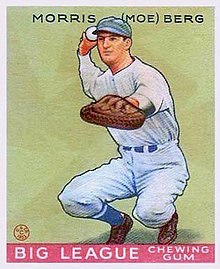
Casey Stengel once said that Moe Berg was the strangest man to ever play baseball. Berg was born in New York on March 2nd, 1902. His parents were Russian-Jewish immigrants. His father, Bernard Berg, was a druggist. He arrived from the Ukraine in 1894 and found work ironing in a laundry. Rose Tashker, arrived two years later when Bernard saved enough money. Bernard also put aside enough money to open his own laundry on the Lower East Side. But he had bigger ambitions, so he attended night school at the Columbia School of Pharmacy. By the time Moe was born, joining older siblings, Samuel and Ethel, Bernard was a pharmacist.
When Moe was 9 months old, the family moved to the Roseville section of Newark New Jersey where Bernard opened his own pharmacy. It was at the Roseville Methodist Episcopal Church that Moe played his first organized baseball. As he was Jewish, he invented a new name for himself, Runt Wolfe. His father worked for thirty years so his children could have a college education. Samuel became a medical doctor. Ethel a schoolteacher. The family felt Moe should become a lawyer, and so he did.
He went to Barringer High School and was an all-city third baseman with a rifle-arm. He graduated from Barringer at the tender age of sixteen. A year later he went to New York University. One year later, he transferred to Princeton. Most of the students at Princeton were from affluent Protestant families. Berg, Jewish and not affluent, hung around the periphery of that closed society, He was a loner, and perhaps that contributed to his mysterious ways later on. He studied classical and Romantic languages: Latin, French, Spanish and Italian. He also learned German and even Sanskrit.
Because he was Jewish, it caused some awkward moments at Princeton. One such moment occurred when a teammate was nominated for membership into a prestigious dining club essential to social life at Princeton. The teammate accepted on the condition that Berg would also become a member. The club agreed on the condition that Berg would not try to bring any more Jews into the club, Berg said no to this requirement. His teammate also declined to join. Berg, feeling responsible for his teammate’s refusal to join, talked him into joining. Left with a bad taste, Berg never attended any class reunions.
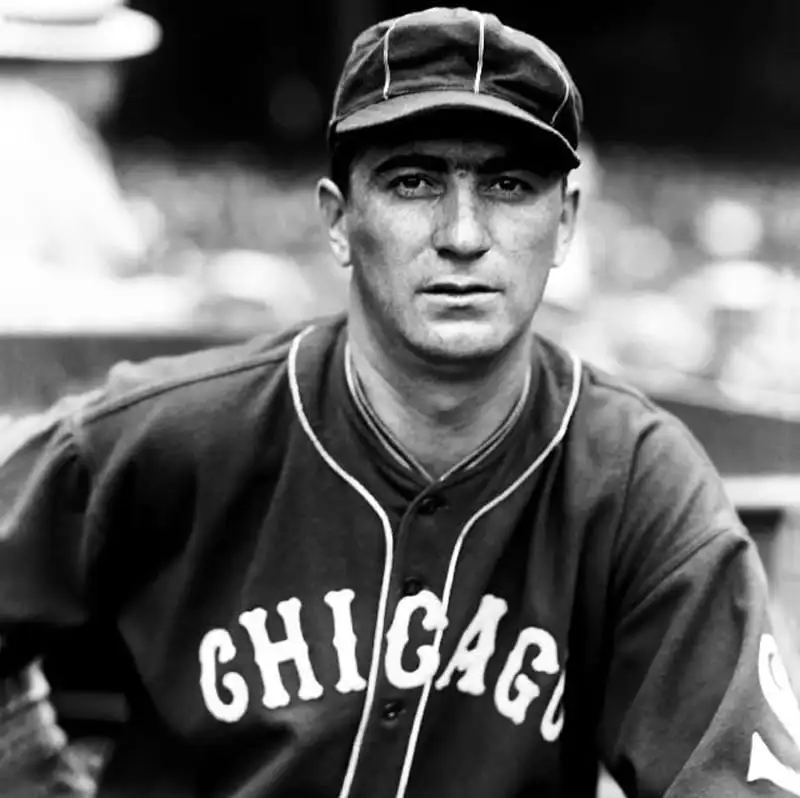
Moe Berg C White Sox
Baseball was a form of acceptance for Berg, and he started for the Princeton team for three years. He played first base, and then in his last year he was the star SS. That team was the best team Princeton ever had. They won 18 straight games and handing Holy Cross’s star pitcher, Ownie Carroll, one of his two losses as a college pitcher. (Carroll would go on to pitch 9 years in the majors, his last two, 33-34 with the Brooklyn Dodgers.) Berg graduated with honors in 1923, 24th in a class of 211.
After graduation, Berg signed with the Brooklyn Robins. He also entered the Columbia Law School, eventually receiving his law degree in 1930. He met Dutch Carter, and eminent lawyer who advised him to keep playing professional baseball. Carter had wanted a baseball career himself, but his family persuaded him to pursue the law and he always regretted it. “There is plenty of time for you to practice law after your baseball career is over.” He told Berg. Berg followed his advice and also turned down a position at Princeton to teach Romantic languages.
Berg debuted with Brooklyn in 1923, but he was awful. He hit .186 in 49 games. he was sent to the minors and would not make it back to the majors until 1926 when he was with the White Sox. After the 23 season, Berg traveled to Paris. He took an apartment in the Latin Quarter that overlooked the Sorbonne where he enrolled in 32 classes. He also developed a habit that would stay with him most of his life. He began reading as many newspapers a day as possible. As long as he was reading it, he considered the paper alive and refused to let anyone read it. After he finished, the paper was dead and anyone could read it.
In January of 1924, instead of returning to New York and getting ready for the baseball season, he traveled to Italy and Switzerland. When he got to the training facility for the Robins, Wilbert Robinson, the Brooklyn skipper, could see that his hitting had not improved any and optioned him to the Minneapolis Millers. Berg did not take the demotion well and threatened to quit baseball. But in mid-April he reported to the Millers. He became their regular third baseman and did pretty well, hitting close to .300. But in July, his average plummeted, and he was back on the bench.
In August of 24 he was loaned to the Toledo Mud Hens. He was inserted to the lineup when their starting SS declined to pay a fine for poor play and was suspended. Major League scout, Mike Gonzalez sent a telegram to the Robins on his progress with the now famous line, good field, no hit. Berg finished the year with a .264 average.
By April 1925, Berg was beginning to show progress with the Reading Keystones of the International League. Because of his .311 average and driving in 124 runs, the White Sox exercised their option with Reading and paid 6,000 dollars for his services. They brought him up the next year.
Berg became a catcher by accident, or a string of unusual circumstances. But that came later. Before the 1926 season began, Berg informed the White Sox that he was going to miss the first two months of the season while he finished his studies at Columbia. So, he did not even report to the Sox until late in the year and only got into 41 games. In 1927, he told the Sox the same thing. Even though the owner offered him more money to report, he stayed in school. Same thing as 26, he spent a lot of time on the bench.
Then in August, Ray Schalk, then the manager and reserve catcher was out with a broken thumb. Buck Crouse was also injured. Then Harry McCurdy had his hand slashed by a Red Sox hitter in Boston. Schalk was in a panic. He looked up and down the bench and asked if anyone thought they could play catcher. Berg said he used to think he could. Schalk asked who thought you couldn’t? Berg said, my college coach. Schalk handed him the mask and said, go prove your coach wrong. So, Berg adorned the tools of ignorance.
He did a good job, but Schalk arranged for former catcher, Frank Bruggy to meet the team at their next game against the Yankees. Bruggy was so fat and out of shape that the starting pitcher, Ted Lyons, refused to pitch to him. When Schalk asked him who he wanted, he said Berg.
Moe Berg
Berg with the help of a professor at the university, got a leave of absence from school for the spring semester so he could report to spring training. He would take extra classes in the winter. The winter Berg went to work at a lumber camp in the Adirondack mountains in New York for about three weeks before reporting to the White Sox training camp in Shreveport Louisiana. The labor did wonders for him. He reported in excellent shape and eventually won the starting catcher’s job. He caught 60 percent of the runners trying to steal on him and for the year he hit .246 with 16 doubles. He had no homers. He would only hit six in his entire 15-year career.
At law school, Berg failed Evidence and did not graduate with his 1929 class, but he passed the New York Bar exam. The next year he passed Evidence and received his LL. B on February 26th, 1930. He had his best year ever in the majors in 1929, hitting .287 and driving in 47 runs. It was also the only season in his entire career that he would play in 100 games or more.
In April of 1930, during an exhibition game in Little Rock, his spikes caught, and he tore a ligament in his knee. He was back in the lineup by May, but he could not play every day due to the knee. He played in only 20 games and hit .115. The Indians picked him up over the winter, but he was even worse in Cleveland playing in only 10 games in 1931 and batting a paltry .077.
He was released again, but with catchers being in short supply, Calvin Griffith invited him to Biloxi for a tryout with the Senators. He made the team and played flawless defense. When the starting catcher, Roy Spencer went down with an injury, Berg stepped in, throwing out 35 runners and batting .236.
It was now that Berg’s life begins to get more interesting. He had taken a job in the winter of 1930 with the New York law firm of Satterlee and Canfield. By the way, this law firm still exists today as Satterlee, , Stephens, Burke, and Burke. A retired ball player, Herb Hunter, arranged for three players, Berg, Lefty O’Doul and Ted Lyons to do baseball seminars at Japanese university’s. It was Berg’s first trip to the Orient.
After their tour of universities, Lyons and O’Doul returned to the states. Berg stayed behind and toured Japan, Manchuria, Shanghai, Indochina, Siam, India, Egypt and Berlin, Germany. Although he wanted to return to Japan, he headed back to the states for spring training.
Berg had a very disappointing season in 1933, batting just .185 and playing in only 40 games. The Senators won the pennant but lost the World Series to the Giants. The starting catcher, Cliff Bolton, demanded more money in 34. But the Senators refused, he sat out, and Berg got the starting job. That lasted all of 33 games and the Senators released him. But Cleveland’s backup catcher went down with an injury and Walter Johnson, who had managed Berg in DC offered him the job. Berg would play in 29 games for the Tribe and hit .256.
After the season, Hunter once again arranged for some MLB stars to tour Japan and play exhibitions against a Japanese all-star team. The group included, Ruth, Gehrig, Averill, Foxx, Gehringer, and Lefty Gomez. At the last minute, Berg, a light hitting second stringer was added to the team.
Berg had contracted Movietone News, a newsreel production company, to make a film of sights from his trip. He took a 16mm Bell and Howell camera and a letter from the company to attest to this. When the team arrived in Japan, Berg, who was fluent in several languages, some say 12 to 14, gave a welcome speech in Japanese. He was also invited to address the legislature.
On November 29th, while the rest of the team was playing a game in Omiya, Berg went to Saint Lukes Hospital in Tsukiji. Ostensibly to visit Ambassador Joseph Drew’s daughter. When Berg arrived, he immediately went to the roof of the hospital, which was one of the tallest buildings in Tokyo, and filmed the city and the port. In 1942, Berg turned those photos over to American intelligence in case they were needed for a raid. He never did visit the ambassador’s daughter, and after the rest of the team left, he stayed behind and toured the Philippines, Korea, and Moskow Russia. While in Japan, the Indians notified him of his release.
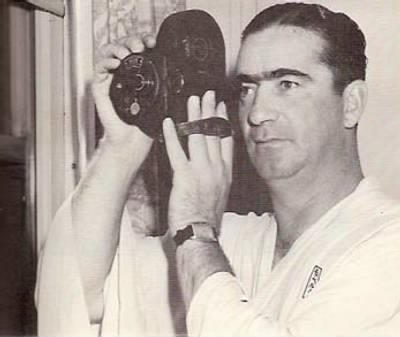
Berg and his Bell and Howell 16mm
In 1935, Berg latched on with the Boston Red Sox. He would spend 5 years with the team and never play more than 30 games. In 1939, Berg appeared on the radio quiz show, “Information Please.” Berg had a dazzling performance. He would appear on the show 3 times, and commissioner, Mountain Landis, said Berg did more for baseball in 30 minutes than he had in all his time as commissioner. On his third appearance, Clifton Fadiman, the moderator, started asking what Berg thought were too many personal questions. He did not answer them and never appeared on the show again. Regular show guest, John Kiernan, who was also a sportswriter, said Berg was the most scholarly professional athlete he ever knew.
With his playing career over, Berg worked as a coach for the Red Sox and wrote and essay that was published in the September 1941 issue of The Atlantic Monthly, entitled, Pitchers and Catchers. He coached the Sox for two years.
With the attack on Pearl Harbor, Berg decided to do his part and went to work for Gov. Rockefellers, Office of the Coordinator of Inter-American Affairs. OIAA. His father passed away on the 14th of January, 1942. Later that summer, he screened his footage of Tokyo for the intelligence community of the US Military. It was once thought that his movies helped in the Doolittle raid, but that happened in April.
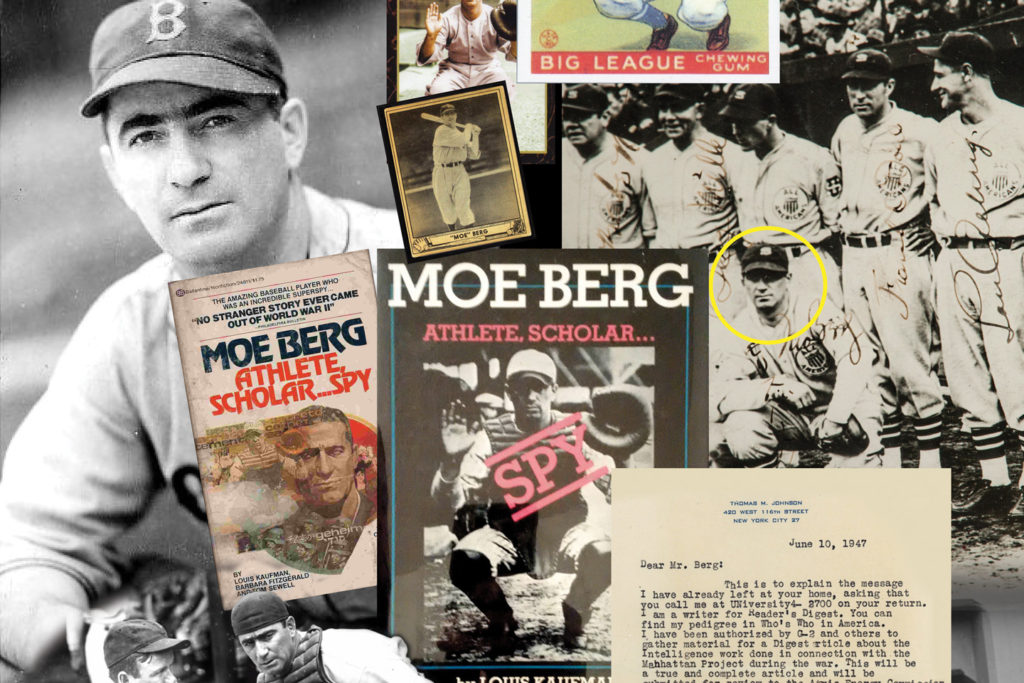
Berg Collage
From August 1942 to February1943, Berg was on assignment to South America, their job was to monitor the health and physical fitness of American troops stationed there. In June of 43, Berg and several other OIAA agents left because they though South America posed little threat to the US.
On August 2nd, 1943, Berg went to work for the OSS. Today’s CIA. He was assigned to the Special Operations branch. He was making 3800 dollars a year. He was the paramilitary operations officer. That branch today is the CIA’s Special Activities Division. In September, he was assigned to the Secret Intelligence Branch and given a spot on the OSS SI Balkans desk. He helped Slavic-Americans recruited to make dangerous drops into Yugoslavia.
In late 43 he was assigned to Project Larson. The stated purpose of the project was to kidnap Italian rocket and missile specialists in Italy and bring them to the US. Another part of the project was called AZUSA. That project was intended to interview Italian physicists to see what they knew about Werner Heisenberg and Carl Frederich von Weizsäcker. It was similar to in scope and mission to the Alsos Project.
Berg was sent overseas and from May to December in 1944, he hopped around Europe, interviewing physicists and trying to convince them to leave Europe and go to the United States. In December, news was received that Heisenberg was giving a lecture in Zurich. Berg was sent there with orders to kill Heisenberg if he felt anything he said convinced him that the Nazi’s were close to building the bomb. Berg determined they were not close. On direct orders from President Roosevelt, Berg convinced Antonio Ferri, who had been the head of the supersonic research team in Italy, to come to the United States and take part in the supersonic program there. When Berg returned with Ferri, Roosevelt commented ” I see Moe Berg is still catching very well. While in Switzerland, Berg became a close friend of physicist, Paul Scherrer. He resigned from the OSS in January of 1946.
One of his duties while he was on the Balkan desk, was to decide which partisan group the OSS and US would support. He chose the group led by Josef Broz (Tito). Who would later become the leader of Yugoslavia and a staunch supporter of communism.
IN 1951, Berg begged the CIA to send him to the new state of Israel. A Jew must do this he wrote in his notebook. The CIA turned him down. But in 1952, the CIA paid him to use his old contacts from WWII to gather information about the Soviets atomic bomb project. For their 10,000-dollar investment, the CIA got nothing. The CIA officer who spoke with Berg when he returned said Berg was flaky.
For the next 20 years, Berg had no real job. He lived with friends and relatives who put up with him because of his charisma. When someone would ask him what he did for a living, he would put his finger to his lips, giving them the impression that he was still a spy. A lifelong bachelor, he lived with his brother Samuel for 17 years. According to Samuel, Berg became snappish and moody after the war. He did not care for much in life except his books. Samuel eventually became fed up and asked Moe to leave. But he actually had to get an eviction notice to get him out of the house.
Berg moved in with his sister, Ethel, and lived there for the rest of his life. He received a handful of votes for the Hall of Fame, 4 in 58, and 5 in 1960. When criticized for wasting his intellectual talent on the sport he loved, he replied, I’d rather be a ballplayer than a justice on the Supreme Court.” He was asked many times to write his memoirs, and almost did so in 1960, but he quit when the co-writer assigned to him confused him with Moe Howard of the Three Stooges.
Moe died on May 29th, 1972, at the age of 70 from injuries sustained in a fall at home. A nurse said his final words were, ” how did the Mets do today?’ They won. By his request, he was cremated, and his ashes spread on Mount Scopus in Jerusalem. Moe received the Medal of Freedom from President Harry Truman after the war but declined to accept it without an explanation. After his death, his sister requested and received the medal. She donated it to the baseball hall of fame.
In 1996, he was inducted into the National Jewish Sports Hall of Fame. In 2000, he was inducted into the Baseball Reliquary’s Shrine of Eternals. Bergs’ baseball card is the only one on display at the CIA’s headquarters in Langley Virginia.
Moe Berg was a highly intelligent man. He was also an enigma to many. He would disappear, and no one would know where he was. It might have been because he was virtually invisible to those with whom he attended college. For whatever reason, he was a very private person. But he also had a sense of humor. He once told a fellow player that he was suffering from a lack of intestinal fortitude. The next day when he was feeling better, the player told the press he was over his bout with a lack of intestinal fortitude. But he got the last laugh on Berg, he told him, Moe, I can drive in more runs in a month than you smart guys can think across the plate all season.
Yes, Berg was one of a kind. Probably one of the most interesting men who ever played the game.
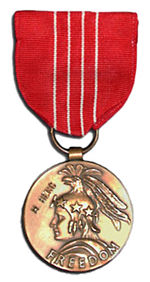
Berg’s Medal of Freedom
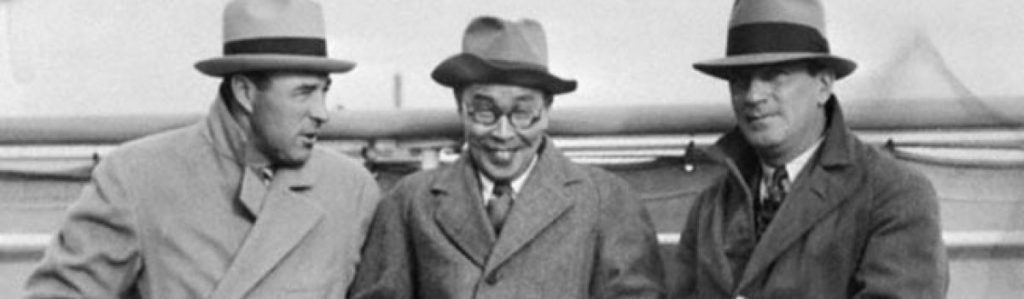
Berg in Japan
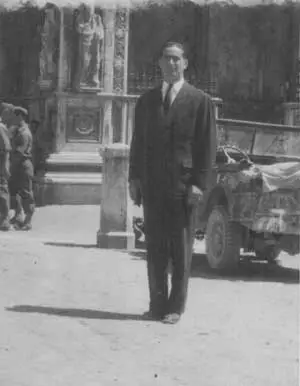
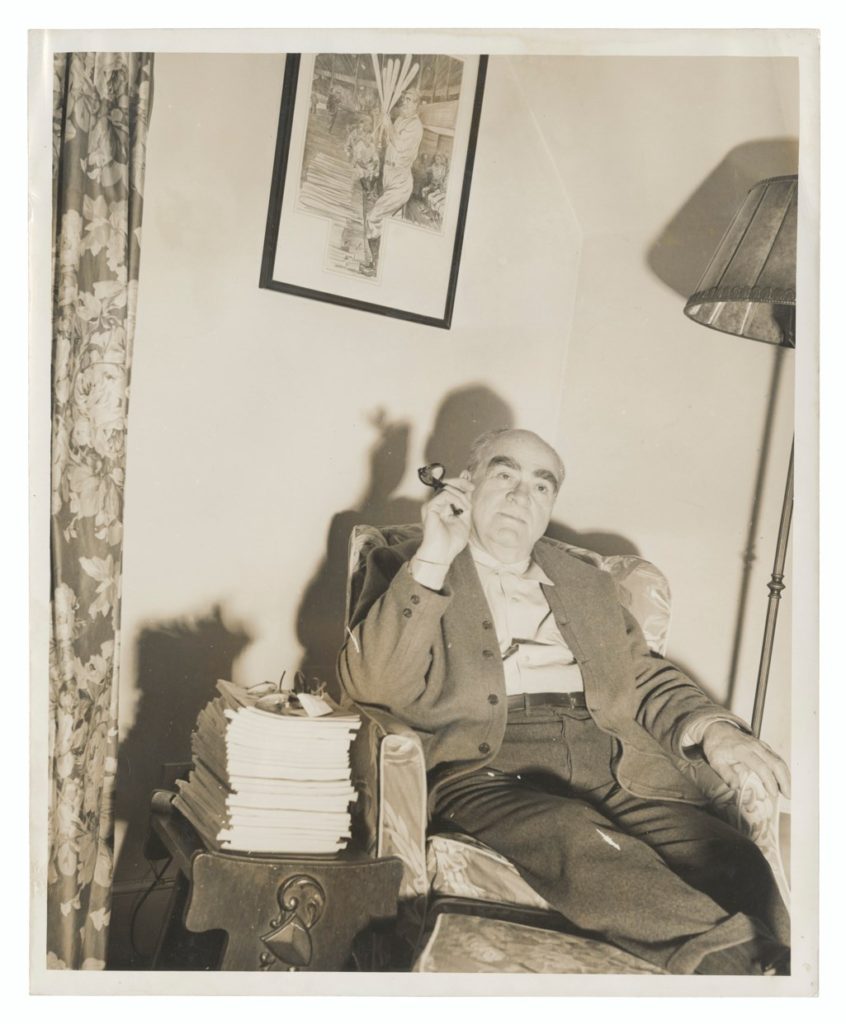
Moe Berg
More from Dodger Talk

Enjoy it While You Can!
It was both surprising and not surprising to me that the Dodgers signed Kyle Tucker. That they can make it work is a tribute to the true genius of Mark Walter and Andrew Friedman. Enjoy it while you can, because it will end soon. In the upcoming CBA and talks among owners, MLB…

Dodgers Food Trailer
I did this interview a couple of weeks ago with Chef Mike, who runs the Dodgers Food Trailer for the Great Lakes Loons. They are there for every home and road regular season and playoff game. They prepare three meals a day for approximately 50 people (players and coaches). Since games end late most evenings, they do not prepare breakfast. Many of their hotels have a complimentary breakfast anyway. However,…

Meet LAD 2026 Draft Picks 1-12
3 picks were High School players (2 SS and 1 OF). There was a college OF, college catcher, college SS, and 10 college pitchers. Of all the talk for a need for a catcher, the only catcher the Dodgers selected was Luke Bard, son of LAD bullpen coach Josh Bard. Bard was a 4th year senior from Houston Christian University. He is not a prospect, so the Dodgers are still…

Interview with Paul Beachy – Team Bus Driver For The Great Lakes Loons (LA Dodgers Minor League Team)
It’s been a few days since I did this interview. We have evidently been working my son-in-law (the video guy) like a rented mule at US Water Systems. However, I am taking him to London with me in a few days, so maybe Watford will buy him a pint as a tip, but he’s a dang Red Sox fan, so there is that! I thought that it would be interesting…
Discussion (55)
Disagree, not disagreeable
Future Dodgers:
C–Smith/Cartaya
1B–Freeman/Rushing
2B–Vivas/Busch
SS–Lux
3B–Vargas//Busch
LF–Deluca/Pages
CF–Outman
RF–Betts/DePaul
DH–Busch/Rushing
Thanks O B. Didn’t know there was a movie about Moe. Will see if I can find it.
Great article on Moe Berg, Bear.
Jack Harris reported that Dodgers picked up the option on Treinen for $1 million. They declined options on Reyes, Kelly, Lynn, and Hudson. Still no word on the Qualifying offer on JDM which I think is very unlikely.
Scott Boras was a guest on Jim Bowden’s show today. Basically said the Rangers won the World Series because they paid $500 million to his clients, Seager and Semien. Also blames injuries for Bellinger poor seasons in 2021 and 2022, while crediting the Cubs for recognizing his elite talent.
Bowden predicted that Ohtani will get $477 million for 10 years plus pitching incentives to put him well past $500 million. Too much for a DH to me.
The Dodgers announced their full list of option decisions, including the previously-reported news that the club options on Lance Lynn, Joe Kelly, and Alex Reyes were all declined. Los Angeles also declined Daniel Hudson’s $6.5MM club option for the 2024 season, but the team is exercising its club option on reliever Blake Treinen. Jack Harris of the Los Angeles Times reports (via X) that Treinen’s club option is worth $1MM.
I heard that Ohtani has a home in Seattle. Anyone else hear that?
Loved the article. I want thoughts on Will Smith. He’s such a talent and seems to have the type of attitude you want from your better players. The grind of catching will catch up to him at some point. He will still be a good player but it will be difficult to max out his talent over a longer period of time. The Dodgers have talented catchers in their farm system. You would think that at least one will be an impact player. You think that Smith could go from catching to third like Joe Torre or to second like Biggio. Maybe not next season but the transition needs to happen. Maybe 20-30 games in the infield next season. Hopefully you guys can comment on the thought. It was brought up a number of times during the season but I haven’t noticed it mentioned since the season ended.
you’re ok Bear!
Sorry Bear ! Nelson, I swear I wasn’t drunk!
I am going on the record as saying we need to sign Ohtani.
Thanks for the info Mark. I agree with you on Snell. I don’t want the Dodgers to get him.
The Dodgers do need starting pitching, I think the 8 years at 25 million per year for Yamamoto is worth taking.
Ever since Gray left the Yankees, as you said, he has really learned how to pitch. Maybe he’s gotten rid of the choking or maybe not. If the length of his contract is 3 years or less with a team option for a fourth year at the most, I think it’s worth it. Because Beuhler is a big question mark and Kershaw tends to choke in the playoffs and he might not be back in 2024 and I believe he won’t.
If not, then there are trades. But I don’t want the Dodgers to give up B. Miller, Sheehan, Pepiot and a few pitching prospects I like, and Rushing.
Mark Melancon possible AF reclamation project?
I would say the Dodgers need to do these things . Get Corbin Burnes as your number one guy. They also sign Blake Snell there’s your 1 and 2 starters. Then you have Miller and Buehler and Pepiot that’s a pretty good starting rotations. And you have Grove as a sixth man okay pitching done. You go get and Alex Verdugo from Boston he then becomes your left fielder him and Chris Taylor platoon in left field with Outman in centerfield and mookie in right field okay and then don’t sign Ohtani sign Matt Chapman to be the thirdbaseman and Muncy the DH or he can play 3b or 2b some days depending on who is pitching and for defensive purposes you have Rojas at shortstop put Lux at second base resign Kiki Hernandez those three can play second or shortstop then you have Freeman at first base and catcher Smith and you let Barnes walk or trade him to Texas where Kershaw most likely goes and the rangers have got to have a better catcher that can hit better then Barnes. And you bring back Heyward in a close battle with Deluca for the last outfielder position. So you have on the roster
Betts
Freeman
Smith
Muncy
Taylor
Rojas
Lux
Hernandez
Verdugo
Outman
Heyward
Barnes replacement catcher?
Chapman
Deluca
Burnes
Snell
Miller
Buehler
Peipiot
Grove
Then your bullpen pitchers and a closer instead of signing Ohtani which he could end up with the Giants since Lee is rumored to go there guys.
That what I see the Dodgers doing for next year and hope they do resign Kiki because he made the clubhouse fun again when he arrived this year.
Oops. Snell good since 2022 and market value 23.5 and age 30. I was looking at someone else. And I overlooked stats on Nola. I’m scratching him off my list.
I’d go with Yamamoto and Gray. As long as Gray’s contract isn’t too long.
Pitching, pitching, pitching. I’m intrigued about Yamamoto. I think he should be the number 1 priority for AF.
Then there are 2 more free agent starting pitchers that I’m not necessarily high on, but in my opinion are the best starting pitchers by quite a bit on the free agent market, besides Yamamoto, and that’s Sonny Gray and Aaron Nola. According to a website I looked at, Nola has a market value of 24.5 million and he’s age 30. Gray 20.3 million and he’s age 33. I don’t know if those dollar estimates are true though, and I don’t know anything about who’s injury prone or a clubhouse cancer.
There’s Snell but his value is more, and he’s been good since 2021 but before that not good at all.
I’m for Jorge Soler!!
Mark I appreciate your thoughts last night. Thank you.
Watford Dodger I agree with you. I guess logic is in the eye of the beholder.
For example: If (A) Bochy is the luckiest manager in the world and (B) the playoffs are a “crap shoot” then (C) Bochy is the one you want to roll the dice.
Moe Berg was amazing…
I saw the movie. And that’s all I’ll say about that….
As for free agents, I have long assumed that the Dodgers will get Ohtani.
If we are assuming Dodgers can add about 100AAV to their payroll, Ohtani would take up about half of that.
Could they also afford Yamamoto? He’s just 25 and looks like an ace-caliber pitcher, perhaps the best to ever come from Japan.
Those guys are at the top of my wish list. Yes, I’m greedy. If they can’t last Yamamoto, perhaps they target Shotu, the Japanese southpaw. I also expect AF to deal from his prospect capital for a frontline starter like Burnes, Cease or Glasnow.
And then there may be enough $$ left to bring in rehab project like Manaea or Flanagan, and maybe Kike or Heyward.
Free agents I would avoid 1. Nola, fast ball trending down. 2. JT. if they sign Ohtani where does he fit? 3. Liam Nelson. too much money, worried about his health. 4. Jordan Hicks. (maybe). 100 mph looks good if you know where it’s going! 5. Tim Anderson. Mark was right on about him being a possible distraction. 6. Lance Lynn. I think he’s done as a starter you can count on in the rotation. Way too many fingers! 7. Cody Bellinger. I hope he stays healthy and productive. I just don’t think he fits in the Dodger scheme of things. HE can hit lefties! It would be hard to pass on Blake Snell, but I don’t think he is a 7-inning pitcher. Too much money for a 5-inning starter! if Clayton retires, might take a chance on Montgomery, at Friedmans price of course. In college football, don’t look now, and I hate to say it, but Alabama is coming! That quarterback is really good.
Does Kendall need to be protected in Rule 5?
That was a great read, Bear. I took the liberty of putting a YouTube Link to the movie about his that came out in 2018. I intend to watch it.
Dodgers To Decline Club Option On Alex Reyes
Kopp and Williams named to AFL Fall-Stars team.
This was a really fun read and a lot of fun researching. Done at a request of one of our posters.