
Hey! I Can Still Play This Game!
I was watching an old movie, yeah, a baseball movie. It starred James Stewart and June Allison. True story. It was about Monty Stratton. Stratton was a RH pitcher who pitched for the White Sox for parts of five seasons. He had a 36-23 record with a 3.71 ERA and 196 K’s. He won…

I was watching an old movie, yeah, a baseball movie. It starred James Stewart and June Allison. True story. It was about Monty Stratton. Stratton was a RH pitcher who pitched for the White Sox for parts of five seasons. He had a 36-23 record with a 3.71 ERA and 196 K’s. He won 15 games in 1937 and again in 38. His future with the Sox looked bright. He was 26 years old. In November of 1938, Stratton was hunting rabbits on his family farm when he fell and accidentally discharged his shotgun into his leg. It damaged a major artery enough to require amputation the next day.
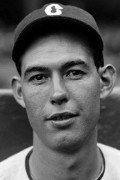
Fitted with a wooden leg, Stratton worked with the White Sox for the next two seasons as a coach and batting practice pitcher. In 1939, the Sox set up a charity game at Comiskey Park against the Cubs. The proceeds from the game, $28,000, went to Stratton. He took the mound to demonstrate he could still pitch, although he could not transfer weight to his artificial leg. Stratton would never pitch in the majors again, but he did pitch in the minors for parts of five seasons. In 1946 he pitched for Sherman of the East Texas League and won 18 games with a 4.17 ERA. Although he pitched for a few more years, he was never that effective again. His biggest problem was getting off of the mound quick enough to field bunts. Stratton passed away in 1982 at age 70.
The movie got me thinking about other players who had deformities or, in a few cases, were missing limbs and still played the game. So I thought I would profile a few of those guys here.
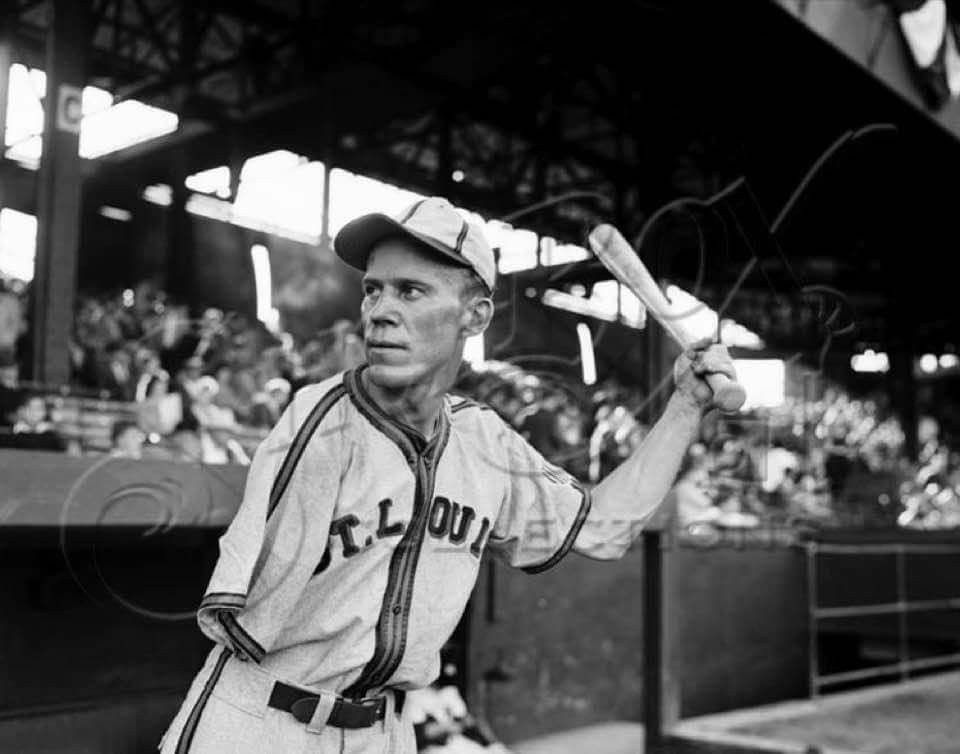
Pete Gray
Pete’s birthname was Peter James Wyshner. He was one of five children born to Lithuanian immigrants, Antoinette and Peter Wyshner. His brother was a professional boxer who boxed under the name Whitey Gray. Gray lost his arm in a farming accident when he was about 7. He finished his formal education at age 13. He went to work as a water boy at the Truesdale Colliery. He did not like to be treated differently because of his disability. By the time he was 19, he was playing semi-pro baseball. He changed his last name to Gray like his brother had to avoid ethnic prejudice.
He had try-outs with the St. Louis Browns and the Philadelphia A’s. Neither team came calling. When Pearl Harbor happened, he attempted to join the Army but was rejected because he was an amputee. “If I can learn how to hit a baseball one-handed, I can damn sure learn to handle a rifle.” He said. At age 27 in 1942, he joined a team in the Class-C Canadian American League. He batted .381 in 42 games. At class A-1 the next season, he hit .289 with the Memphis Chicks. In 1944 with the Chicks again, he hit .333 and had five homers.
His contract was purchased from the Chicks before the 1945 season for $20,000 dollars. Pete would play 77 games in his only MLB season. He hit .218, with 8 of his 51 hits going for extra bases. He was released after the season when players started coming back from the war. He played for four more seasons before finally hanging up his spikes. He was near penniless and had alcohol issues after leaving the game. He often wondered if he could have made it had he had both arms. Pete died at age 90 in 2002. His glove is in the Hall of Fame.
Bert Sheppard
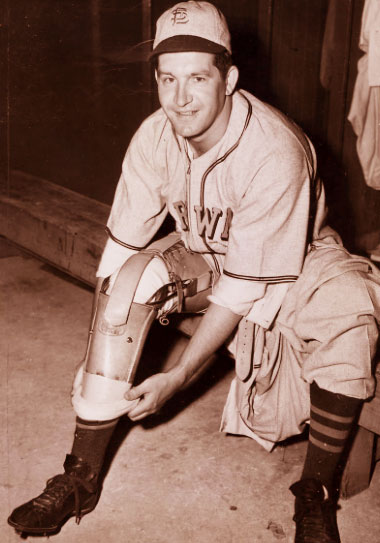
Unlike Monty Stratton, who lost his leg after he had pitched in the majors, Bert Sheppard’s career was derailed before he got the chance. In WWII, he was shot down in his P-38 during his 34th mission. His leg was mangled and removed by German Lieutenant Doctor Ladislaus Loidi. He learned to pitch again with an artificial leg that was made by a Canadian doctor and fellow prisoner, Doug Errey. When he returned to the US in 1945, he hoped to resume his baseball career. He had pitched for several teams prior to the war, including the Anaheim Aces in 1941. He impressed Senator owner Clark Griffith enough that he was hired as a pitching coach. He would pitch in exhibitions and batting practice. On August 5, 1945, he was called on in the 4th inning of a game against the Red Sox in DC that the Senators were way behind in. He thus became the first and only player with an artificial leg to pitch in a major league game.
He was very effective in his 5.1-inning stint. He allowed only three hits and one run. The game was notable for a couple of other reasons. He relieved Joe Cleary, whose surrender of seven runs on five hits and three walks in one-third of an inning gave him an ERA of 189.00. That was the highest in MLB history for a pitcher who recorded at least one out. Also, outfielder Tom McBride tied a major league record with 6 RBIs in one inning, the inning Cleary pitched. In between doubleheaders on August 31st, Sheppard received the Distinguished Flying Cross and the Air Medal for his service in WWII. Sheppard would in 1968 and 1971, win the US Amputee Golf Championship. He died when he was 87 and is buried in the Riverside National Cemetery in Riverside, California.
Jim Abbott
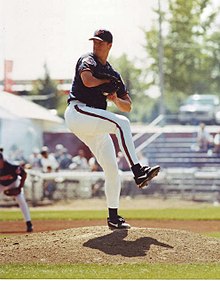
Jim Abbott was born with a stump for a right hand. But this never kept him from pursuing sports as a child. At Flint High School, he was a standout pitcher and the quarterback on the football team. He was drafted in the 36th round draft in the 1985 MLB draft by the Toronto Blue Jays. He instead went to the University of Michigan.
At UM, he was named the James E. Sullivan award winner as the outstanding amateur athlete of the year. In 1988, he was drafted in the first round by the California Angels. He made it to the majors in 1989. He won 12 games in his rookie season. He would win 18 in 1991 when the Angels were looking to trim payroll and dealt him to the Yankees. Part of their return for Abbott was JT Snow, who would be their first baseman for years. Abbott struggled with the Yanks, but in 1993, he pitched a no-hitter against the Indians. He would have a 10-year career in the majors. His final stats were 87-108, with an ERA of 4.25. In his last season, he played for the Brewers in the NL. That forced him to bat for the first time in the majors. He had two hits in twenty-one at-bats. Both hits were off of Jon Lieber of the Cubs, and both drove in runs. They came in two different games. Abbott now works as a motivational speaker.
Chad Bentz
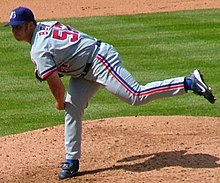
Chad Bentz, like Abbott, was born with a deformed hand. His deformity did not keep the Expos from drafting him in the 7th round in 2001. As a freshman in college, he met Jim Abbott, and he became his mentor. Bentz only pitched briefly in the majors appearing in 36 games for the Expos in 2004. The next season he appeared in only four games for the Marlins. One very interesting item about Bentz. After being released in 2009, he joined the Castleton State College football team in Castleton, Vermont. Up to 265 pounds, he was a running back for the division 1 team. He played in 9 games, carrying the ball 12 times for 29 yards and two touchdowns. He was later a coach for their baseball team!
LOU BRISSIE
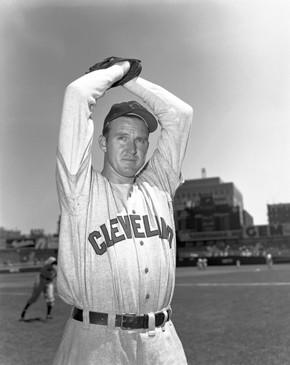
To me, one of the more amazing stories is that of Lou Brissie. Brissie began his baseball career in 1940 at age 16. He attracted the attention of Connie Mack, but his father insisted he finish school. He attended Presbyterian College before enlisting in the Army in 1942. In November of 1944, his unit, the 88th infantry division, was involved in heavy fighting in Italy. His unit came under a heavy artillery barrage. A shell exploded near him and shattered his left tibia and shinbone into 30 pieces. At the field hospital, the doctors told him his leg had to be amputated. He replied that he was a baseball player and insisted the leg be saved even if it jeopardized his life. His military citations would include the Bronze Star, a Purple Heart with an Oak Leaf Cluster, and the ETO and American campaign medals.
Two years and twenty-three operations late, he was able to return to baseball with a metal brace on his leg. Brissie would sign with the Philadelphia A’s in 1946. In 1947, Brissie was sent to the A’s AA farm team in Savannah, Georgia. He won 25 games there and was called up to the A’s in September, realizing his dream to play major league baseball.
His first start in 1948 was against the Red Sox. During the game, Ted Williams hit a shot back up the middle that hit Brissies leg, and it caused him to collapse. When Williams got to first, he went to the mound feeling bad because he thought he had really injured Brissies badly. Brissie looked up and saw Williams saying, “For christ’s sakes, Williams, pull the ball.” Brissie would beat the Sox 4-2 that day, striking Williams out for the final out of the game. Brissie would spend parts of 7 seasons in the majors and finish with a 44-48 record with a 4.07 ERA. He won 14 games in 1948 and 16 in 1949.
Mordecai Brown
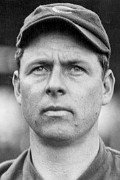
Mordecai Peter Centennial Brown. Brown lost two fingers on his right hand in a farming accident in his youth. He would gain a nickname and learn how to hold a ball and make it break erratically, “knuckle-curve, and with that pitch, became one of the elite pitchers in the majors in the early part of the 1900s. Brown would go on to win 239 games, losing 120 in his 14 years in the majors. He had a career ERA of 2.07. He pitched in 4 World Series for the Cubs, Winning twice, 07-08.
Mental Problems
Before we move on to a couple of other players who had to overcome either physical deformities or Illness issues, I thought I would touch on a couple of players who suffered mental issues that were not diagnosed at the time. Rube Waddell was a very good pitcher who, at the time, was considered just a little wacky. A lefty, he was a strikeout pitcher at a time when players made very good contact. He strengthened his arms by throwing rocks at birds while working on the family farm. He was definitely not your normal child. Once when he was three, he wandered over to a local fire station and stayed there for three days. He did not attend school very often.
He once left a game to go fishing. He would often chase after fire trucks even while he was pitching a game. Back then, these were just considered eccentricities. He would disappear sometimes in the offseason, and no one would know where he was. Then it was discovered he was wrestling alligators in a circus. Waddell also drank excessively, which added to the instability. Some now consider that Waddell might have been suffering from some sort of mental illness and at the very least, ADD. Still, he was one of the better left-handers of his time. While helping the city of Hickman, Kentucky battle a flood, he contracted pneumonia. It sapped much of his energy. He contracted it again when there was another flood in Hickman, and that led to him contracting tuberculosis. He died at the age of 37 in 1914
Jim Piersall’s battles are well documented. He had what we call today bipolar disorder. He signed with the Red Sox in 1948 when he was 18. He broke into the major leagues in 1950. As his career progressed, he became less and less stable. In 1952 things took a drastic turn for the worse. He had a fistfight with Yankee second baseman Billy Martin. After that settled down, he had an altercation with teammate Mickey McDermott in the Red Sox clubhouse. After several such altercations, including Piersall spanking the four-year-old son of teammate Vern Stephens, son in the clubhouse during a game, he was demoted to Birmingham on June 28th.
In less than three weeks with Birmingham, he was ejected from games four times. The last one was in the second inning after he struck out. He celebrated his teammate, Milt Boiling’s homer by spraying home plate with a water pistol. Suspended for three games, he entered the Westborough State Hospital in Massachusetts. He was diagnosed with nervous exhaustion. He underwent electroshock therapy and took a new drug called lithium which seemed to level his moods. He spent the next seven weeks there and missed the rest of the season. He would return to the Red Sox in 1953 and finish 9th in the MVP vote. Although his behavior changed some, he still had some memorable moments that were considered a little off the wall. He once wore a Beatle wig to the plate while playing air guitar with his bat. He also ran the bases backward when he hit his 100th career homer.
Hack Wilson is a Hall of Fame player. He holds the major league record for the most RBIs in a season with 191 in 1930. He had a monster season that year. He was considered one of the premier power hitters of his era. He also was a heavy drinker and, on occasion, a brawler. Studying his behavior and an early addiction to alcohol, some have concluded that Wilson may well have had fetal alcohol syndrome. Some of these diagnoses by researchers now are also based on the physical characteristics Wilson had. A large head, small feet, and short legs and arms are consistent with the syndrome. Not being able to control the impulse to drink later in life is also another symptom. All of this contributed to his short life. He was more or less portrayed by Tom Hanks in the movie “A League of Their Own“.
Several players have made the majors even though they were deaf. One of the earliest was Dummy Hoy. Hoy played in the majors for 14 years. Another would be Curtis Pride, who spent 11 years in the majors. Perhaps one of the strangest stories I found was about a player named Charlie Faust. Faust spent three seasons with the NY Giants. He only pitched in two games over that time. But Faust had gone to a fortune teller who had him convinced he was supposed to lead the Giants to the pennant. So John McGraw kept him around. Sure enough, the Giants won the pennant all three seasons. But they lost the series each time. He left the team in 1913. He spent the rest of his life in a mental institution.
Freddie Sanchez
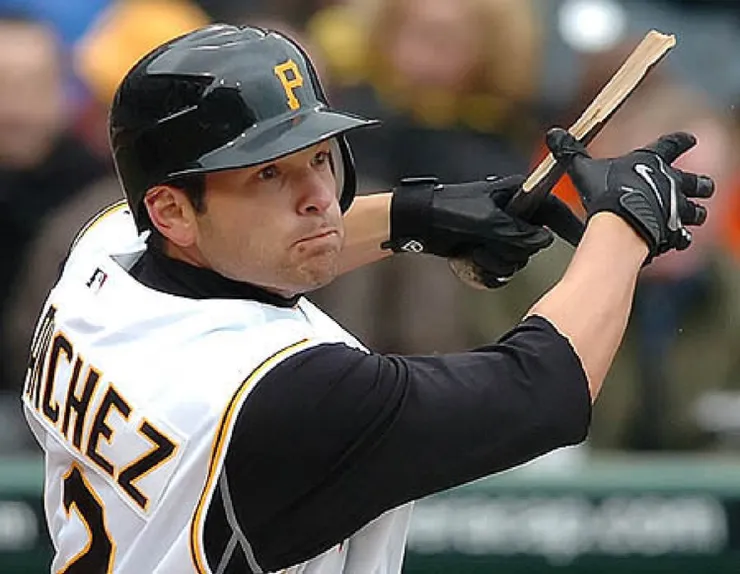
Freddie Sanchez and our next subject both overcame being born with a club foot and a pigeon-toed foot. Doctors questioned if he would ever be able to walk. He had several surgeries to correct the problems, and eventually, he was able to pursue his dream of playing in the majors. Sanchez had a 10-year career in the majors. He won a batting title, hitting .344 in his second full season in the big leagues. He was a career .297 hitter.
Jim Mecir
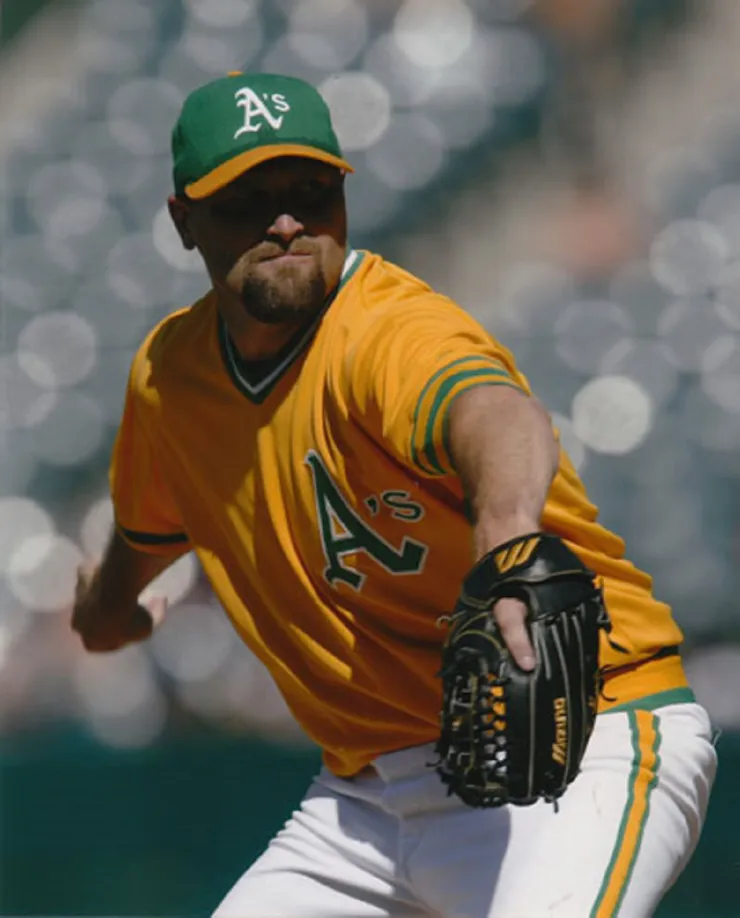
Mecir was also born with two club feet. He, like Sanchez, needed multiple surgeries to correct the problem. He would go on to pitch 11 seasons, mostly with the A’s; he was 29-35 with a 3.77 ERA and 12 saves.
Vision problems would make playing baseball almost impossible. But there are a couple of players who worked their way to the bigs in spite of being visually challenged. One was Ryne Duren. Duren wore glasses with lenses that looked like they were as thick as a coke bottle. He had a tremendous fastball and little control of the same. He would often throw his first warmup all the way to the backstop. Many a hitter was pretty intimidated from that point forward. Duren pitched ten years in the majors. He was an All-Star four times. He finished with a 27-44 career record, 3.83 ERA, 55 saves, and 41 HBP.
Tom Sunkel
One of the more improbable careers belongs to this man, Tom Sunkel. He was injured in his eye in an accident with a toy gun. Doctors saved the eye, but he could barely see out of it. Over the years, cataracts developed, and he lost most of the vision in his eye. He pitched a couple of years for the Cardinals. Just as his career was getting started, he went totally blind in the eye. That was 1939. In 1941 he was signed by the Giants and, for the next four years, pitched in the big leagues. His last season, 1944, was spent with Brooklyn. He was 9-15 in his career.
Many other players have had to deal with some sort of disability. The Dodgers saw that firsthand when Jim Eisenreich came over in the Piazza deal. Jim was suffering from Tourette’s syndrome. Al Kaline battled osteomyelitis as a child. Ron Santo, Bill Gullickson, and Sam Fuld all battled with Type-1 diabetes. Several battled cancer. Many of us remember Dave Dravecky. Dravecky broke his arm, which had been weakened by his battle with cancer, delivering a pitch. Well, there they are, some of the players who made their big league dreams come true despite the obstacles they had to overcome.
Future Dodgers Down on the Farm (by Mark)
- OKC won13-5
- Bobby Miller started and went 5.2 innings, allowed nine hits and 5 R. He was just about perfect through 4.0 innings (just like Stone yesterday). He walked one and struck out 3. You have to look at him pitch and say, “how in the hell…” That’s the main reason I think he should pitch out of the bullpen. He seems to lose focus at times. Andrew Miller had the same issues until they put him in the pen.
- Victor Gonzalez pitched one inning, allowed one hit, and struck out 1.
- Mike Busch hit his 27th HR to go with 86 RBI, .278 BA, .360 OB%, and .892 OPS.
- Miguel Vargas was 2-4 with 2 BB. Miguel also stole two bases… he now has 15 on the year.
- Edwin Rios was 2-6 with a HR.
- Jason Martin hit his 27th HR., scored three runs, and had 3 RBI.
- Hunter Feduccia was 2-5 with 5 RBI (a HR was included).
- Jacob Amaya was 2-5 with his 3rd HR.
- Wichita beat Tulsa 10-7.
- Brandon Lewis hit a 2-Run HR.
- Leonal Valera hit a 3-Run HR.
- Great Lakes beat the Lug Nuts 12-1.
- Diego Cartaya hit his 22nd HR – a 3-Run Shot and drove in 4 runs as he went 2-5. (.949 OPS)
- Vivas, Vargas, Ramos, and Diaz all had two hits.
- Emmett Sheehan went five innings and allowed two hits and one run. He walked 0 while striking out 11. He’s a mover, and you need to be watching.
- The Modesto Nutsbeat the Rancho Cucamonga Quakes 6-5.
- Dalton Rushing was merely mortal, going 1-4 – it was a double, however!
Dodger News & Notes (by Mark)
- The Bazooka is returning soon.
- Tommy Kahnle threw a simulated game and hit 97 MPH yesterday.
- V-Gon also pitched an inning
- Danny Dufy pitched an inning.
- Blake Treinen is working his way back.
- Yency Almonte is expected back the second week of September.
- Of course, all might not make it back, and someone else may get injured, but Friedman’s Boys have that covered!
- If they all come back, who goes away? What a great problem to have. “Bawwwwwahhhh! We have too many pitchers.”
- Did someone say that maybe Kershaw should not pitch in the playoffs? If he’s healthy, why in the world would you not want a guy with a 2.64 ERA and a 0.984 WHIP on the team?
- Dustin May was better than advertised. Walker Who?
- Speaking of Walker Buehler, some fans have wondered aloud why the Dodgers did not know what was wrong with Walker’s arm after he had surgery on his elbow. I am going to say that the dodgers had Dr. Neal ElAttrache perform the surgery, and he will also perform the surgery this week on it, and it is still not clear exactly what the problem is. They should know more after the surgery. Maybe they should have had someone better than Dr. Neal ElAttrache perform the surgery. He’s only the best on the planet… maybe they should have sought help from Uranus?
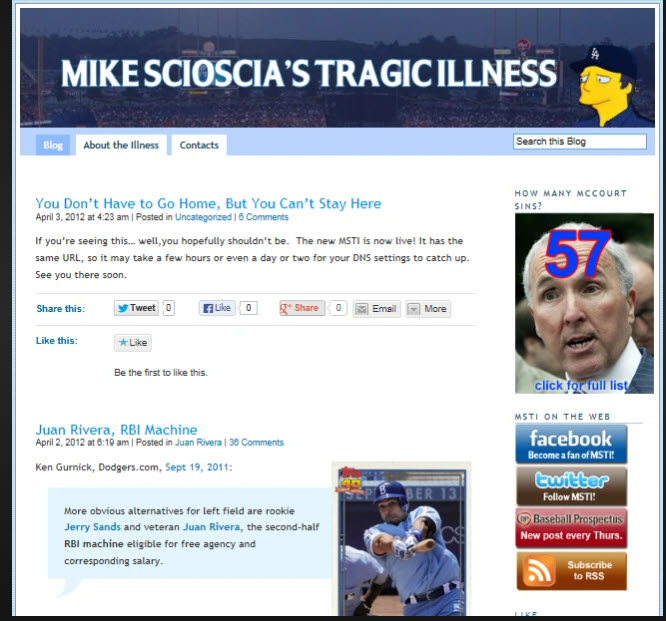
- Mike Petriello wrote an excellent article for MLB yesterday about the Dodgers’ Dominance. Back in the day, Mike and Jon Weisman were occasional commenters on LADT. We took different paths (not that I could ever write like Mike). I remained a hobby blogger and built a multi-million dollar company while he built his brand and became a famous writer and TV Personality. I would not trade places and he wouldn’t either. I remember MSTI:
More from Dodger Talk

Enjoy it While You Can!
It was both surprising and not surprising to me that the Dodgers signed Kyle Tucker. That they can make it work is a tribute to the true genius of Mark Walter and Andrew Friedman. Enjoy it while you can, because it will end soon. In the upcoming CBA and talks among owners, MLB…

Dodgers Food Trailer
I did this interview a couple of weeks ago with Chef Mike, who runs the Dodgers Food Trailer for the Great Lakes Loons. They are there for every home and road regular season and playoff game. They prepare three meals a day for approximately 50 people (players and coaches). Since games end late most evenings, they do not prepare breakfast. Many of their hotels have a complimentary breakfast anyway. However,…

Meet LAD 2026 Draft Picks 1-12
3 picks were High School players (2 SS and 1 OF). There was a college OF, college catcher, college SS, and 10 college pitchers. Of all the talk for a need for a catcher, the only catcher the Dodgers selected was Luke Bard, son of LAD bullpen coach Josh Bard. Bard was a 4th year senior from Houston Christian University. He is not a prospect, so the Dodgers are still…

Interview with Paul Beachy – Team Bus Driver For The Great Lakes Loons (LA Dodgers Minor League Team)
It’s been a few days since I did this interview. We have evidently been working my son-in-law (the video guy) like a rented mule at US Water Systems. However, I am taking him to London with me in a few days, so maybe Watford will buy him a pint as a tip, but he’s a dang Red Sox fan, so there is that! I thought that it would be interesting…
Discussion (58)
Disagree, not disagreeable
BP –
Right on about your comment “I hate platoons but it seems reasonable to platoon Belli, Gallo, Thompson and CT3 in LF and CF. All of them are great defenders and they all strike out a ton. But, they are come up with big hits and run the bases well. You could do a lot worse for 8-9 in the lineup.”
I agree completely! The back of the Dodger lineup could be the secret weapon in the playoffs! My distaste for platoon baseball goes back to Walter Alston in 50s-60s. But, he did win 3 World Series in LA; six decades later I admit I was wrong.
I heard a comment today from Orel that I have heard many times throughout my life as baseball fan “Baseball is a game of adjustments.” It truly is: pitch to pitch; inning to inning; game to game; and, season to season! JT, Max and others have applied this axiom to their careers; I hope that Belli will embrace it in his off-season hitting work because – IMO – his early career hitting approach is not going to work anymore….my two cents!