
The Mahatma: Branch Rickey
Young Branch Rickey Wesley Branch Rickey was born in a small Ohio town on Dec 20, 1881. His father was a farmer. He had an older brother, Orla, {B 1875} and a younger brother, Frank {B 1888}. His father, Jacob, was a very religious man, and the household was your typical pious…

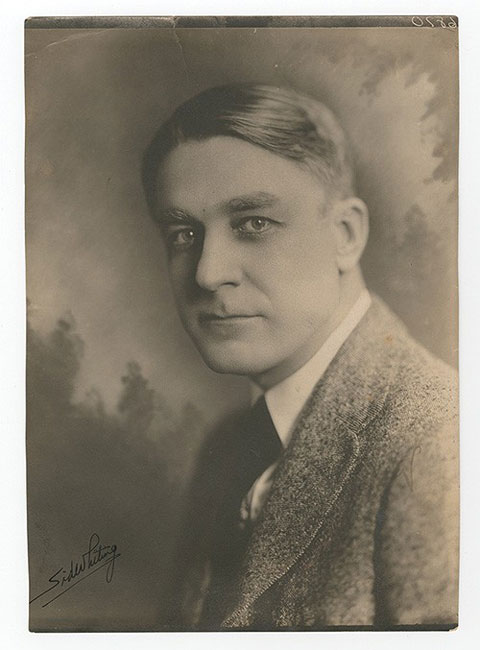
Wesley Branch Rickey was born in a small Ohio town on Dec 20, 1881. His father was a farmer. He had an older brother, Orla, {B 1875} and a younger brother, Frank {B 1888}. His father, Jacob, was a very religious man, and the household was your typical pious Methodist family. Rickey finished grade school, but then labor on the farm called. He got help from a retired educator who helped him get as many books as he could, considering the resources in the 1890s in Scioto County, Ohio. He educated himself enough to become a teacher at a local grade school, saving his money to go to college. Eventually, he went off to Ohio Wesleyan University, and over the next decade, his life was a hodgepodge of sporadic education, sports, and eventually coaching.
He played baseball and football at Wesleyan, and realizing he could make money to pay for his studies, he entered baseball’s semipro circuit in 1902 and coached the university team the next spring. He moved to the minors in 1903 and played in three different cities. He was a catcher, and after he graduated in 1904, his contract was purchased by the Cincinnati Reds. He would play parts of three seasons in the majors, where he earned a reputation as a bad hitter, a marginal catcher, and an odd duck for refusing to play on Sundays.
His refusal to play on Sunday’s infuriated Red’s manager, Joe Kelley, no relation, who released him back to Dallas before he got into a game. For the winter, Rickey moved to Allegheny College, where he coached football and baseball. He was purchased by the White Sox that winter but then sent to the St. Louis Browns when the Sox decided that they could not carry a catcher who refused to play on Sunday and refused to report until the college season was over. He made his MLB debut on June 16, 1905. That one game was it.
His mother became ill, and he returned home. By the time she had recovered, the season was over, and he returned to Allegheny. That winter, he became disillusioned with the semiprofessional character and left before the baseball season began.
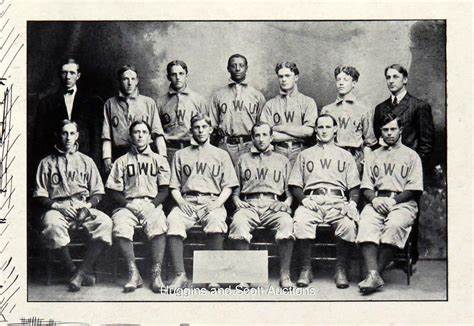
While his MLB career as a player was very short, he would go on to have a long front office career. A sore arm eventually ended his playing career, and he returned to Ohio Wesleyan to complete the courses he needed to go to Law School. He married his sweetheart in June of 1906 and went on to a laundry list of jobs. He was Ohio Wesleyan’s athletic director while also coaching football, basketball, and baseball. He was secretary of the Delaware Ohio YMCA, and he taught law classes while taking other law classes as a student. He threw himself into William Howard Taft’s presidential campaign and worked with the Anti-Saloon League.
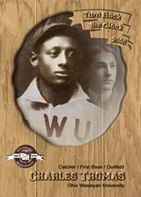
While coaching baseball at Wesleyan, an incident happened that would steel his resolve later on to integrate baseball. Ohio Wesleyan’s baseball team traveled to Cincinnati for a set of games. When the team tried to check into the hotel, the hotel manager would not allow the team’s lone black player, Charles Thomas, to register in the hotel. Rickey finally managed to get the young man a room, and when he went up to check on him, he noticed the young player wringing his hands, saying to himself, “it’s my skin, if I could only get it off, I could be like everyone else.” That incident stuck with Rickey. He could not do anything about it with the establishment, but he vowed he would try to do something about it in baseball.
By the end of 1908, perhaps because of all his activity, he was diagnosed with tuberculosis, the #1 killer at the time. He spent most of 1909 in a sanatorium in upstate New York. He only left to start his first semester at the University of Michigan law school. By the end of 1910, his health had improved enough for him to supplement his income by coaching baseball for the university.
In 1911, nearing 30 years old, he graduated from Law School and chose Boise, Idaho, as the site of his law office. By his own account, it was a bad choice. He only had one client, and he did not even want a lawyer. But his baseball knowledge rode to the rescue. He had been scouting for the St. Louis Brown’s owner, Robert Hedges, who had been impressed with Rickey’s articulate presentations and intelligence. After a second unsuccessful winter in Boise, he was only too happy to meet in Salt Lake City and discuss full-time employment with the Browns.
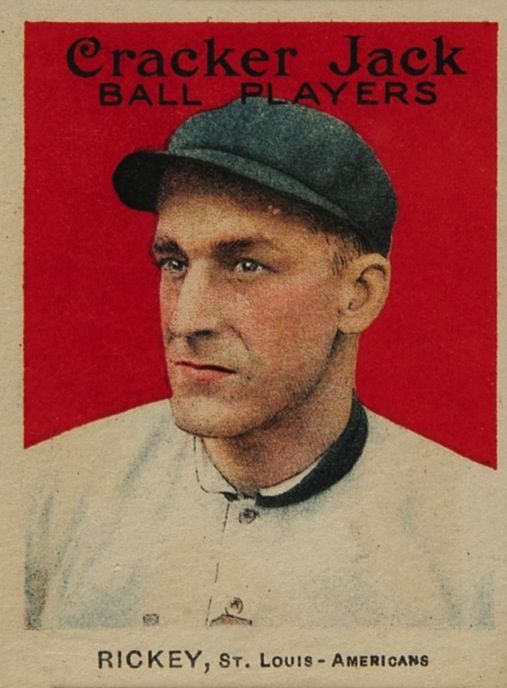
Thus began a half-century working in baseball. At first, with the help of Charlie Barrett. a full-time scout, he would look at players in the Midwest and South. His title was somewhere between scout and GM. he would then present a list of players the Browns could draft from minor league teams. In 1912, 30 of the 105 players chosen were taken by the Browns. In mid-1913, he became the manager. He taught his players with a blend of lectures, heart-to-heart talks, and drills. He also began a lifelong fascination with statistical analysis. He even hired a guy to sit behind home plate and check how many times a player got on base and advanced his teammates.
The Browns improved some in 1914 and then slipped back in 15 amid accusations that Rickey was too intellectual in dealing with his players. That winter, Hedges sold the Browns to Phil Ball after giving Rickey a long-term contract as GM. But Ball was contemptuous of Rickey’s religious views and his approach to the game. He hired another manager, and Rickey returned to being a scout. He was not happy about it. In 1917, the Cardinals got new ownership, and they convinced Ball to release Rickey from his contract so he could become the Cardinal’s President.
Living in St. Louis and running the Cardinals was not all that easy a task. They had not finished in the top half of the league but once in the last 25 years. They struggled to their best record since 1891, but it was only good enough for third place. Rickey clashed with manager Miller Huggins, who was leery of Rickey’s theoretical approach. That winter, Huggins was lured away by the Yankees, and Rickey hired Jack Hendricks to manage the Browns.
In August of 1918, Rickey joined the US Army Chemical Corps; he was commissioned as a Major and joined a company that included Captains Ty Cobb and Christy Mathewson. Before the Armistice on November 11th, his unit supported many attacks on the Germans. He was back in the states by Dec 23rd and spent Christmas at home with his family. NOTE: Sometime during his training, Mathewson was exposed to gas accidentally. As a result, his lungs were weakened, and it eventually killed him in 1925.
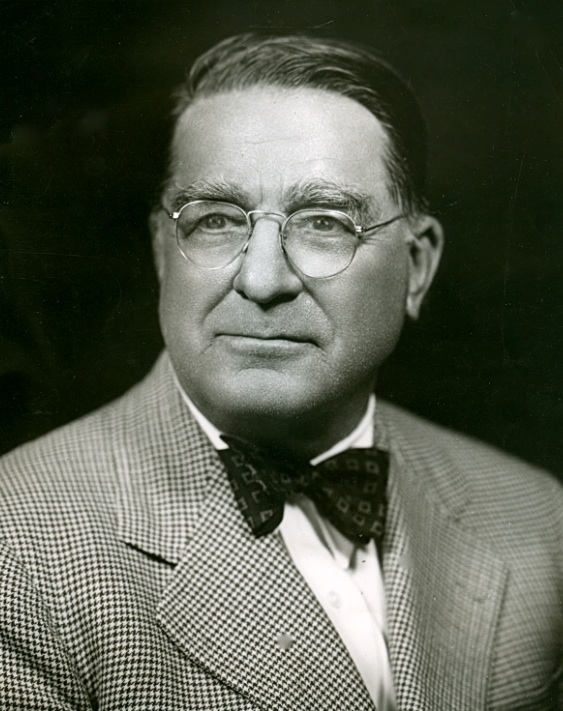
The team he returned to was in serious financial trouble. He named himself the manager to save money. His teams were lousy. They did improve a little but then fell back. He was finally replaced by Rogers Hornsby. He contemplated quitting but then decided to stay as GM. But he was beginning to lay the foundation that would make the Cardinals a league powerhouse for the next three decades. When he was kicked back up to the front office, Rickey really found his niche. He practically created the position of business manager all by himself. He was also beginning to get the farm system going. This was a move of need. The Cardinals could be outbid for real talent since the team was financially challenged, so an experiment started at A-Class Houston in 1924 became a testing ground for what would follow.
They would sign as many as they could cheaply and then weed out the good from the bad. The best they would keep for themselves and the good ones were sold to other teams to give the Cardinals a profit. The one team became many, and the Cardinals farm system supplied a bunch. Rickey was a cold-blooded judge of talent, and he was not sentimental when it came to aging players. He would prove that time and time again by trading those guys to fill holes. He was also a teacher. He set up sliding pits to teach sliding and base stealing. He put up strings in the bullpens so pitchers could develop control.
Rickey was not above using deception to get his way. Kennesaw Mountain Landis, the commissioner, thought the minor leagues should be run as separate entities. He did not like the idea that major league teams could use them to supply their needs in a pennant race. In one decision, he released 74 players from the Cardinals system. This was known as the Cedar Rapids decision. Landis had said the Cardinals had more than one team in some leagues, so they could affect pennant races by moving players between these teams. He offered no proof they had done so, but he released the players anyway. One of the more talented players released was outfielder Pete Reiser. Rickey arranged for the Brooklyn Dodgers to get Reiser with the proviso that, eventually, he would be returned to the Cardinals. But Reiser did so well in spring training that Larry McPhail reneged on his promise.
Rickey built an NL powerhouse in St. Louis that would win nine pennants and 6 World Series between 1926 and 1946. By late 1942, Rickey’s relationship with Cardinal owner Sam Breadon was strained. He had refused to back him on the Cedar Rapids mess, and he would give himself bonuses while cutting Rickey’s budget for salaries. In 1937, Brooklyn board member James Mulvey approached him about coming to Brooklyn. He was not ready to leave his comfortable life in St. Louis. By 1942, he was. On October 29, he was announced as the new GM of the Brooklyn Dodgers at a lunch at the Brooklyn club. He was also introduced to Walter O’Malley, with whom he shared a table.
Brooklyn fans saw a different team than Rickey did; he saw a team that had aging stars and had been ravaged by manpower needs in WWII. The fans saw a team that won the pennant in 41 and finished 2nd in 42. It was the disposal of aging stars that would earn him the nickname “El Cheapo,” But it also built the foundation for the “Boys of Summer.” Rickey was unkempt and absent-minded. He was a staunch conservative and backed Dewey for president. There was even talk of him running for governor of New York if Dewey won. He would absentmindedly toss lit cigars into trash cans. His wife said, “he will never be on the top ten best-dressed list.”
With the draft in place, teams cut back on signing players. Rickey signed them in buckets. Players like Gil Hodges would play a handful of games in the majors before heading off to boot camp and then return to stock baseball’s richest farm system. It was during this time that Rickey earned the nickname, The Mahatma. A reference to Mohandas Mahatma Gandhi, who was said to be a combination of your father and Tammany Hall.
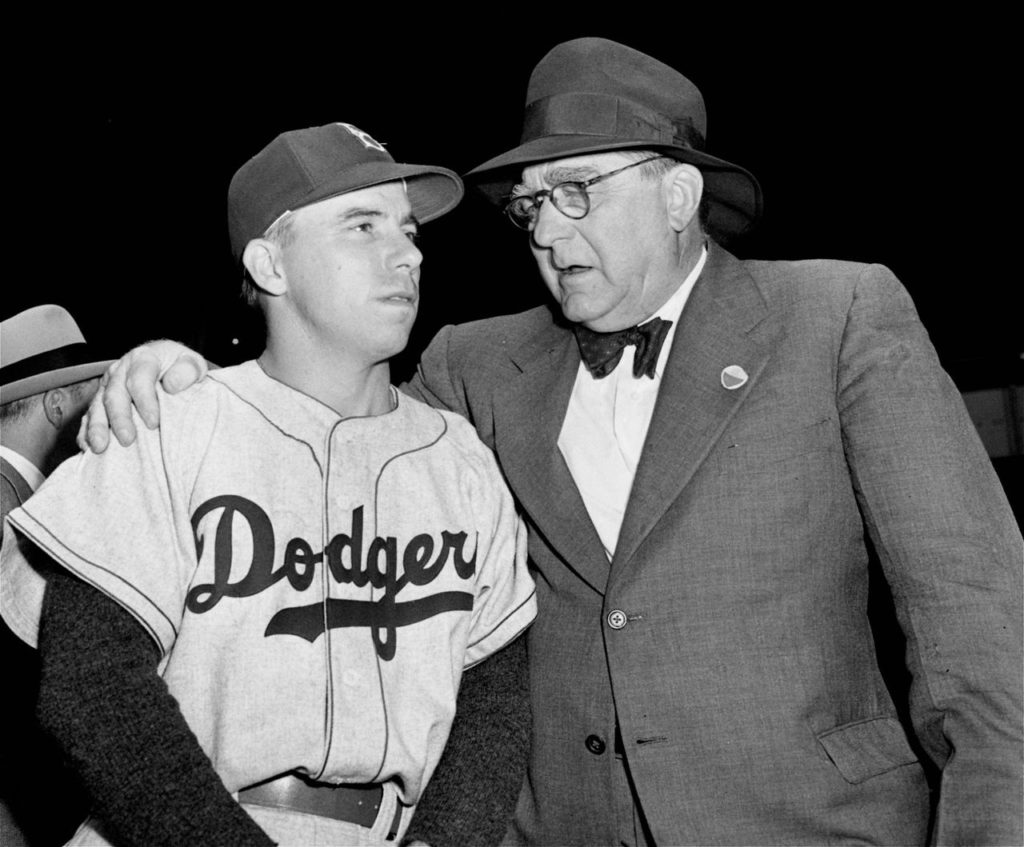
After the war, Rickey blended pre-war players like Dixie Walker, Hugh Casey, and Pee Wee Reese with the results of his player development program. That led to another Rickey innovation, the spring training complex. With close to 700 players under contract, Rickey needed a large complex to train the players. He made a deal with the City of Vero Beach to use the former Naval pilot-training base on the east end of town. Using a complex system of colors and numbers, players were sorted, trained, analyzed, graded, and eventually assigned to their minor league teams, all according to Rickey’s methods. Except for Vero Beach, which became a model for other teams, most of the things he did had been honed in the Cardinals organization. But his next move would raise him from talented baseball executive to sainted agent of progress.
Rickey had been thinking about integrating baseball since early in his tenure with Brooklyn. We all know the story. Rickey wanted a man who was not only a good ballplayer but intelligent enough not to fight back. Jackie Robinson was that man. He would be 27 before he played a minor league game. Jackie paid Rickey back plenty. He was the catalyst of 5 Pennant winning teams. And forever is etched in baseball and Dodger lore.
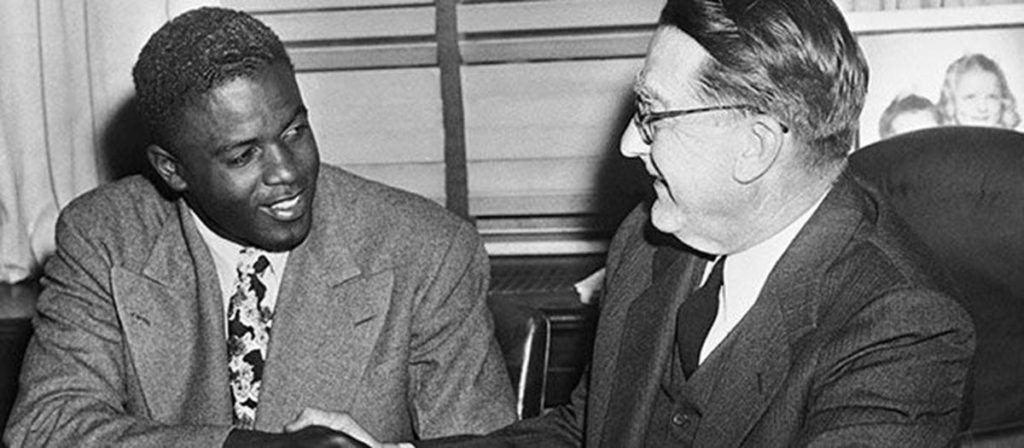
His relationships with his partners were not so good. By 1950, he knew that his lucrative contract would not be renewed. So he set the wheels in motion to give Walter O’ Malley control of the team and himself in the GM chair in Pittsburgh. He set out to make Pittsburgh the kind of team the Cardinals had been But by 1855, and he was gone. His original move was to send his chief scout, Howie Haak, to the Caribbean to look for talent. It would pay off huge in 1960, but Rickey was long gone. He also engineered the plucking of one Roberto Clemente from the Dodgers in the rule 5 draft.
For two years, he headed the Continental League. He promised not to raid MLB rosters, but the league collapsed when baseball expanded. He joined the Cardinals as a consultant. It was an awkward relationship. Cardinals GM Bing Devine felt threatened by Rickey’s presence. Then when Rickey advocated that Cardinals star, Stan Musial, should retire, it got worse. He was not helped when Busch fired Devine in 1964, and the Cardinals won the pennant with a team assembled by Devine. Busch was embarrassed, and after the season, he fired Rickey too. Branch spent his last years writing his book, “The American Diamond: A Documentary of the Game of Baseball.” It was the closest thing to an autobiography he would write. Rickey passed away in Dec of 1965. He is buried in Rushtown, Ohio, just across the river from Lucasville; his wife died in 1971 and is buried next to him. Rickey was inducted into the Hall of Fame in 1967.
More from Dodger Talk

Enjoy it While You Can!
It was both surprising and not surprising to me that the Dodgers signed Kyle Tucker. That they can make it work is a tribute to the true genius of Mark Walter and Andrew Friedman. Enjoy it while you can, because it will end soon. In the upcoming CBA and talks among owners, MLB…

Dodgers Food Trailer
I did this interview a couple of weeks ago with Chef Mike, who runs the Dodgers Food Trailer for the Great Lakes Loons. They are there for every home and road regular season and playoff game. They prepare three meals a day for approximately 50 people (players and coaches). Since games end late most evenings, they do not prepare breakfast. Many of their hotels have a complimentary breakfast anyway. However,…

Meet LAD 2026 Draft Picks 1-12
3 picks were High School players (2 SS and 1 OF). There was a college OF, college catcher, college SS, and 10 college pitchers. Of all the talk for a need for a catcher, the only catcher the Dodgers selected was Luke Bard, son of LAD bullpen coach Josh Bard. Bard was a 4th year senior from Houston Christian University. He is not a prospect, so the Dodgers are still…

Interview with Paul Beachy – Team Bus Driver For The Great Lakes Loons (LA Dodgers Minor League Team)
It’s been a few days since I did this interview. We have evidently been working my son-in-law (the video guy) like a rented mule at US Water Systems. However, I am taking him to London with me in a few days, so maybe Watford will buy him a pint as a tip, but he’s a dang Red Sox fan, so there is that! I thought that it would be interesting…
Discussion (73)
Disagree, not disagreeable
Doug Rau v El Jefe
Open on www.tiktok.comhttps://www.tiktok.com/t/ZTRP9SkMT/Maybe Lux was not 100% yesterday, which caused him to make the misplays, and
What does it mean when Doc said that Gonsolin’s MRI was “as good as we could have hoped?”
That could mean just about anything.
There’s a reason the Dodgers added Reed and DFA’ed him: They want him back next year!
But it’s a risk!