
The Importance of a Mexican Star
Dave Robert’s selection to start Julio Urias in Game one of the NLDS was a landmark decision that essentially told the world that he had supplanted Clayton Kershaw as the ace of the staff. This was no slight to Kershaw, who continues to thrive as a Dodger starter and will…

Dave Robert’s selection to start Julio Urias in Game one of the NLDS was a landmark decision that essentially told the world that he had supplanted Clayton Kershaw as the ace of the staff. This was no slight to Kershaw, who continues to thrive as a Dodger starter and will undoubtedly be a first-ballot Hall of Famer after retiring. Urias’ durability is primarily the reason for the decision, as he can much easier come back and pitch game five of this series if it goes that far, unlike Kershaw, who now definitely needs his rest between starts. But there is another thing that is significant about the naming of Urias to this “Ace” status. He is a Mexican star on the Los Angeles Dodgers. Something that the team has wished to have ever since they arrived in Los Angeles in 1958.
Walter O’Malley understood that the Mexican American Community needed to be addressed. He knew his market and the demographics of Los Angeles, with a large Spanish-speaking population, primarily from Mexico (and understood that the proximity of Los Angeles to Mexico as well). He desperately wanted to tap into that market and find that one Mexican player that was a star. It was something he desperately wanted to cultivate. When you consider the origins of Dodger Stadium and the community that was displaced at Chave Ravine, it wasn’t a good start for the Dodgers with that community when they arrived. Because of those events, there were generations of Mexican Americans in Los Angeles that refuse to this day to attend Dodger games.
O’Malley was big on international expansion, and though Mexico was his prime target, it wasn’t the only international market that he wanted to enter. He sent his teams repeatedly to Japan on goodwill tours as well.
“Find me the Mexican Sandy Koufax,” he told his Latin American scout, Mike Brito. This was shortly before his death. “I tried to explain that it wasn’t easy. There aren’t a lot of arms that are electric like that.” But Brito, a Cuban-born scout with the Dodgers, searched for that talent south of the border, and much to his employer’s chagrin, he initially came up empty.
There were few that knew the ins and outs of the Mexican League in the 1970s better than Brito. A former minor league catcher in the Washington Senators organization. Brito was a Los Angeles-based truck driver still obsessed with baseball. He had meandered through the Mexican league region for a decade. Little did Brito know that his first break with a Mexican American player was right under his nose in Los Angeles, and he had found him before the Dodgers had even employed him as a scout. The year was 1976, and the 41-year-old Brito continued to play the sport he loved in an East Los Angeles Semipro Adult league. He could still hold his own as a catcher, and in this one particular game in Boyle Heights, he struck out against this mustachioed kid who threw a twisting screwball. It was there he found a young right-hander that would change his path and Dodger history as well.
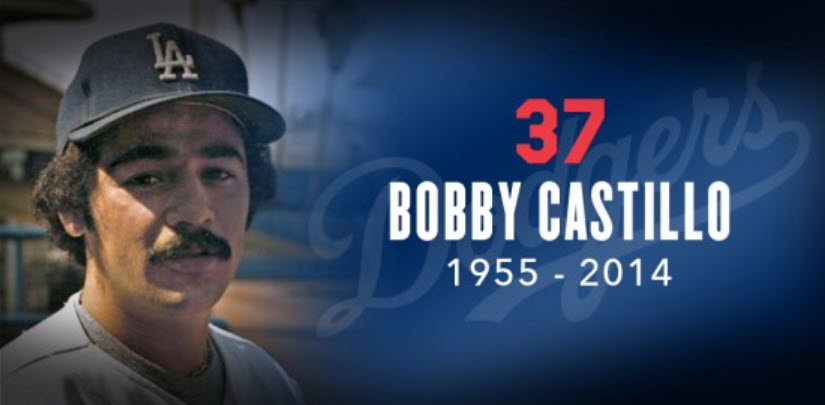
That strong-armed right-handed pitcher was L.A. native Bobby Castillo. Castillo had been drafted by Kansas City out of Lincoln High School, but the Royals cut him, and he now played in the adult league for fun. Brito was working in the Mexican Leagues at the time, and he immediately convinced Castillo to play in Reynosa. It was there where he quickly started his ascendency toward the big leagues.
Al Campanis hired Brito shortly after in 1978 because he had introduced Castillo to the Dodgers, who took a flyer on the kid. His screwball was mowing down Mexican League hitters at an impressive clip. He sported a 19-11 record and 2.22 ERA at Monterey. By 1977 the Dodgers compensated KC, who sold his rights to them. As a 22-year-old, he had a cup of coffee in the big leagues, and in 1978 he bounced between Albuquerque and the big club. Castillo loved playing for his hometown team. Being a Dodger fan, playing for the blue meant a lot to him, and his Los Angeles roots played a big role in that. His best year as a Dodger was 1980 when he was 8-6 with a 2.55 ERA. He remained with the big club in the ’81 strike year, where he earned a World Series ring. During the off-season, Campanis dealt him to Minnesota, where he got a chance to start, pitching 218 innings and going 13-11 with a respectable 3.66 ERA. Castillo finished his career in 1985 with a short return back to the team he loved in Los Angeles before retiring from the game.
Castillo loved wearing that Dodger uniform. When he was traded in 1982, he said, “It’s going to be hard not to out that Dodger uniform again. They’ve all been great, even the people in the stands who booed. They booed great.” Castillo’s historical contribution to the Dodgers really had little to do with his playing career. It was his ability to teach that screwball to an up-and-coming, Mexican left-handed pitching prospect who was in need of another pitch. Brito and Campanis paired Castillo with Fernando Valenzuela in 1979 Spring Training first because he could communicate with the young man who was just 19 years old. Secondly, Castillo’s unusual screwball might be a pitch that he could teach the youngster. The tutelage worked. Valenzuela learned to master the pitch immediately and put it to use. So effective was the pitch that he passed Castillo immediately in the organizational depth chart.
That Lefthander that Brito found in a dusty old field in Silao, Guanajuato became the greatest draw in Dodger history, but his signing almost never happened. In the ESPN 30 for 30 film “Fernando Nation,” the details of the Valenzuela discovery and signing were explained by Mike Brito.
“I went to (Silao, Guanajuato), Mexico, to watch a shortstop we were interested in. But I didn’t like the shortstop at all. He didn’t impress me a bit, but there was a young lefthander pitching that day against the shortstop. Twice he had the bases loaded against him with no outs, and twice he struck out the side. A young pitcher that age showing that kind of poise; that is something that we, as scouts, always notice. So, I forgot about the shortstop, and I went behind home plate and watched this left-handed pitcher. I was ready to sign him right there. I was impressed with his makeup. I told him my name is Mike Brito, and I’m a scout for the Los Angeles Dodgers. He didn’t care. I thought, ‘Who does this guy think he is?’”
Fernando recalls the story differently. He really didn’t know what a scout was, and he didn’t care either. He just wanted to win. “I concentrated on my game; that’s it.”
Brito was able to get the kid to admit that he would be interested in pitching in the big leagues. That was enough for him. One viewing of his performance and he was on the line with Al Campanis. “I think we found the Mexican pitcher that we need in L.A., and he may be another Sandy Koufax. We offered him $125,000, and they countered by seeking another $50,000.” Campanis wanted to walk away, but Brito convinced him to move forward. “It was a good thing that we offered the extra $50K because the Yankees came in with a $150,000 offer.”
Valenzuela’s arrival wasn’t immediately noticeable. He didn’t arrive with great fanfare or attention.
In a 2012 interview that I had with former Dodger outfielder Mike Marshall, he said the following about Fernando in the early stages of his development.
“Quick story. I’m in Reno, Nevada and I’m 19 years old, playing for the Lodi Dodgers. It’s half an hour before the game and they tell us that we signed a kid out of Mexico, he’s 18 years old and he’s starting that night, and I’m playing 1st base. It was Fernando Valenzuela. He had hair down to about here (points to his shoulders). Big long black hair. He didn’t speak a word of English. He was from somewhere in Mexico and Mike Brito had signed him. He threw about 90 MPH. He had a curve ball. I think we got beat that night. It was nothing special. It was towards the end of the season.
“So, we went to Spring Training the next year, and Bobby Castillo taught him the screwball. And the next year, he went to Double-A in San Antonio, and it got a little more interesting. He still didn’t speak English… He’s 19 now, and Hershiser was also on that staff. All of a sudden, he is lights out. He’s up with the big club. He didn’t even go to Triple-A. Next year there are a bunch of injuries out of Spring Training, and this kid could flat-out pitch. With his screwball and changeup, he threw over 90. He’s a heck of an athlete, and he’s the guy. He had no fear. He pitched opening day at the last minute against the Astros. I think he struck out 12 or 13 guys and threw a 3-hitter and Fernandomania starts.”
“You know, to see him at 18 and then the changes at 19. It just shows you that one pitch, just one little change, can impact in a major way. And then to be Mexican, pitching in Chavez Ravine. The year the Dodgers won in 81. I got called up at the end of the year. To be part of that was amazing…it was special.”
So here we are, 40+ years later, and it has always been important for the Dodgers to have that Mexican star. Ismael Valdez and Dennys Reyes briefly did so in the 1990s. Juan Castro wasn’t a star but a steady defensive infielder as well. Adrian Gonzalez filled the role for several years. Now there is Julio Urias, the number one starter on what may be the best pitching staff in the game.
Urias has accomplished a lot in his six years with the club. The only 20-game winner in the big leagues in 2021, the closer in the Dodgers’ first World Series Title since 1988 in 2020. Now he had the lowest ERA in the league and is a surefire candidate for the Cy Young Award. Watching Urias mature as a pitcher makes me see some similarities with Fernando Valenzuela; it is mainly his poise and confidence. Valenzuela pitched until his arm practically fell off. His career was shortened by overuse, a common theme of pitchers from that era. Today, Urias is coddled and treated with care. His value is too much for the Dodgers to risk losing him for any extended period.
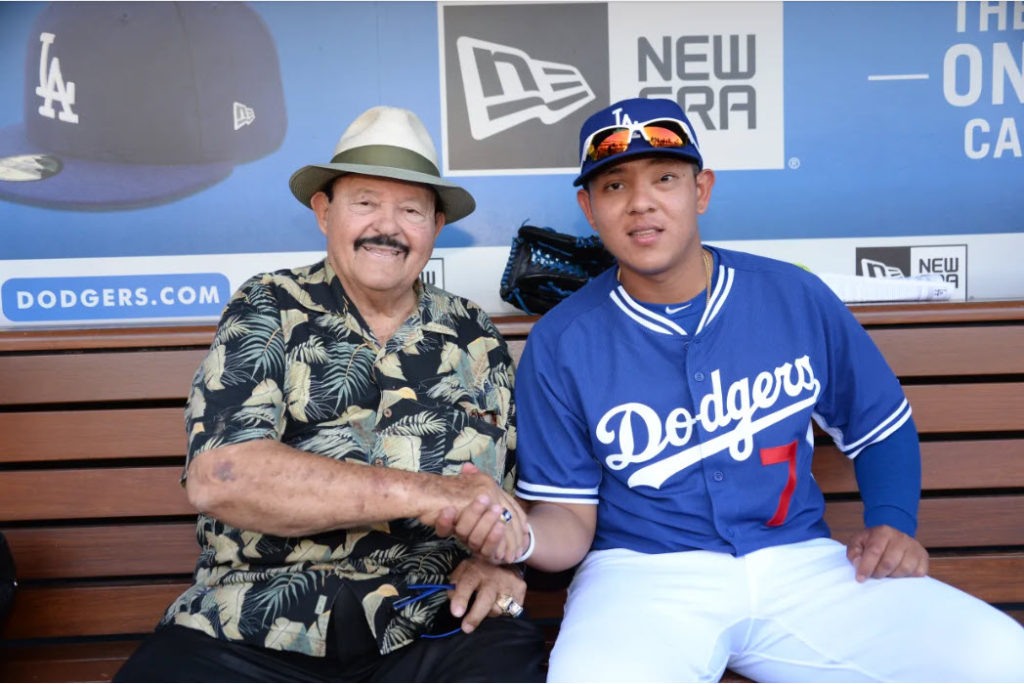
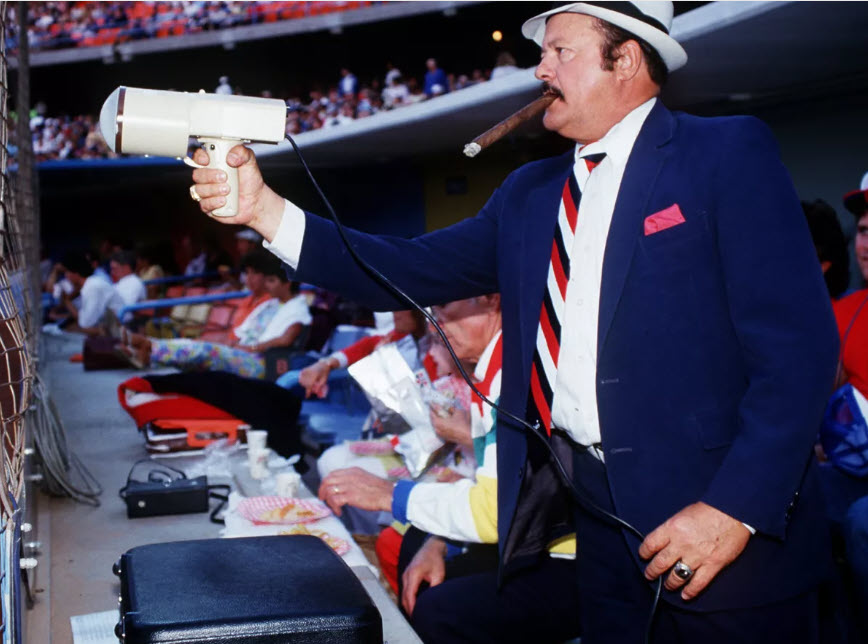
Bobby Castillo passed away too soon at the age of 59 in 2014 of cancer. He had been on the Dodgers alumni speakers bureau and community services team. Mike Brito died in July of this year. He signed many Latin American players over the years, including Ismael Valdez, Antonio Osuna, Juan Castro, Dennys Reyes, Victor Gonzalez, Karim Garcia, and Yasiel Puig. Many of us remember him for his Panama hat and radar gun that was in the inground dugout seats that Dodger Stadium used to have before Stadium upgrades. He was named International Scout of the year in 2014 and has been the recipient of the Tony Gwynn Award.
More from Dodger Talk

Enjoy it While You Can!
It was both surprising and not surprising to me that the Dodgers signed Kyle Tucker. That they can make it work is a tribute to the true genius of Mark Walter and Andrew Friedman. Enjoy it while you can, because it will end soon. In the upcoming CBA and talks among owners, MLB…

Dodgers Food Trailer
I did this interview a couple of weeks ago with Chef Mike, who runs the Dodgers Food Trailer for the Great Lakes Loons. They are there for every home and road regular season and playoff game. They prepare three meals a day for approximately 50 people (players and coaches). Since games end late most evenings, they do not prepare breakfast. Many of their hotels have a complimentary breakfast anyway. However,…

Meet LAD 2026 Draft Picks 1-12
3 picks were High School players (2 SS and 1 OF). There was a college OF, college catcher, college SS, and 10 college pitchers. Of all the talk for a need for a catcher, the only catcher the Dodgers selected was Luke Bard, son of LAD bullpen coach Josh Bard. Bard was a 4th year senior from Houston Christian University. He is not a prospect, so the Dodgers are still…

Interview with Paul Beachy – Team Bus Driver For The Great Lakes Loons (LA Dodgers Minor League Team)
It’s been a few days since I did this interview. We have evidently been working my son-in-law (the video guy) like a rented mule at US Water Systems. However, I am taking him to London with me in a few days, so maybe Watford will buy him a pint as a tip, but he’s a dang Red Sox fan, so there is that! I thought that it would be interesting…
Discussion (70)
Disagree, not disagreeable
For those “Fire Doc” folks, here’s what he has planned for tomorrow, in case you want to start screaming a day early.
Gonsolin starts. May is stretched to 60 pitches and may follow him. Not definite.
Barnes starts at catcher. Smith at DH.
Belli and Lux ride the pine.
CT3 in left. Trayce in center.
Muncy at 2nd.
Frustrating loss.
Machado can play. No doubt about that. But I agree with Bear. He’s a giant tool. I didn’t hate Barry Bonds simply because he was a Giant. He was an awful person. Even before he went on the juice and became The Hulk. Watching him lose the lowly Angels in 2002 (his only WS appearance) was very satisfying. Machado isn’t at that level for me yet. But he’s heading there.
A compilation of Manny being Manny, just to refresh everyone’s memory.
To be fair, I won’t be overly critical of his attempts to break up plays at 2nd base if we lionized Chase Utley for doing the same thing. The other stuff … he’s a douche. …that whiny face after the Donaldson tag … LOL!
Post lost in the ether
I don’t want to say all the lineup moves smack of desperation… but benching Belli and Lux to load up with right-handed hitters against Snell underscores the weaknesses in this vaunted 111-win team. Add to that the fact that Vargas sat while Barnes pinch-hit for Belli, and Taylor’s struggles with Ks all season.
It’s surprising that this team, with all its success, has entered the playoffs with so many position players–Belli, Gallo, Vargas, Taylor, etc– playing beneath their potential. Sad to say, but Roberts was right to have Barnes pinch it: he made decent contact while Belli looks like a K waiting to happen. Vargas would have been a roll of the dice–but didn’t he make the roster because of his bat? (Or is it really just his legs?)
The hope now, clearly, is that the righty-loaded lineup will get to Snell early.
Perhaps Roberts and AF remember when Snell, with the Rays, dominated the Dodgers a couple postseasons back before Kevin Cash, mindful of the analytics, lifted him after two trips through the lineup. The Dodgers were grateful and went on to beat the Rays.
So what happens this time if the Dodgers don’t get to Snell early?
My guess is that Bob Melvin , unlike Cash, would keep Snell in until he shows some weakness.
We’ll see…..
Another thought: Right now, don’t you wish AF had found a guy who mashes lefties instead of Gallo? Seems that they counted on Vargas, with all his potential, to be that guy….but so far he isn’t mashing anyone.