
Iron Mike Marshall: Baseball Rebel
In the winter of 1973, the Dodgers sent longtime center fielder Willie Davis to the Montreal Expos for Mike Marshall, the Expos’ closer who led the league with 31 saves. The Dodgers’ closer at the time was Jim Brewer, a 36-year-old left-hander who had joined the team in a trade…

In the winter of 1973, the Dodgers sent longtime center fielder Willie Davis to the Montreal Expos for Mike Marshall, the Expos’ closer who led the league with 31 saves. The Dodgers’ closer at the time was Jim Brewer, a 36-year-old left-hander who had joined the team in a trade with the Cubs in 1964. He had been their primary closer since 1968.
Marshall was born in Adrian, Michigan, in 1943. His father, William, was a draftsman, and his mother, June, a homemaker. When he was 11, he was riding in a car with his uncle when the car was hit by a train. His uncle was killed, and Mike had a back injury that would bother him for years and shape his baseball career.
After he graduated from high school in 1960, he signed with the Phillies as a shortstop. He also enrolled at Michigan State University and began classes in the offseason. Sometime shortly thereafter, he married his hometown sweetheart, Nancy Matthes.
He climbed steadily up the minor league ladder in the Phils organization for 4 years, reaching AA. He was an above-average hitter but made an alarming number of errors in the field. Then things started to go south. He told the organization that he wanted to pitch, believing it would be easier on his back than diving for ground balls.
The powers that be in Philadelphia, unwilling to let a player dictate which position he would play, became the first of 11 teams to decide they could do quite well, thank you, without the services of Mike Marshall.
So, the Phillies sold him to Detroit in 1966. He completed his conversion to pitcher, and by May of 1967, at 23 years of age, he made it to the Tigers. He had an excellent rookie season, pitching in 37 games, he had a 1.97 ERA with a 1-3 record and 10 saves. The Tigers missed the pennant by 1 game. His reward? A trip back to the minors in 1968.
He figured out he had a problem retiring left-handed batters. He started working on throwing a screwball. At that time, screwballs were considered arm killers by most baseball coaches and organizations. Tigers’ manager, Mayo Smith, told him to quit using it. When he refused, the Tigers let him go to the Seattle Pilots in the expansion draft.
The Pilots’ pitching coach, Sal “The Barber” Maglie, told him the same thing. He was 3-10 with a 5.14 ERA in 69 games with the Pilots; they sold him to the Brewers, who then sold him to the Astros. Astros skipper, Harry Walker, told him the same thing. He was with Houston for just 4 games before being traded to the Expos, his fifth team in just 4 years.
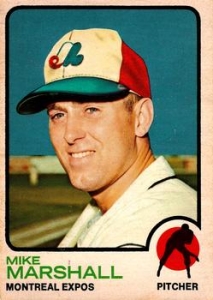
Marshall was 27 when he was traded to the Expos. He and his wife had been married for 9 years. They lived in transient housing during the season, taking their three children with them. In the winter, they lived in graduate student housing at Michigan State while Mike earned a master’s degree and studied for a PHD.
In 1970, he was 3-7 with a 3.48 ERA and three saves in 64.2 innings. In 1971, Expos manager, Gene Mauch, installed him as his “late inning fireman”, they were not called closers yet. Mauch, known as “The Little General”, was an old-school type manager. Mauch had told him, ” Do it your way as long as you don’t try to influence other players that your way is the right way.
Now able to control his screwball, Mike seized the role. His first year in the job, he had a 5-8 record with a 4.28ERA and 23 saves in 111.1 innings. He led the league in games finished with 52. After 10 years of butting heads, he had finally found home. Mauch said he never argued with Marshall because he was intelligent and always thinking.
1972 saw Mike go 14-8 with a 1.78 ERA, 18 saves, and he led the league in appearances. He pitched 116 innings. 1973 saw him with a 14-11 record, a 2.66 ERA, and 31 saves in 92 appearances. He pitched 179 innings. His 31 saves and 92 appearances led the league. Surprisingly, he did not make the All-Star team. On the downside, he blew 12 saves. Since he often came in for multi-inning saves, he had more chances to blow a game than modern-day closers.
It had taken him a long time to be successful in the game. But success did not keep him from putting his foot in his mouth. He refused to accept a $5,000 check awarded to the team’s outstanding player because he did not believe teammates should compete for individual awards. That embarrassed the club’s radio sponsor, who sponsored the award.
He then told an interviewer a couple of weeks later that the Expos’ defense stunk and he named names. A huge taboo in baseball circles, even though he had said the comments were off the record. He finished 2nd to Seaver in the Cy Young voting, but the team had seen enough. He was traded to the Dodgers for CF, Willie Davis, who was 3 years older.
Marshall was apprehensive about the move. He knew the Dodgers were an excellent organization and that they worked hard to achieve success. He was also leaving his favorite manager. He now had to convince Alston to buy into his program.
“I will tell you on days when I am not able to pitch; otherwise, you can pitch me every day you feel I can help you win a ballgame,” he said. Alston believed him. “Walter Alston was a beautiful human being,” he said.
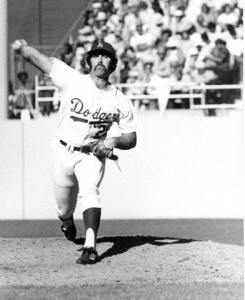
Marshall began 1974 by pitching in 5 consecutive games. Starting on June 18th, he threw in 13 consecutive games in 16 days, breaking the MLB record of 9. During that stretch, he picked up 5 wins in six days. He pitched on consecutive days 53 times and both ends of a doubleheader once. He would pitch in 106 games with 208.1 innings. He was 15-12 with 21 saves.
No pitcher has come close to pitching in that many games since. Kent Tekulve and Soloman Torres came the closest with 94 each. Marshall once said, after 3 days off, “If I had not pitched tonight, I would have had to pitch batting practice tomorrow. It felt like I hadn’t pitched all year.
Alston used him like most managers of the day. He would come in if the team were ahead, tied, or behind, often as early as the 6th inning. Marshall’s heavy lifting allowed the Dodgers to carry nine pitchers instead of the usual 10. It should be noted that the save rule was different than. It made it harder to record a save.
LA won the division, and Marshall was unscored on in two games of the playoffs against the Pirates. The Dodgers then faced the two-time champion A’s. Marshall would pitch in all five games, but his teammates remember the last one best since they believed his bullheadedness cost them the win.
The Dodgers were down, 3 games to 1. Game 5 was in Oakland. Marshall came in to relieve Sutton with the game tied at 2 in the 6th inning. The A’s leadoff hitter was Joe Rudi. Someone in the left field stands threw a whiskey bottle at LF, Bill Buckner. The game was held up for close to six minutes.
Marshall refused to take the traditional warm-ups even though catcher Steve Yeager and his teammates urged him to keep loose. When play resumed, Rudi hit Marshall’s first offering for a series and game-winning homer. Rudi said he got the fastball he expected because he did not think Marshall would throw a screwball after waiting around that long.
“You have to throw a few pitches when you wait around that long,” Yeager said. The Rudi homer was the only run Marshall allowed in the series. Marshall had come in after finishing warming up in the pen, and his point was that the delay was not that long. But some Dodgers never forgave him.
After the season, Marshall earned the Cy Young award and finished 3rd to Garvey in the MVP vote. He refused to say he had done anything special. “I have a simple job; I pitch for the Dodgers when they need a relief pitcher. I do not count appearances, wins, losses, earned run average, or saves; I am just ready to pitch.”
He was proud that his arm showed no signs of damage with all of the pitching, but his body was another matter. The 75 season was less than 2 weeks old when he fell to his knees on the mound in Dodger Stadium with a pain in his side. “I felt like someone stuck a knife in me.” The diagnosis was torn rib cartilage. He went on the DL. When he returned, he pitched inconsistently. He finished with a 9-14 record, eight blown saves, and just 13 saves. His ERA was 3.19 in 109 innings. He said the injury had nothing to do with his arm but was most likely a result of the love handles in his waistline.
Many of his teammates sought him out about ways to keep their arms healthy, including Messersmith, John, and Sutton. Joh,n who had undergone the surgery that would bear his name, enlisted his help with rehabilitation. John would pitch until he was 46. Fran Tarkenton and Billy Kilmer also sought him out.
He also landed in legal trouble in the winter of 75 over his insistence on having his own way. While studying for his doctorate, he kept in shape by taking pitching and batting practice in the university’s intramural center. But when players on nearby tennis courts started complaining about baseballs being hazardous, university officials said he would have to reserve time rather than just practice when he wanted.
Marshall ignored them and kept doing what he wanted. That resulted in him being arrested. The court fight would drag on for several years. He was late to spring training because of court appearances and then angered Dodger management with his role as player rep. He aired grievances about hotel accommodations in several cities and demanded that sportswriters be kept off the team bus.
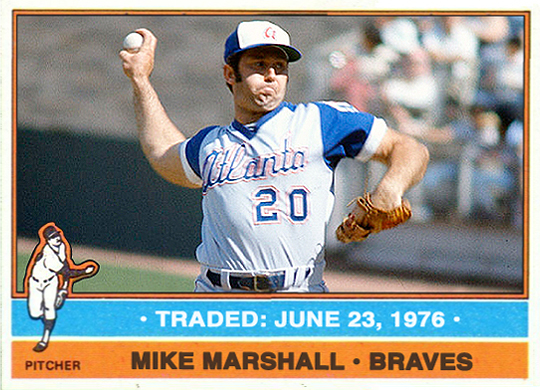
At the time, knuckleballer Charlie Hough was pushing him out of the closer role. When he left the team for another court appearance early in the season, team president Peter O’Malley had had enough. On June 23rd, he was traded to the Braves for Lee Lacy, Elias Sosa, and cash. Jim Murray wrote, “There isn’t a team in the league that would not want Mike if they could just keep the arm and get rid of the rest.
Marshall arrived in Atlanta without his trademark sideburns, like a man looking for a fresh start. He would pitch 24 games for the Braves before his season ended because of knee surgery. He showed up late for spring training in 77 because of another arrest in his ongoing feud with Michigan State.
In his 4th appearance of the year, Braves skipper Dave Bristol came out to relieve him. He rolled the ball across the infield and left the team. The Braves put him on the disqualified list. He was sold to the Texas Rangers on April 30th.
His stay in Texas would not be long. They tried him as a starter, but he injured his knee fielding a bunt. He had surgery on the knee and, after the season, an operation to repair the back problem that had been bothering him since childhood.
He was 35 and close to getting his PHD. He decided to retire. He kept up his rigorous routine, and his wife knew he wasn’t ready to quit. After the season started, she called Gene Mauch, who was now managing the Twins. Needing relief help, Mauch asked him to work out with the team.
Calvin Griffith, the team owner, said they could not afford Marshall’s salary, now over $ 100,000. Several Twins players, including Rod Carew, a six-time batting champ, fumed at the owner’s penny pinching. How can he expect anyone to want to join the team when he does things like that? Marshall got his contract at a reduced rate.
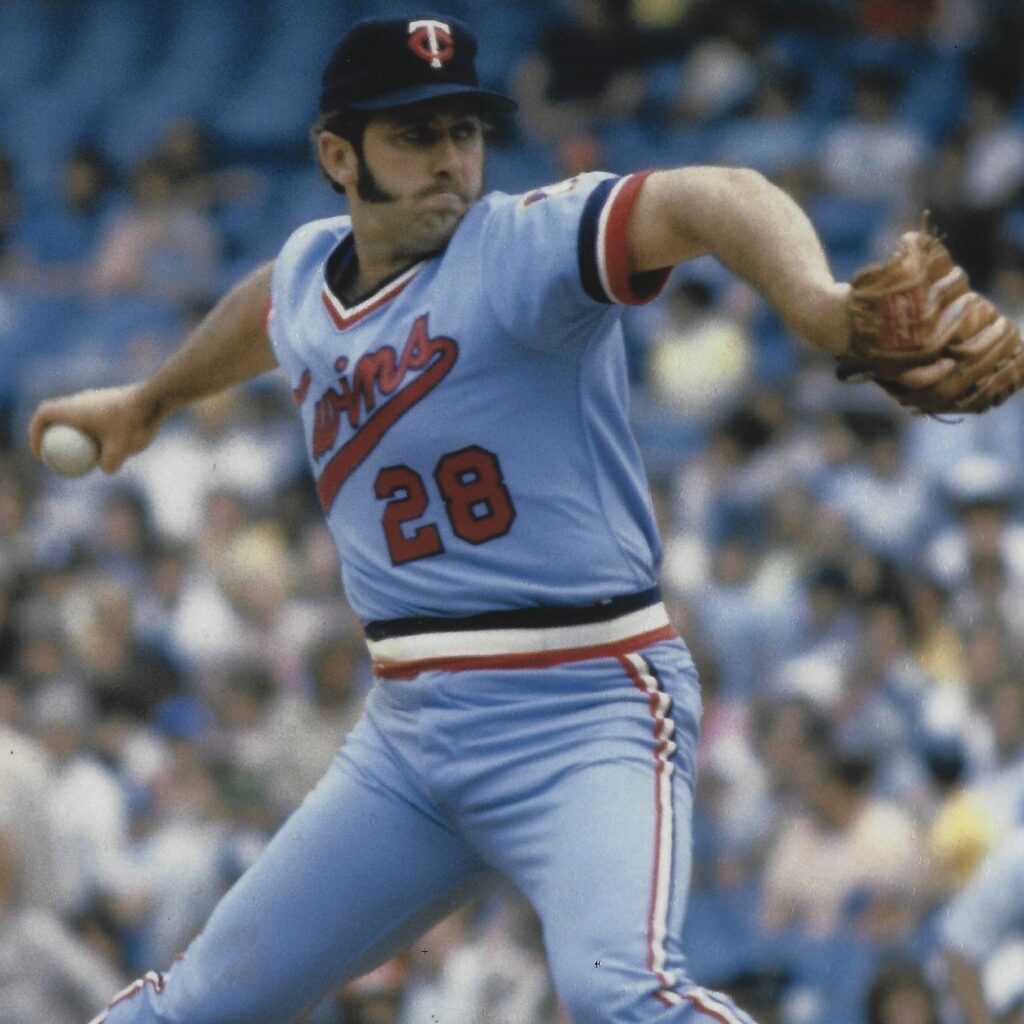
He would call it his second career. Now that he had some financial security, he said this time it is for fun. He went 10-12 with a 2.45 ERA and 21 saves in 99 innings for the Twins. Griffin then signed him to a 3-year, $850,000 deal.
In 1979, he went 10-15 with a 2.65 ERA, led the league in appearances with 90, and saves with 31. In 1980, his second career suddenly went south. Mauch started using him in mop-up situations. Marshall was pitching poorly, but he suspected there was another reason for his demotion, and Mauch confirmed it.
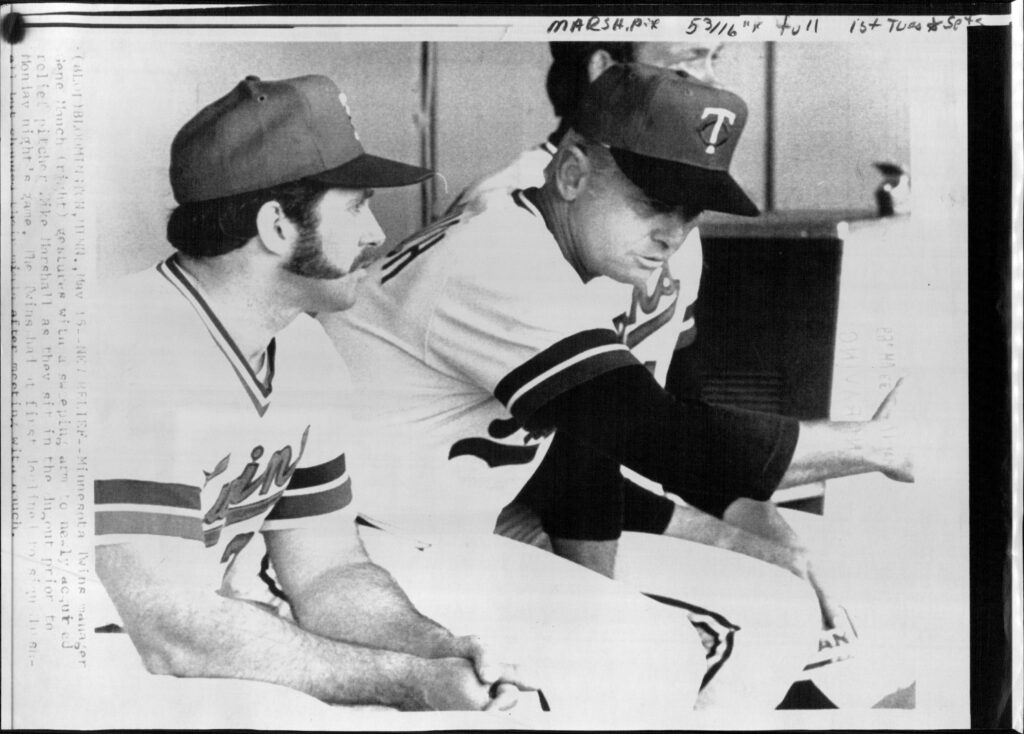
“It’s this player rep stuff; you have to quit doing it.” Marshall was one of the players’ union’s most high-profile negotiators, and they were in a standoff with the owners over a new union contract, and Mauch hated the union.
When the two sides agreed on an interim contract which would postpone the inevitable strike until the next season, Griffith decided to eat the 500,000 still owed to Marshall, and the Twins immediately released him. Mauch and Mike had been such good friends, but by the time he left the Twins, they were no longer talking.
Through the beginning of the 1981 season, Marshall could not find a job. He was 37, but just a year removed from one of his best seasons. After the strike ended, he found a job with the New York Mets who were managed by Joe Torre, a former union rep.
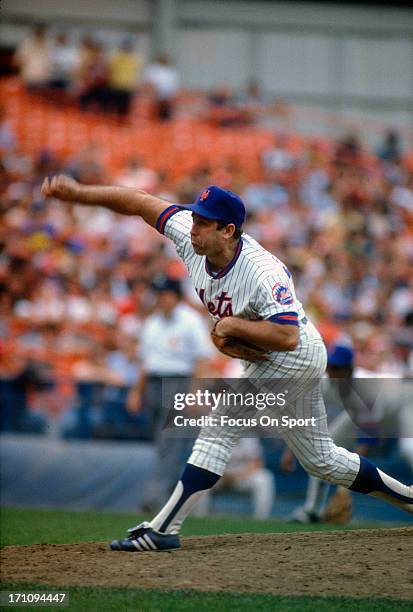
He pitched in 20 of the Mets’ last 43 games to a 3-2 2.61 mark with no saves. But the Mets released him anyway. He tried out with the Expos in 82 but was cut during spring training. He was forced into retirement with 188 saves. At the time, that was fifth on the All-Time list—58th in 2021.
After 17 years, Major League Baseball was through with Mike Marshall. He pitched one game at AAA in 1983 and continued to pitch in senior league sandlot games until he was 56. He was unable to find an organization willing to let him coach. In the early 90’s he wrote all 30 franchises offering his services by he did not receive a single reply.
They are still teaching pitching the same way the first guy who won a ballgame was pitching. None of them knows anything about science. They think Sir Isaac Newton invented the Fig Newton, he said. He coached at several small colleges for over a decade and then opened a pitching academy in the Tampa, Florida area. He did not try to get rich. He charged just 10$ a day for his course of instruction. He posted his treatise of pitching online for all to see. His routine involved throwing trash can lids and 12-pound iron balls with 30-pound sandbags strapped to the student’s wrist. He taught them a pitching motion so weird that onlookers wondered if he had ever even thrown a baseball. He insisted that delivery made them injury-proof.
His approach influenced Kyle Boddy, the founder of Driveline Baseball, one of the leading private pitching labs and a consultant to colleges and MLB. He took the name from Marshall’s drive-line theory, which holds that a pitcher’s arm and body should always be moving forward. His company hit the mainstream in 2019 when the Reds hired him as a minor league pitching coordinator. But he and several researchers took issue with some of Mike’s theories.
Most of Mike’s students were high schoolers and collegians who were not likely to get drafted or washed-up minor leaguers. One of the major leaguers who sought his help was Rudy Seanez, who came to him to help him recover from an injury.
Shortly after his baseball career ended, he and his first wife, Nancy, divorced. She would collaborate with Bobbie Bouton, Jim’s ex, on a tell-all book about their lives as baseball wives. Bouton and Mike had been teammates on the 1969 Pilots.
Marshall’s legacy indirectly connects to Brent Honeywell Jr. His father was Mike’s cousin. He taught the screwball to Honeywell Sr., who taught it to the kid. Honeywell made it to the majors with the Rays in 2021 and was a member of the Dodgers’ 2024 Championship team.
Marshall remained an outcast from baseball’s establishment, but he never gave an inch. “I know what works, I have a responsibility to give it back, if nobody wants it, that is not my problem”. Marshall passed away on May 31st, 2021. He had been in hospice care.
More from Dodger Talk

Enjoy it While You Can!
It was both surprising and not surprising to me that the Dodgers signed Kyle Tucker. That they can make it work is a tribute to the true genius of Mark Walter and Andrew Friedman. Enjoy it while you can, because it will end soon. In the upcoming CBA and talks among owners, MLB…

Dodgers Food Trailer
I did this interview a couple of weeks ago with Chef Mike, who runs the Dodgers Food Trailer for the Great Lakes Loons. They are there for every home and road regular season and playoff game. They prepare three meals a day for approximately 50 people (players and coaches). Since games end late most evenings, they do not prepare breakfast. Many of their hotels have a complimentary breakfast anyway. However,…

Meet LAD 2026 Draft Picks 1-12
3 picks were High School players (2 SS and 1 OF). There was a college OF, college catcher, college SS, and 10 college pitchers. Of all the talk for a need for a catcher, the only catcher the Dodgers selected was Luke Bard, son of LAD bullpen coach Josh Bard. Bard was a 4th year senior from Houston Christian University. He is not a prospect, so the Dodgers are still…

Interview with Paul Beachy – Team Bus Driver For The Great Lakes Loons (LA Dodgers Minor League Team)
It’s been a few days since I did this interview. We have evidently been working my son-in-law (the video guy) like a rented mule at US Water Systems. However, I am taking him to London with me in a few days, so maybe Watford will buy him a pint as a tip, but he’s a dang Red Sox fan, so there is that! I thought that it would be interesting…
Discussion (59)
Disagree, not disagreeable
I was so busy today that I forgot what day it was. In 1963, I was at choir practice when we got the news. I was at lunch when they lowered the flag to half-staff. I spent most of the next four days watching TV. I usually watched CBS because of Walter Cronkite. The country changed dramatically after that. I often wonder how things might have been different had JFK lived.