
Gene Autry: More than just an owner.
Eddie Dean, Gene Autry Monte Hale, Roy Rogers, Rex Allen Believe it or not, there was a time when singing cowboys roamed the silver screen. Most were pretty talented singers. The first, John Wayne, was not. His voice was dubbed for his part as Singing Sandy. Some did songs for…

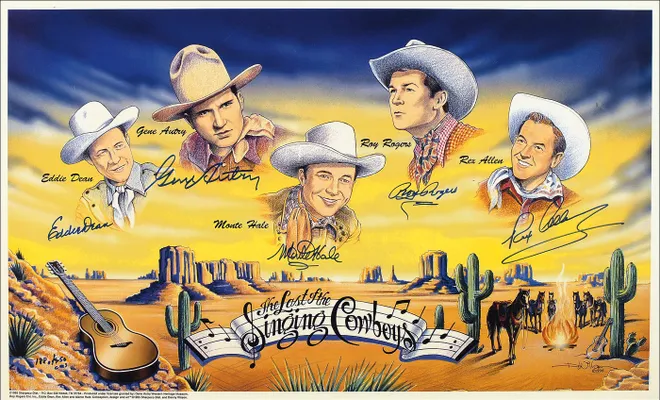
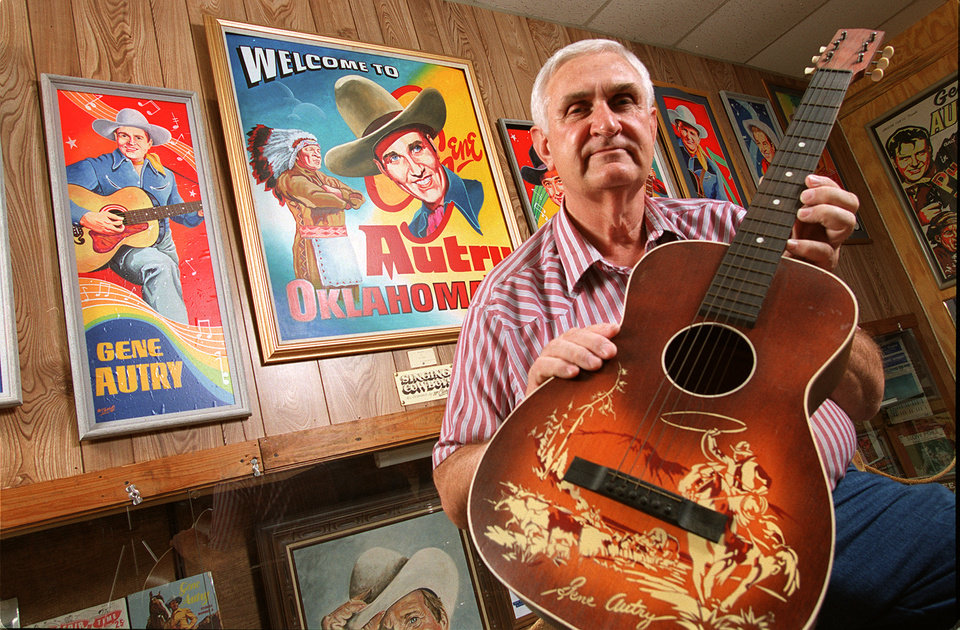
Believe it or not, there was a time when singing cowboys roamed the silver screen. Most were pretty talented singers. The first, John Wayne, was not. His voice was dubbed for his part as Singing Sandy. Some did songs for movie tracks we have never forgotten, such as Tex Ritter’s “Do Not Forsake Me” in High Noon. That tune won an Oscar. One of them, Gene Autry, recorded one of the most played Christmas songs ever, Rudolph the Red-Nosed Reindeer. But Autry was not just a singing cowboy. He was an entrepreneur. He had many varied investments and interests. And he did well in all of them. Well, almost all. He also, at one time, owned a baseball team. The Los Angeles Angels, who then became the California Angels… and then the Anaheim Angels.
Orvon Grover Autry was born in Tioga, Texas, on September 29, 1907. He was the first child of Delbert and Elnora Autry. He rarely spoke of his childhood because he wanted to forget most of it. His dad was mostly absent. His mom and her four kids had to rely on help from relatives in Texas and Oklahoma to get by. Ormon dropped out of high school to help the family and got a job as a railroad telegraph operator. At age 12, he had saved 8 dollars and bought a guitar out of a Sears-Roebuck catalog. He liked to tell of the time when Oklahoma’s most famous citizen at the time, Will Rogers, walked into the station while he was playing and encouraged him to pursue his musical dreams. It might be pure press agent stuff; the first document appeared after Roger’s death.
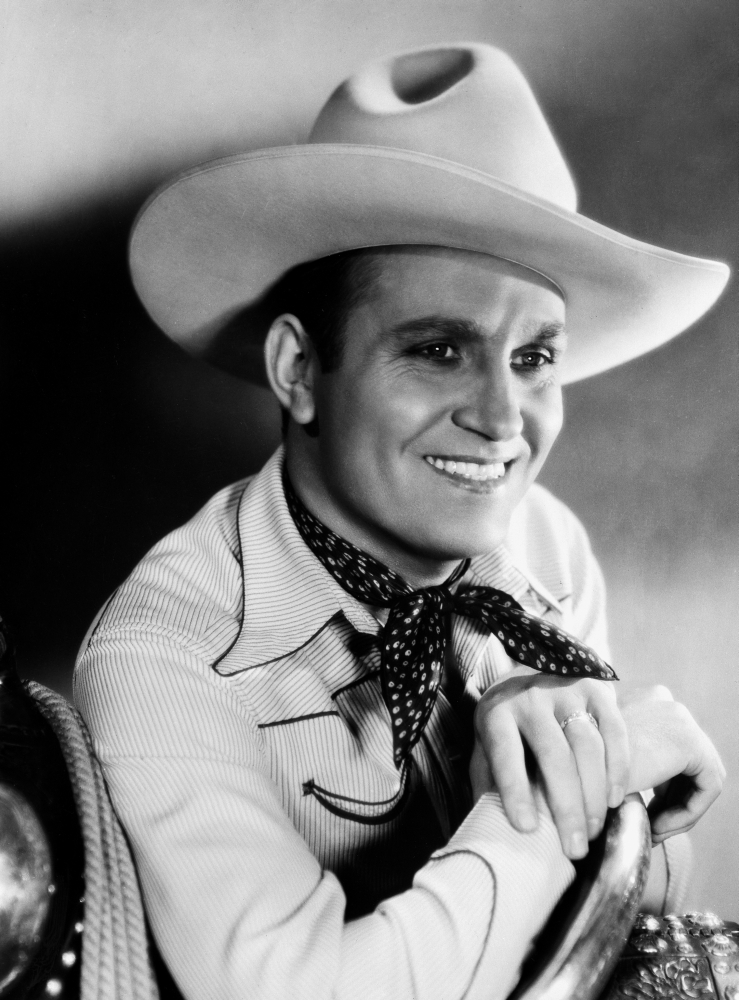
When he turned 20, he went to New York in search of a recording contract. He was turned away but came back with a new name, Gene Autry. He probably got the name from Gene Austin. a popular crooner he met on the way. He got his first radio gig at KVOO in Tulsa. He was billed as “The Yodeling Cowboy” and imitated Jimmy Rogers, the country star. His first hit record, “That Silver-Haired Daddy of Mine” sent him to the big time on Chicago’s WSM Barn Dance. It was the model for Nashville’s Grand Ole Opry.
During a trip home to Oklahoma, Gene met Ina Mae Spivey and married her four months later, on April 1, 1932. It all happened so quickly that most of his friends thought it was an April Fools prank. But they were married for 48 years. When his mother died that spring, his two sisters and brother moved in with the newlyweds. Ina, just 21, became their surrogate mother. The Autrys never had children.
In July of 1934, Ina, Gene, and his comic sidekick, Smiley Burnette, loaded up his Buick and headed for Hollywood. He felt the motion pictures would help him sell more records. His debut was a singing cameo in, In Old Sante Fe. It starred Ken Maynard. He was stiff and awkward on screen and was going to go back to radio, but Maynard was supportive and got him a role in the serial Mystery Mountain. He was more singer than cowboy, and stuntmen had to take his place more often than not.
His big break came when Maynard was fired for his drunken tantrums. He took over the lead in a bizarre 12-part serial that had him as a singing cowboy battling robots and mad scientists. Years later, when Maynard was living in a trailer park, Autry sent him monthly checks. He did the same with many other early benefactors who were down on their luck in their declining years.
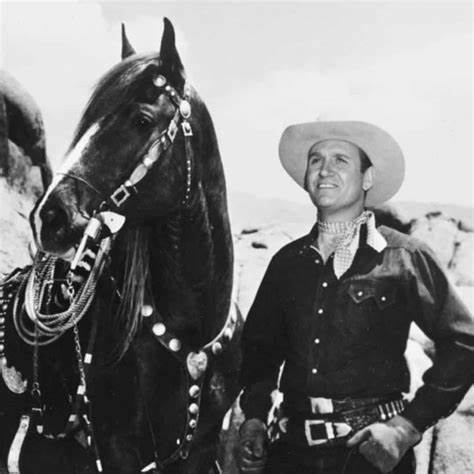
Within three years of arriving in Hollywood, he was declared to be the #1 star of action melodrama’s in 1937. His Republic films followed the same formula for wholesome, if bland family entertainment. The good guy defeats the bad guy but never shoots first and never kills anyone. The good guy gets the girl but never kisses her. Kissing was allowed in these movies, but when the studio realized that Autry’s core audience was pre-teen boys, who did not care for the mushy stuff. They would much rather see him with his horse, Champion.
In 1937, he was making about $6,000 dollars a picture but was vastly underpaid for his popularity. So, he went on strike. During his absence, the studio replaced him with a new singing cowboy named Roy Rogers. Born Leonard Slye in Ohio, he had several bit parts in Autry films. They became rivals, albeit friendly ones. From his earliest days, Autry used every avenue to turn his fame into money. Sears sold Gene Autry guitars, and he was said to be one of the first to have his name on comics, lunchboxes, jeans, and over 100 other products. He did refuse to endorse cigarettes. With personal appearances, songbooks, and records, his outside income exceeded his movie income. Personal note: I had a Roy Rogers lunchbox. He was my favorite.
In 1939, Autry took his show on the road to England and Ireland. It was a smash. His biographer likened it to the Beatles’ first American tour. A reported 250,000 people jammed the streets of Dublin to have a look at the cowboy. In the streets, that day was another American tourist, P.K. Wrigley, the owner of the chewing gum company. When he returned to Chicago, he ordered his ad agency to hire Autry for a weekly CBS radio show to be sponsored by Doublemint gum. That added another profit center to Autry’s empire, which now had a foothold in all entertainment media.
Gene’s career reached its pinnacle when theater owners voted him the #4 cinema star behind Mickey Rooney, Clark Gable, and Spencer Tracy. That is quite an achievement for a B actor whose core audience comes from the small towns and not the big cities. His income in 1941 approached a half million dollars. Autry’s reign as the #1 western star ended while he was serving in the Army Air Corps in WWII. When he sued Republic to get out of his contract, the studio retaliated by promoting Roy Rogers, who was found unfit for duty due to a bad back. Rogers climbed to #1 in 1943, a spot Autry never regained. Life magazine headlined a cover story on Rogers, “King of the Cowboys.”
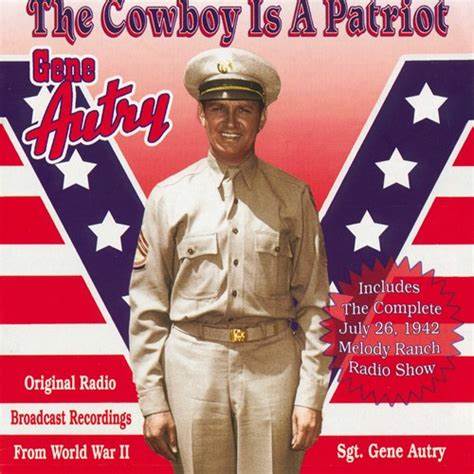
Seeing harsh evidence that stardom was temporary, Autry turned his energy towards business. After the war, he bought radio and television stations and hotels and invested in oil wells and real estate. When the California Supreme Court finally freed him from his Republic contract, he formed his own production company to make movies in a partnership with Columbia. The arrangement gave him control of his work as well as a tax shelter.
He also resumed his radio show and personal appearances. He enjoyed six top-10 records in 1947. In the fall, he recorded and released “Here Comes Santa Claus,” a song he co-wrote after hearing a child’s exuberant shout at a Christmas parade. It became a holiday standard, but nothing like his next Christmas song. In 1949, “Rudolph the Red-Nosed Reindeer” sold 2 million copies and carried Autry to the top of the Billboards country and pop charts for the first time. “Rudolph” would sell millions more over the years. It has been said that it is the second bestselling Christmas song of all time behind Crosby’s “White Christmas.” But the Guinness Book of World Records has it third behind another Crosby classic, “Silent Night.”
He also became one of the first stars to make the move to television. William Boyd, who Autry considered a third-rate actor, ran watered-down versions of his movies and ignited a crazy for Hopalong Cassidy merchandise. Autry starred in weekly half-hour shows for CBS-TV. His company also produces three other series for the station. One of those was ” Annie Oakley,” starring his sometime girlfriend, Gail Davis. But Autry’s career was going downhill. His new records were not selling. Television killed many of the small-town theaters where his movies were shown. Adult westerns like High Noon and TV’s Gunsmoke made singing cowboys seem campy. He released his last feature film in 1953.
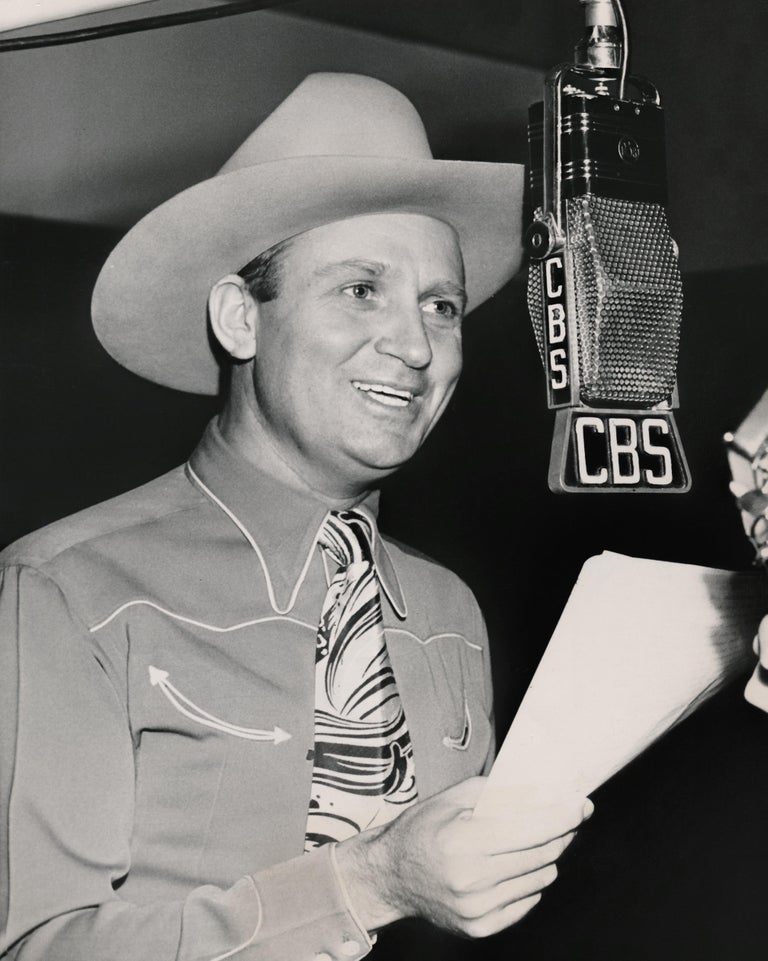
Autry had begun drinking heavily during the war, and as time wore on, it began affecting his work. After missing a number of shows, his sponsor, Wrigley, canceled the show in 1956. Out of radio and TV, his public appearances suffered too. As his entertainment career went into the tank, his business empire was hitting on all cylinders. One of his best money makers was the radio station KMPC in Los Angeles. KMPC began broadcasting Dodger games in 1958 when they moved west. But its signal was too weak to reach O’Malley’s home in Lake Arrowhead, and he moved it to a more powerful station he could hear.
KMPC needed a new anchor for its summer schedule. Autry thought he had found it when Hank Greenburg, the Hall of Fame slugger, came calling. Greenburg, now a baseball executive, had secretly received permission from the American League to place an expansion team in LA for the 1961 season.
Walter O’ Malley did not want to share the LA market. He leaned on commissioner Ford Frick and Frick declared that he deserved compensation for allowing a competing team into” his” territory. Upon hearing that, Greenburg pulled out. The AL was thrown into a frenzy. They had already announced the expansion team for Washington DC. For those of you not old enough to remember, the original Senators were allowed to relocate to Minnesota in 1961, becoming the Twins. The story often told is that Autry went to the meetings to secure the radio rights for the new team and ended up owning it.
The truth is he became interested as soon as Greenburg dropped out. When he found out it was not all Greenburg, he immediately thought, “I would like to own that franchise.” He took his choice for GM, Fred Haney, a LA resident who had led the Milwaukee Braves to two pennants. AL owners were facing ridicule for the bungled expansion when they met in St. Louis in December. Just like in the movies, the hero in the white hat rode to the rescue. The owners welcomed him with open arms. Why not, he was rich, and he wanted to own a ball club.
But O’Malley exacted a high price. The new team would pay him 350 thousand dollars for a ticket to enter the Los Angeles market. Instead of sharing the 90,000-seat coliseum with the Dodgers, the new team would play its home games in 22,000-seat Wrigley Field. Wrigley Field was the minor league home of the PCL’s Los Angeles Angels. And when the Dodgers moved into their new home, Dodger Stadium, the new team would play its home games there in 1962 and pay the Dodgers a minimum of 200 thousand, or 7.5% of the gate receipts. O’Malley would keep all the parking and some of the concessions. All told, the deal was worth about 750 thousand to the Dodgers. O’Malley also did not want TV competition from the new team. Since the Dodgers only broadcasted 11 games on TV a year ( all of their away games with the Giants), the new team would be limited to that number. After a meeting that lasted almost all night with O’Malley, Autry agreed to pay. After all, it was the price of doing business.
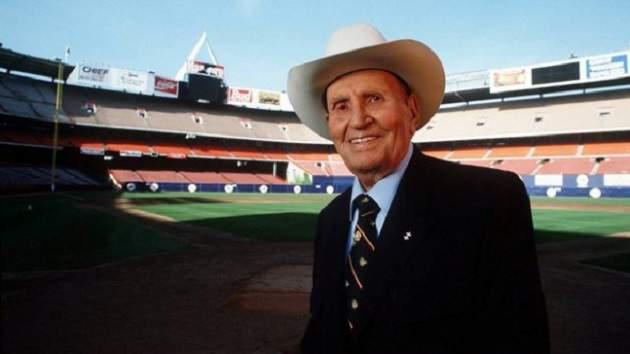
For Autry, getting the franchise was the answer to a boyhood dream. He had once been part owner of the Hollywood Stars PCL franchise. Now on track, the new team adopted the other PCL team’s name and became the Los Angeles Angels. They also had to find a manager and had only ten days to get ready for the expansion draft. After Stengel and Durocher turned them down, they settled on Durocher’s successor with the Giants, Bill Rigney. Most teams were allowed to protect their best players, so most of the players were over-the-hill vets or young kids who had not established themselves.
Ted Kluzewski, Bob Cerv, Eddie Yost, and Ned Garver were supposed to give the fans the idea that the new team was trying to win. All of those guys had their 34th birthdays in the rear-view mirror. But Haney plucked a couple of youngsters, Jim Fregosi and Buck Rogers, who would become team cornerstones. He also acquired pitching prospect Dean Chance after the draft. The 1961 team also had players like Albie Pearson, the diminutive, 5’4″ center fielder, and Leon “Daddy” Wagner. They drew only 600,000 fans but rallied to a 70-91 record. That was the most victories by an expansion team. They trained in Palm Springs and were put up in Autry’s hotels. He would lead them every morning on a bike ride to the ballpark.
The Angels shocked everyone in their first year at Dodger Stadium, which they referred to as Chavez Ravine. They charged into the pennant race, and on the 4th of July, they were in 1st place. They finished 3rd with 86 wins. Autry began to look for ways to climb out of the Ravine. He vented his complaints in uncharacteristically blunt language, “Chavez Ravine is an expensive venue to operate. Walter O’Malley is a difficult landlord. The Angels are treated as a stepchild by the Dodgers…we are playing in the shadow of the Dodgers and must build our own fan following elsewhere.”
On August 31, 1964, he broke ground for a new stadium to be built in Anaheim, 30 miles south. It would be paid for by the city. In 1966, renamed the California Angels, they moved into the new stadium. But attendance still trailed the Dodgers by a lot. And they languished in the second division most of the time. Autry really wanted a championship. But he was a hands-off owner, preferring to leave the baseball side to his GM and baseball people.
Gene was a people person, and he knew the names of all of his players, their children, and their wives. He would often travel with the team. He was more of a friend than an owner. He was always asking, is there anything you need? His one big star in the 1970s was Nolan Ryan. Ryan threw four of his seven no-hitters as an Angel. He had been an Autry fan since he was a kid. He said, ” Autry was one of the finest men I have ever known.”
With the advent of free agency, Autry saw a way to improve his team. All it would take was money. And he and his minority partner, Signal Company, had plenty. So they signed three of the biggest free agents on the market, Joe Rudi, Don Baylor, and Bobby Grich, to long-term contracts totaling 5.25 million. The equivalent of 22 million in 2017. It might not seem like much now, but his fellow owners were really upset. “This is bad for baseball.”
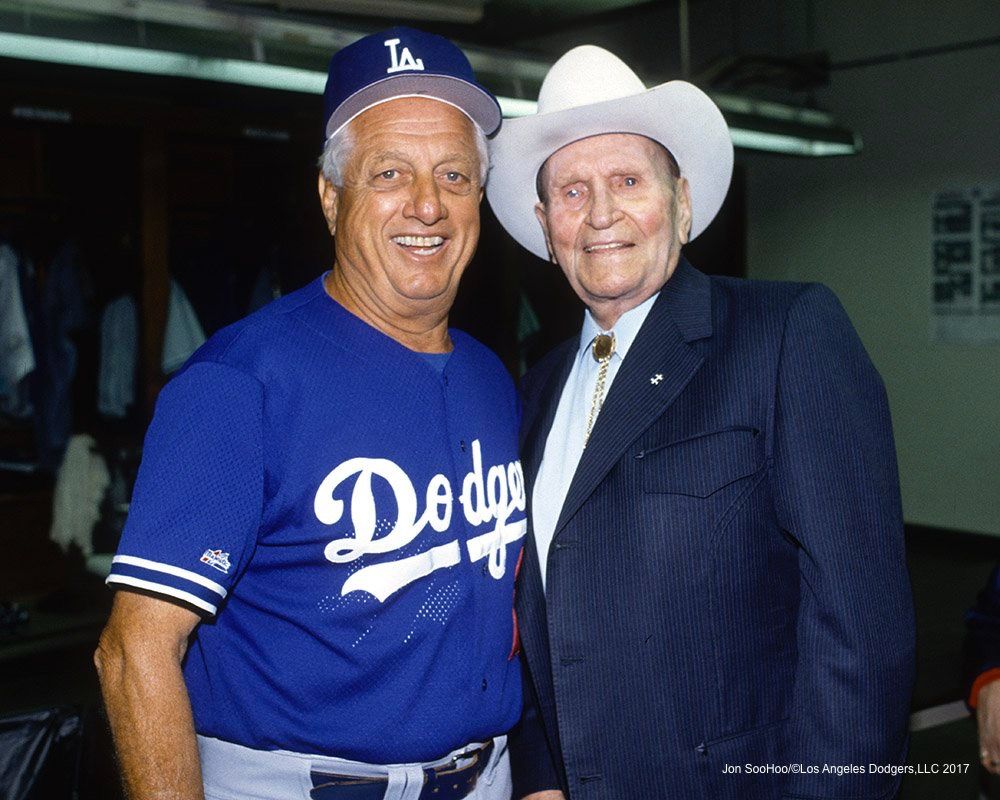
While Gene was counting on the free agents to help win games, he was also working with an old Hollywood axiom: stars sell tickets. Three years later, when the team signed Rod Carew, ticket sales doubled. The Angels won their first division title in 1979, then again in 1982 and 1986. Each time they lost the ALCS, Autry’s wife Ina passed in 1980. Although they were outwardly devoted, her husband spent a large portion of their 48-year marriage on the road. Either for movie shoots or personal appearances. There had been numerous liaisons with leading ladies or in some cases, groupies. Ina turned a blind eye to all of that. She even nursed him through uncontrollable bouts of drinking and unsuccessful attempts to quit.
Autry’s family life was always a mess. He supported his ex-convict father and his family for decades. His brother, Dudley, was a chip off of the old block, an alcoholic who tried and failed to ride the family name to a singing career. He was often on Gene’s payroll. Eighteen months after Ina’s passing, 73-year-old Autry married Jaqueline Ellam, 34 years his junior. A former bank executive, she took over the administration of his business.
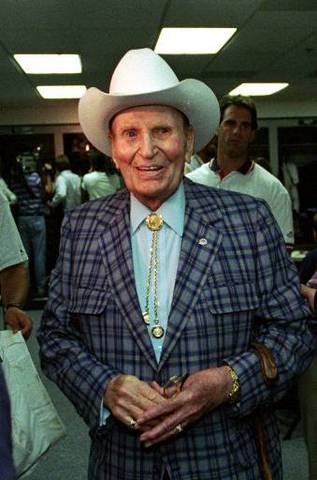
Gene became one of the leading philanthropists in Southern California in his later years. He spent 100 million dollars on building the Autry Museum of the American West. Now the Autry National Center. To those of you who live in So-Cal who have never been, you should go. They rotate exhibits, and there are some very interesting memorabilia there, especially if you are a film buff. He gave 5 million to build a wing on the Eisenhower Medical Center in Palm Springs, where he and Jackie lived. He turned over control of the Angels to Jackie in 1990. “Owning a baseball team has been one of the most exciting and frustrating experiences of my life,” he said. His team had never won a World Series, nor had they been in one. The 1986 team was within one out of making the dream come true when Donnie Moore gave up a home run to Dave Henderson of the Red Sox. Even though they were still up, 3-2 in games, they lost the next two games in Boston. Moore would eventually take his own life. Many owed that to his failure in that pivotal game.
In 1995, Autry announced a deal to sell the Angels to Disney Corp. The team rallied to be in first place in the AL west with the rallying cry, “win one for the cowboy.” But the team faded at the end and lost a one-game playoff to the Mariners. The sale went through in 1996. And Autry’s active participation with the team ended. He still attended games when he could. Disney acquired 25% of the Angels with the option to purchase the rest upon his passing. Gene contracted lymphoma and died at age 91 on October 2, 1998.
Autry considered himself a personality, not an actor or a singer. “When I started, some said I couldn’t act, and others said I couldn’t sing. But I sure could count.” After his death, he was mourned as a good man, an American success story, and for many, the memories of a good childhood. Four years after he passed, the Angels won the 2002 AL Pennant and defeated the Giants in the World Series. Manager Mike Scioscia raised a bottle of champagne in a toast to the Cowboy. One of the business’s Autry owned was Flying A Gas Stations. I had almost forgotten those.
Quick Notes From Vegas (MT)
- I was able to watch the game in a bar in the casino. I lost my $20 (which is all I bet), and my gambling is done.
- Last night’s game was a big step for the Catman to win the Cy Young Award. It’s his to win if he can keep it up.
- Tony Gonsolin may be Cy Young, but Julio Urias is Ace.
- Maybe CT3 is waking up.
- It’s a
goodawesome time to be a Dodger fan. - Carry on!
More from Dodger Talk

Enjoy it While You Can!
It was both surprising and not surprising to me that the Dodgers signed Kyle Tucker. That they can make it work is a tribute to the true genius of Mark Walter and Andrew Friedman. Enjoy it while you can, because it will end soon. In the upcoming CBA and talks among owners, MLB…

Dodgers Food Trailer
I did this interview a couple of weeks ago with Chef Mike, who runs the Dodgers Food Trailer for the Great Lakes Loons. They are there for every home and road regular season and playoff game. They prepare three meals a day for approximately 50 people (players and coaches). Since games end late most evenings, they do not prepare breakfast. Many of their hotels have a complimentary breakfast anyway. However,…

Meet LAD 2026 Draft Picks 1-12
3 picks were High School players (2 SS and 1 OF). There was a college OF, college catcher, college SS, and 10 college pitchers. Of all the talk for a need for a catcher, the only catcher the Dodgers selected was Luke Bard, son of LAD bullpen coach Josh Bard. Bard was a 4th year senior from Houston Christian University. He is not a prospect, so the Dodgers are still…

Interview with Paul Beachy – Team Bus Driver For The Great Lakes Loons (LA Dodgers Minor League Team)
It’s been a few days since I did this interview. We have evidently been working my son-in-law (the video guy) like a rented mule at US Water Systems. However, I am taking him to London with me in a few days, so maybe Watford will buy him a pint as a tip, but he’s a dang Red Sox fan, so there is that! I thought that it would be interesting…
Discussion (65)
Disagree, not disagreeable
Bit odd – seems a few comments were deleted